Tag: Saudi Arabia

Filter By:
Sort By:
Inside INTOSAI
ARABOSAI 50th Anniversary Logo
Inside INTOSAI
ARABOSAI Celebrates 50th Anniversary
August 18, 2026
Knowledge Sharing Builds Capacity: The Saudi Center for Financial Review and Performance Control

The Kingdom of Saudi Arabia’s supreme oversight bodies enjoy complete independence in performing their duties, despite certain challenges they may face, such as overlapping powers and conflicting roles between multiple entities, a lack of specialized information technology (IT) skills to keep pace with the monitoring of electronic technologies and digital currencies, or forensic experts to detect complex financial manipulation such as money laundering, as well as a lack of specialists in project management or infrastructure engineers to determine the minimum and optimal use of iron, asphalt, and others related to construction, implementation, and design. 

The Role of General Court of Audit in Saudi Arabia’s Fiscal Oversight: Financial Audits and Mechanisms for Good Governance of Public Funds

Public sector accounting in the kingdom of Saudi Arabia is undergoing significant transformation, shifting from cash-based to full-accrual accounting. This shift represents a strategic pillar of Vision 2030, which includes large-scale capital projects. In light of this transformation, financial audits must evolve into proactive tools that identify risks, and help redirect public resources toward citizens’ priorities, rather than solely being passive year-end exercises. In response to these changes, Saudi Arabia’s General Court of Audit (GCA) has taken on an increasingly strategic role in strengthening financial oversight and public accountability. 

saudi fisp panel
Saudi Fund for Improved SAI’s Performance (Saudi FISP) Meet & Greet – Highlights from the Side Event at INCOSAI XXV in Sharm El Sheikh

During Sharm El-Sheikh INCOSAI XXV, the General Court of Audit (GCA) of the Kingdom of Saudi Arabia organized a side event titled “FISP Meet & Greet”, bringing together beneficiaries of the Saudi Fund for Improved SAI Performance (FISP). The Saudi FISP is a funding initiative established by the GCA under the leadership of its President, H.E. Dr. Hussam Alangari. Since 2020, the GCA has allocated 1 million U.S. dollars annually to support the needs of Supreme Audit Institutions (SAIs) in developing countries, helping INTOSAI respond to the increasing demand for direct capacity-building assistance. By 2026, the fund had reached a total value of 7 million U.S. dollars, with continued growth anticipated.

IDI–OECD Global Project on SAI Independence side event
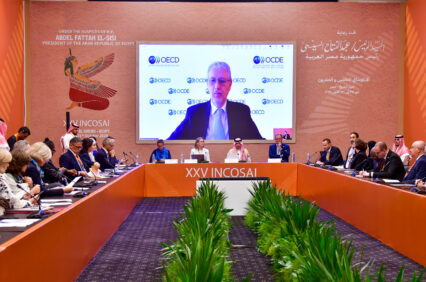
Side Event at XXV INCOSAI Highlights Early Results of the IDI–OECD Global Project on SAI Independence

During a side event at the XXV INCOSAI, the IDI–OECD Global Project on SAI Independence presented its initial results to the wider INTOSAI community. The session included contributions from János Bertók (OECD), Einar Gørrissen (IDI), H.E. Dr. Alangari (Chair of the INTOSAI PFAC), Dr. Caralee McLiesh (Auditor‑General of Australia), and Franziska Spörri (SECO, Switzerland). They discussed the early evidence gathered through the project and reflected on how Supreme Audit Institutions (SAIs) operate within their national accountability systems.

Collage PESA INCOSAI
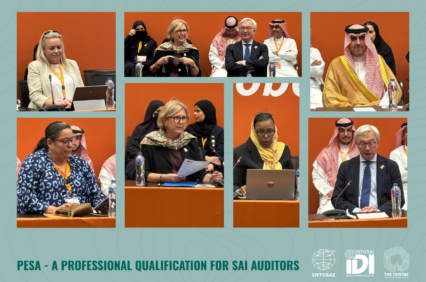
PESA Leads the Way as Professional Qualification for SAI Auditors in Public Sector Auditing at INCOSAI XXV

At the XXV INCOSAI, a dedicated side event celebrated INTOSAI’s formal recognition of the Professional Education for Supreme Audit Institution (SAI) Auditors (PESA) qualification, highlighted the launch of INTOSAI co-branding and the Arabic version of the qualification, and supported a key motion at INCOSAI. The INTOSAI community came together to support PESA in its journey, including Supreme Audit Institutions, (SAIs), experts, and partners who had contributed to professionalising public sector auditing.

INCOSAI 25 Kimi Makwetu Award Ceremony
AFROSAI-E Wins the Kimi Makwetu Award for Excellence in Capacity Building

The Kimi Makwetu Award was presented to AFROSAI-E by the International Organization of Supreme Audit Institutions (INTOSAI) at the XXV INCOSAI in Sharm El-Sheikh, Egypt. The INTOSAI Kimi Makuetu Award spotlights the best of capacity building in the INTOSAI community, and honors institutions that demonstrate outstanding commitment to strengthening the skills, systems, and sustainability of Supreme Audit Institutions (SAIs) worldwide.

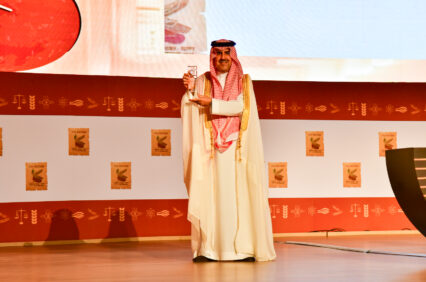
Dr. Hussam Alangari, President of the General Court of Audit of the Kingdom of Saudi Arabia, recipient of the INTOSAI Future Award.
President Dr. Hussam Alangari Accepts the INTOSAI Future Award on behalf of the General Court of Audit of Saudi Arabia

The International Organization of Supreme Audit Institutions (INTOSAI) presented the INTOSAI Future Award at the XXV INCOSAI in Sharm El-Sheikh, Egypt on October 31, 2025. The INTOSAI Future Award, recognizes meritorious services in government auditing and is granted to a SAI for future-oriented achievements and outstanding contributions to INTOSAI community, organization stewardship, and leadership priorities. The INTOSAI Future Award represents a new iteration of the former Jörg Kandutsch Award.  

The Use of Artificial Intelligence Techniques in Auditing

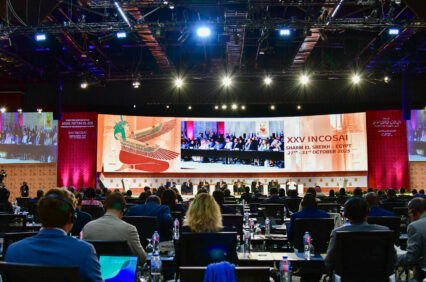
During INCOSAI XXV, deliberations focused on the growing role of artificial intelligence (AI) in shaping the future of public sector auditing. Delegates from Supreme Audit Institutions (SAIs) around the world convened to examine the opportunities of a technological development that can have far-reaching implications for accountability, governance, and public trust.

The Role of Supreme Audit Institutions in Auditing Central Banks and Government Activities During Financial and Economic Crises

At the 25th International Congress of Supreme Audit Institutions (INCOSAI), delegates focused on a critical issue facing today’s public institutions: understanding the role Supreme Audit Institutions (SAIs) should play in auditing central banks and government activities during financial and economic crises.

Auditing Sensitive Government Bodies: Finding the Right Balance Between Transparency and Security

The independence of Supreme Audit Institutions (SAIs) is an essential element to ensure the effectiveness of auditing. It ensures that audit results are objective, credible, and free from external influence. Independence reinforces public confidence in the audit process and strengthens accountability mechanisms in government. Although, when auditing sensitive government entities, such as national security agencies, SAI independence can encounter significant challenges.

Strengthening SAI Independence: Global Progress and the Saudi Experience

Supreme Audit Institutions (SAIs) are pivotal in safeguarding public resources, ensuring that governments are held accountable and fostering transparency in the management of public funds. A key to fulfilling this role is their independence from undue external influence, which allows them to perform audits with objectivity and credibility. As emphasized by INTOSAI’s guidance, SAIs operate most effectively when shielded from interference, allowing them to properly strategize, acquire necessary information, and report findings without restrictions (INTOSAI, 2019). Political influence, budgetary constraints, and limited access to records can undermine audit quality and public trust. This article examines how the General Court of Audit (GCA) of Saudi Arabia has successfully navigated challenges to its independence through robust legal frameworks and disciplined execution, offering practical insights that other SAIs can adopt to reinforce independence and thereby enhance governance and public confidence.

News in Brief
News in Brief
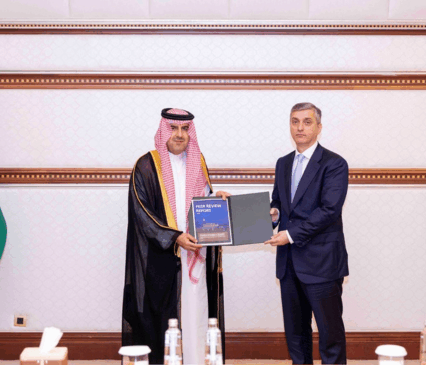
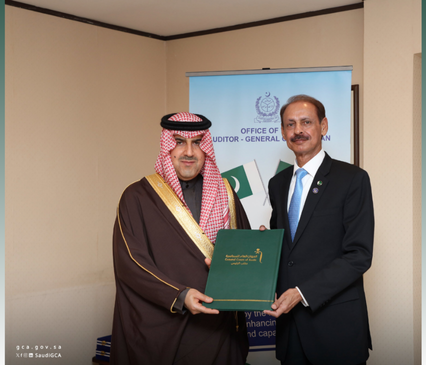
President of GCA Presents Peer Review Report to His Azerbaijani Counterpart
December 5, 2025
Inside INTOSAI
Inside INTOSAI
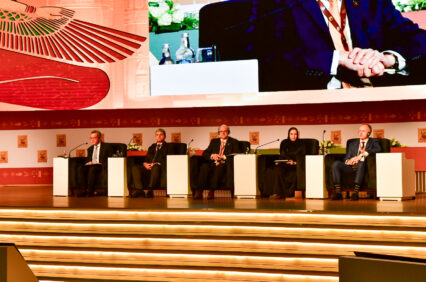
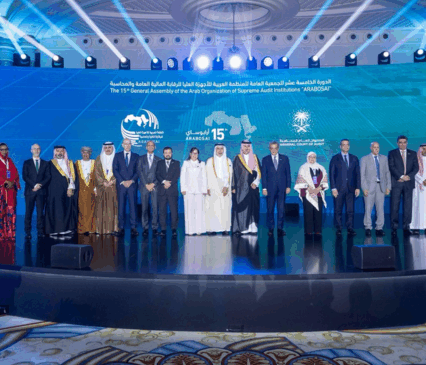
The 15th General Assembly of ARABOSAI Begins Under the Chairmanship of Saudi Arabia
December 4, 2025
Inside INTOSAI
Inside INTOSAI
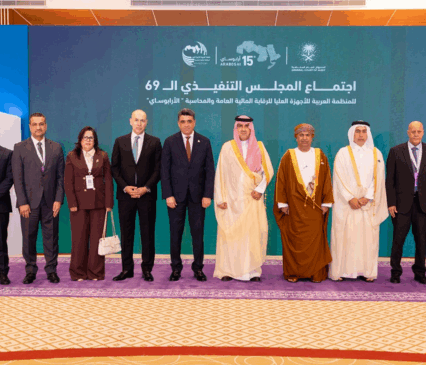
The General Court of Audit of Saudi Arabia Chairs the 69th Governing Board Meeting of ARABOSAI
December 3, 2025
News in Brief
News in Brief
General Court of Audit of the Kingdom of Saudi Arabia hosts MoU-KEEP Program in Jeddah
September 26, 2025
The Role of Organizational Culture Audits: GCA’s Case Study to Foster a Culture of Diversity, Equity and Inclusion

As SAIs navigate today’s rapidly evolving technological and regulatory advancements, the morality, resilience, and productivity of their auditors can experience significant fluctuations. These variations, if remained uncaptured, pose a threat to the core mission of SAIs, which is to ensure transparency, accountability, and the effective use of public resources.

News in Brief
News in Brief
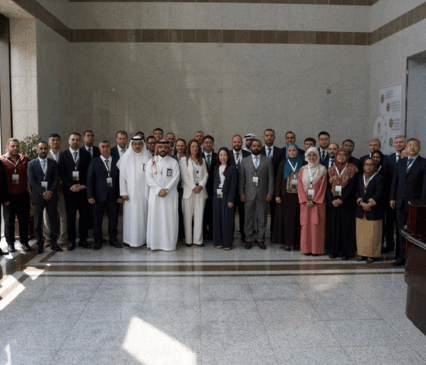
GCA Conducts First Peer Review Mission for the Office of the Auditor General of Pakistan
February 7, 2025
News in Brief
News in Brief
General Court of Audit of the Kingdom of Saudi Arabia Assumes Second Chairmanship Term for ARABOSAI
January 10, 2025
Inside INTOSAI
Inside INTOSAI
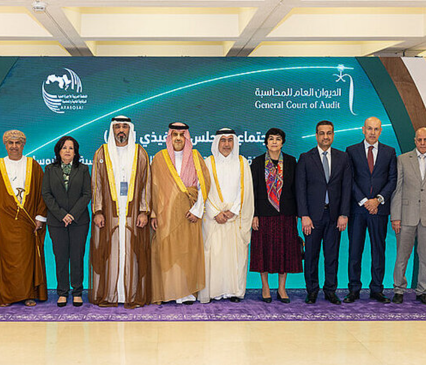
68th ARABOSAI Governing Board Meeting Convenes in Riyadh
December 9, 2024
News in Brief
News in Brief
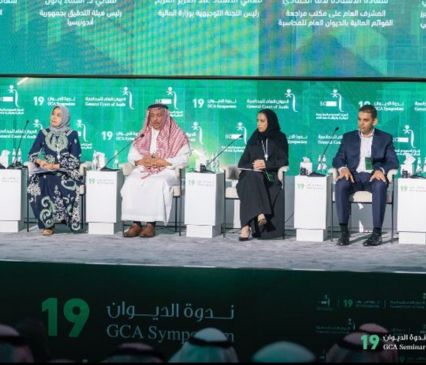
19th Annual Symposium of the General Court of Audit of Saudi Arabia
November 20, 2024
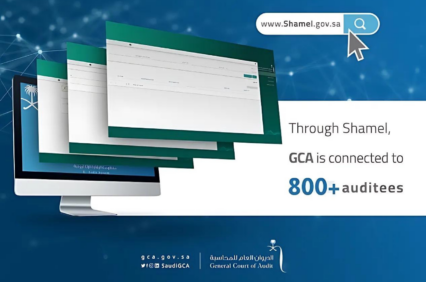
GCA’s Digital Transformation: Innovative Solutions for Recommendation Implementation and Audit Follow-up

In recent years, the General Court of Audit (GCA), Saudi Arabia’s Supreme Audit Institution (SAI), has undertaken measures to bolster its framework, aiming to elevate its oversight capacity with a focus on objectivity, efficiency, and professionalism. Embracing a proactive stance, the GCA is committed to adapting to the swift evolution in financial auditing and performance oversight. GCA leveraged a modern technologies and methodologies to conduct audits with heightened effectiveness and quality, ensuring alignment with contemporary standards and practices. On the other hand, government agencies and ministries within the Kingdom of Saudi Arabia’s public sector have also undergone significant transformations in recent years. These efforts are aligned with the ambitious goals outlined in Vision 2030 of the Kingdom of Saudi Arabia, which aims to diversify the economy, enhance public sector efficiency, and promote sustainable development.