Tag: Audit Methodology

Filter By:
Sort By:
Implementation of Strategic Management Principles in the Public Sector: The Experience of The Chamber Of Accounts Of The Republic Of Azerbaijan

Over the past 20–25 years, strategic management has been widely accepted as one of the methods for modernizing public policy. The Strategic Plan of the Chamber of Accounts for 2021–2025, which outlines the Chamber’s long-term development, reflects its vision, mission, core values, outcomes and outputs, and relevant activities. It was developed based on international expert evaluations and recommendations, progressive practices, the “Strategic Management Handbook for Supreme Audit Institutions,” and the principles of INTOSAI P-12 (The Value and Benefits of SAIs – Making a Difference to the Lives of Citizens). The Strategic Plan serves as a roadmap for the Chamber of Accounts’ operations from 2021 to 2025. It aims to strengthen institutional capacity and enhance the role of high-quality auditing in public financial management and oversight, through greater engagement with the parliament, government, and society.

3D Isometric Flat Illustration of Link Building, Mobile Applications Marketing
Strategic-Based Audit Model: A Vessel in Navigating Dynamic Governmental Landscape

The Audit Board of the Republic of Indonesia (BPK) is constitutionally mandated as an independent body, reflecting the INTOSAI Lima Declaration (1977), which underscores the importance of legal, organizational, and operational independence in ensuring accountability. However, Indonesia’s evolving political and institutional landscape introduces challenges to this mandate. The 2024 presidential transition initiated a new development cycle under Law No. 25/2004, requiring each administration to prepare a National Medium-Term Development Plan (RPJMN) aligned with the Long-Term Development Plan (RPJPN). This process has involved ministerial restructuring, the establishment of new agencies, and the launch of flagship initiatives, such as the free nutritious meal program, all of which reshape governance arrangements and audit priorities.

Benford’s Law as a Tool for Audit Planning and Control: An Analysis of Municipal Expenditures

This study presents a practical application of Benford’s Law to the expenditure data of two Greek municipalities, Messini and Trifylia, aiming to evaluate the extent to which these financial transactions conform to the expected digit distributions as defined by Benford’s Law. The primary goal is to assess the utility of Benford’s Law as a tool in public sector auditing processes and determine whether it can raise red flags to prompt further investigative procedures.

Beyond Promises and Plans: Making Climate Adaptation Deliver

Due to climate change, communities across the world are losing their homes to floods, crops to drought, and coastlines to rising seas. The financial risks related to lacking or poor adaptation are also growing. Governments have been responding with their plans and promises—but adaptation on the ground remains fragile. The recent Global Cooperative Audit of Climate Change Adaptation Actions (CCAA) from 54 SAIs revealed why adaptation is failing—and what Supreme Audit Institutions (SAIs) can do to change that trajectory.

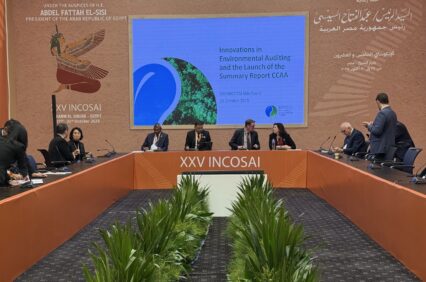
The Cooperative Audit on Climate Change Adaptation Actions launched at the INCOSAI XXV

The INTOSAI Working Group on Environmental Auditing (WGEA) side event, “Innovations in Environmental Auditing”, at the INCOSAI spotlighted the latest innovations within the INTOSAI WGEA community. First, highlighting some of the recent innovations, Vivi Niemenmaa from the WGEA Secretariat introduced the new agile support system, Audit Clinic, that has been piloted in 2025 with outstanding feedback. This is a mechanism where SAIs can book a one-hour consultation slot with a more experienced SAI to discuss any environmental audit related issue. As another innovation, Dashiell Da Costa from SAI Brazil, revealed the first results of the second assessment round of the ClimateScanner, covering assessments from 100 SAIs. The official launch was foreseen in the COP30 Climate Conference.  

SDG Side Event World Sector Report Image
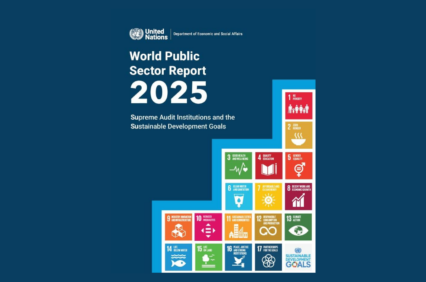
SAIs Demonstrate Value by Auditing the 2030 Agenda and the Sustainable Development Goals

Supreme Audit Institutions (SAIs) and the International Organization of Supreme Audit Institutions (INTOSAI) have increasingly positioned themselves as key actors in advancing sustainable development. Successive INTOSAI strategic plans (2017–2022 and 2023–2028) identify the contribution of SAIs to the implementation, follow-up, and review of the Sustainable Development Goals (SDGs) as a strategic priority. This longstanding commitment has provided an enabling institutional framework that has stimulated numerous initiatives— often supported by the INTOSAI Development Initiative (IDI) — and yielded a growing set of tools, methodologies, and audit reports across diverse sectors and SDG targets.

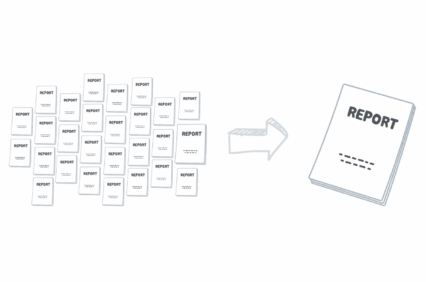
Improving Financial Audit Efficiency: One Report Instead of 27

In response to public demand and global trends, the State Audit Office of Latvia (SAI of Latvia) has initiated the most significant transformation in its audit operations in the past two decades.

Reducing Greenhouse Gas Emissions in Hungary in Light of the Dynamically Changing Requirements of the European Union

The fight against climate change requires Hungary to develop a common set of principles-based targets and to operate a coherent framework for action, monitoring and feedback in order to meet national and international targets for reducing greenhouse gas emissions. This is highlighted by the analysis of the State Audit Office of Hungary (SAO) concluded in 2024, which audited the measures aimed at reducing greenhouse gas emissions and the strategic framework of Hungary in the light of the dynamically changing requirements of the European Union (EU).

Greenwashing State Forest Harvesting in Poland

The Supreme Audit Office of the Republic of Poland (NIK) audited the implementation of a strategic pilotage project, Forest carbon farms, to verify its performance and if funds were spent efficiently during its implementation by the General Directorate of State Forests. The audit also looked at whether it enabled obtaining the best outcomes, and if forest divisions correctly and reliably planned and performed their activities included in the project. 

The Board of Audit and Inspection of Korea and its Audit of Railroad Buckling Correlated with Rising Temperatures and Climate Change

The Board of Audit and Inspection (BAI) conducted an audit of the Korea National Railway (KORAIL) to prepare it for possible buckling of railways that may be caused by intense heat waves, the fingerprint of global warming. It seemed worthwhile to share the audit methodologies employed in this audit with INTOSAI members and the public sector auditing community, notably as the methodologies utilized the scientific analysis of the correlation between temperatures of air and railroads, as well as the simulation of future temperature scenarios.

Assessing Norway’s Support to Climate Change Adaptation in Developing Countries: A Performance Audit

Climate change already has severe consequences for developing countries. Through the Paris Agreement, adopted in 2015, Norway and other industrialised countries committed to support climate change adaptation efforts in developing countries. 

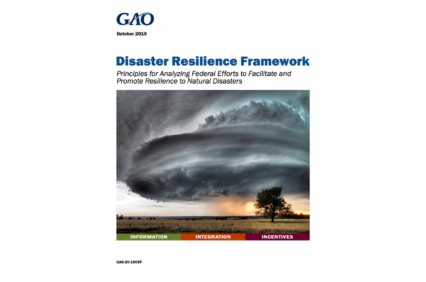
Identifying Climate Resilience Opportunities with the Disaster Resilience Framework

In every region across the globe, climate change is driving extreme weather events like heatwaves, heavy rainfall, and drought to increase and intensify, according to the Intergovernmental Panel on Climate Change.(1) These extreme weather events have led to natural disasters which have cost lives, displaced people, devastated economies, and racked up billions of dollars in damages.(2)

Combatting Climate Change in Cyprus – Water Resource Management: A Performance Audit Carried Out in The Framework of the INTOSAI IDI’s Global Cooperative Audit of Climate Adaptations Actions

Cyprus has been facing water scarcity for years. The lack of natural surface water systems, such as lakes and rivers, has historically led to excessive exploitation of groundwater. Over-extraction from underground water bodies, in combination with reduced rainfall, as a result of climate change, have led to the current situation, where most of Cyprus’ aquifers are in poor condition. To address the need for sufficient water reserves, in the past, the government has constructed dams to collect rainwater that would otherwise flow into the sea and has developed infrastructure to transfer water to areas with less rainfall, with the Southern Conveyor Project being the most significant. However, the reduction in rainfall mentioned above impacts adversely on the quality of water collected in the dams.

An “Ecological Transition Community” fuels the French Cour des Comptes with Tools

Considering the rise in environmental concerns and the growing importance of ecological transition issues in all national and local public policies, the French Cour des comptes, the supreme audit institution (SAI) that forms the financial jurisdictions with the regional and territorial audit chambers (CRTCs), has organized with the latter to strengthen the relevance of their audit and assessment work in these areas, which already account for a growing share of their scheduled work. 

Systematic Approaches to Performance Audits of Environmental Policies

Auditing the performance of government environmental programs is concerned with the three E’s, Economy, Efficiency, and Effectiveness, like most performance audits. However, it is very difficult to set up performance indicators and select adequate methodology to analyze the performance results for auditing in various environmental programs.

The Connected Audit: Thinking Ahead to Maximize Impact

Many auditors have developed considerable experience conducting each stage of an audit, yet those same auditors often lose momentum when it comes to moving from one stage to the next. One reason is that auditors must get the details right to support convincing findings and conclusions; however, that same focus on the details may prevent an auditor from considering how decisions on one stage will impact the next stage of the audit. Consequently, in addition to developing technical skills needed to execute each stage of an audit, auditors should also develop the ability to think ahead to help an audit move smoothly from one stage to the next. 

Auditing Efficient and Safe Environments for Remote Work in the Public Sector in Georgia with IT Governance

Creating an effective and safe environment for remote work in the public sector requires clear policies, careful planning, technology and infrastructure, data security, performance measurement, and focus on productivity of employees, and public sector auditing organizations have a role to play in ensuring this environment.

How are governments ensuring that no one is left behind? IDI and UN Women are developing a ‘Leave No One Behind’ Audit Framework 

What does it mean to implement the SDG principle of ‘Leave no one Behind’? How can SAIs’ audit the implementation of this principle by governments? 

PASAI Collaborates with CAAF to Develop Performance Measurement Systems in Two SAIs

In 2022-23, the Pacific Association of Supreme Audit Institutions (PASAI) commissioned the Canadian Audit and Accountability Foundation (CAAF), to support the design and implementation of performance management systems for the Office of the National Auditor of the Federated States of Micronesia (FSM) and the Pohnpei Office of the Public Auditor.

The Development of Financial Audit Approaches and Impact on Efficiency and Effectiveness 

The financial statement audit, aims to provide confidence in financial statements for users’ decisions. Financial statement auditors give an independent opinion on whether financial statements are presented in accordance with the designated framework and accurately represent an entity’s financial position and activity outcomes. As organizations have developed and grown in size, so has the complexity of their operations, which have greatly influenced financial statement audit approaches. These developments do not erase the previous methods; instead, it builds upon them to make the audit process more efficient and effective.

Supreme Audit Institutions in the Wake of the Pandemic: Addressing Methodologies and Challenges in a New Era

In the aftermath of the global pandemic, operational, financial, and strategic landscapes within audited entities have dramatically transformed. This shift necessitates Supreme Audit Institutions (SAIs) to revise their auditing methodologies and face novel challenges as they seek to assess the pandemic’s impact on audited agencies effectively.

Leveraging A Geographic Information System (GIS) in Public Audit

Emerging technology has revolutionized the world, and has become a preferred ally for auditors, as its use can significantly help in improving the efficiency and effectiveness of their work. Governments and public sector organizations worldwide are embracing innovative technologies to modernize their auditing practices. These technologies include blockchain, artificial intelligence (AI), data analytics, etc.