Tag: AFROSAI

Filter By:
Sort By:
Women’s Leadership in Supreme Audit Institutions 

The Beijing Declaration in 1995 set a roadmap for gender equality and women’s empowerment. Since then, the international community has been increasingly aware that women’s leadership is essential for the development of public strategies and programs, so that rights, priorities, and needs of all members of society are fairly represented. 

A Journey of Institutional Development Towards the Creation of a Truly Specialized and Independent SAI: How Mozambique’s SAI Became a Benchmark in Specialized Audits and its Prospects

Mozambique’s supreme audit institution (SAI) continues to operate under a hybrid model inherited from the colonial epoch, resembling the jurisdictional model. Mozambique’s Administrative Court (Tribunal Administrativo, TA) consolidates three distinct courts within a single organization, represented by its respective chambers. The First and Second Chambers are focused on Administrative, and Tax and Customs litigation, respectively. The Third Chamber performs the functions of an SAI. Despite a visible and steady process of institutional development in recent years, the main obstacle to its progress has been its hybrid structure. This configuration hinders the institution’s organizational, financial, and functional independence, the foundational basis for the effective functioning of an SAI as recognized in the 1977 Lima Declaration. Consequently, there is no fully functional SAI in Mozambique that meets the recommendations of the United Nations (UN), INTOSAI, and international best practices.

The Independence of the Supreme Audit Institution: Challenges and Opportunities

The issue of the independence of Supreme Audit Institutions (SAIs) is back in the spotlight, more than ever before, in the context of complex and intertwined geopolitical, economic and environmental changes and crises. At a time when there is an urgent need for independent and effective oversight institutions, particularly given the steady increase in public spending and the growth of public debt, coupled with limited revenue growth, these institutions are facing pressures that undermine their independence and negatively affect their ability to perform their mandated roles. These pressures have taken various forms, such as budget cuts or failure to provide sufficient resources to carry out their work, interference in their programs and results, and in some cases the dismissal of officials or delays in their appointment

Advancing SAI Independence Through the AFROSAI-E Model Public Audit Act

Across Africa, the independence of Supreme Audit Institutions (SAIs) faces growing pressure. Political transitions, fiscal crises, and governance challenges have, in some cases, led to attempts to limit the authority of SAIs, restrict access to resources, or interfere with the tenure of Auditors General. Such threats undermine not only the credibility of SAIs but also their ability to deliver impartial audits that safeguard public funds and strengthen trust in government. In this context, legislative, administrative, and financial independence is not a theoretical aspiration; it is a practical necessity for SAIs to fulfil their constitutional mandates without fear or favor.

Digitalising Contract Oversight: Somalia’s Office of the Auditor General Leads the Way

Office of the Auditor General of Somalia (OAGS) has achieved a significant milestone by implementing a digital Contract Management System (CMS), representing a pivotal step toward promoting transparency, accountability, and operational efficiency across public institutions. As part of a broader public financial management reform agenda, the CMS signals Somalia’s commitment to modernising governance structures and aligns with the global drive to digitalise public sector oversight. This experience offers valuable lessons to other members of the International Organization of Supreme Audit Institutions (INTOSAI), particularly those in developing or fragile states where building transparent systems remains a pressing priority.

Enhancing Collaboration between Supreme Audit Institution and Anti-Corruption Agencies: Lessons Learnt from Tanzania

Tanzania is one of the East African countries vested with stunning landscapes, rich culture, and iconic tourist attractions. Tanzania’s economy is classified as lower-middle-income, with a Gross Domestic Product (GDP) of around $75 billion US dollars. The economy is diverse, with agriculture, mining, and tourism being key contributors.  In recent years, Tanzania has made significant strides in infrastructure development, energy production, and social services, which have collectively bolstered economic growth. Despite these advancements, the country continues to grapple with challenges related to corruption and financial crimes.  The government has intensified efforts in combating these issues, corruption remains a significant impediment to development and poverty reduction. The country’s ranking on international anti-corruption indexes reflects ongoing challenges, with Transparency International placing Tanzania at 94th out of 180 countries in its Corruption Perceptions Index (CPI) for 2023.

Best Practices for Conducting Public Financial Audits

Effective public financial audits are vital tools in promoting transparency, accountability, and good governance in the public sector. Supreme Audit Institutions (SAIs) play a key role in evaluating how public funds are managed and ensuring that public officials act in accordance with laws, policies, and ethical standards. This article outlines best practices for conducting public financial audits, grounded in the International Standards of Supreme Audit Institutions (ISSAIs).

Strengthening the Fight Against Gender-Based Violence in PALOP-TL through Coordinated Auditing

The Organization of Supreme Audit Institutions of Portuguese-speaking Countries (OISC-CPLP), with the support of the European Union-Funded United Nations Development Programme (UNDP) Multicountry Public Financial Management (Pro PALOP-TL), in collaboration with the Good Financial Governance Programme in Mozambique of the Deutsche Gesellschaft für Internationale Zusammenarbeit GmbH, (GIZ), successfully launched the Coordinated Performance Audit on Gender-Based Violence (CAGBV) on December 2, 2024. Hosted by the Tribunal de Contas de Cabo Verde, the international seminar marked a significant milestone in the collective efforts of Portuguese-speaking Countries: Angola, Cape Verde, Guinea-Bissau, Mozambique, São Tomé and Príncipe, and Timor-Leste (PALOP-TL) Supreme Audit Institutions to address the pervasive issue of gender-based violence.

Building a Sustainable Future: The National Audit Office of Tanzania  Audits Infrastructure for Resilience and Innovation 

Assessing infrastructure resilience is key to mitigating risks, enhancing service delivery, and ensuring long-term value for citizens. Rigorous audits allow us to identify areas for improvement, strengthen governance, promote accountability, and optimize resource utilization. Given the pressures of urbanization, climate change, and technological progress, infrastructure planning and management must be forward-thinking, inclusive, and adaptive to evolving challenges.

Inside INTOSAI
Inside INTOSAI
The 10th General Assembly of the Association of Supreme Audit Institutions (SAIs) with French as a common language (AISCCUF) took a number of important decisions.
July 7, 2025
Inside INTOSAI
Inside INTOSAI
Planning Workshop Brings Together Portuguese-speaking SAIs to Advance Gender-Based Violence Audit
April 21, 2025
PAP-APP 2018-2024: A game-changer designed to increase the impact of Supreme Audit Institutions

Supreme Audit Institutions (SAIs) aim to make a difference in the lives of citizens. For SAIs operating in challenging contexts, reaching this lofty aim is not always obvious. In 2018 the INTOSAI Development Initiative (IDI), African Organisation of English-speaking Supreme Audit Institutions (AFROSAI-E), and African Organisation of French-speaking Supreme Audit Institutions (CREFIAF), came up with a groundbreaking model to support SAIs operating in challenging contexts.

Inside INTOSAI
Inside INTOSAI
IDI and INTOSAI General Secretariat Voice Concerns Over Sierra Leone’s Auditor General Removal
July 31, 2024
Inside INTOSAI
Inside INTOSAI
Save the Date: French-speaking event on the Sustainable Development Goals (SDGs) in Yaoundé, Cameroon from July 2 to 4, 2024
June 26, 2024
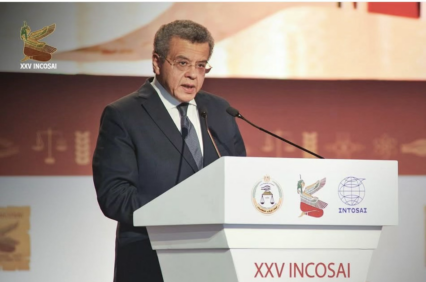
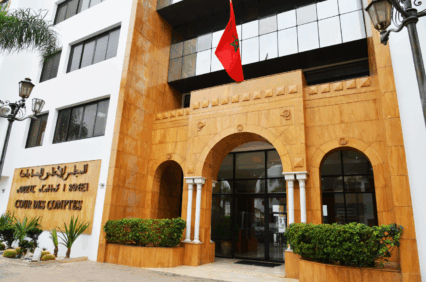
Role of SAI Morocco in the Fight Against Fraud

Fraud in public management can be defined as the abusive use of power by a person vested with public authority or mandate, to serve their own or private interests.

Given the risks associated with fraud, the Kingdom of Morocco has spared no effort in promoting an exhaustive and integrated vision to tackle this global challenge that affects economic and social development. Morocco’s particular attention to the fight against fraud is reflected in the 2011 Constitution, which has elevated good governance bodies to constitutional status, and enshrined the principles of good governance(1), transparency, accountability and the moralization of public life(2). The protection of these principles has been entrusted to the Court of Audit(3).

The Chambre des Comptes of the Supreme Court of Cameroon benefits from diversified technical cooperation and aims for greater international cooperation

28 years after its creation by the Cameroonian constitution of 1996 and 20 years after the effective start of its activities, the Chamber of Accounts (or in French, the Chambre des Comptes) of the Supreme Court of Cameroon continues its transformation into a modern public auditing institution with the support of its peers and technical and financial partners.

Burundi’s Cour des comptes aims to operationalize its jurisdictional mission and to comply with international standards for financial jurisdictions

Under the terms of Article 183 of the Constitution of the Republic of Burundi, promulgated on June 7, 2018: “A Cour des comptes is established, which is responsible for examining, judging and certifying the accounts of all public services. It assists Parliament in overseeing the implementation of the Finance Act”.

Jurisdictional Control of the Court of Auditors in Madagascar: Challenges and Prospects

The French Cour des Comptes, created in 1807 under Napoleon, is one of France’s oldest institutions. It acquired its authority through jurisdictional control of public accountants’ accounts, its primary mission. This type of control was subsequently adopted by other French-speaking, Portuguese-speaking and Spanish-speaking countries. In Madagascar, the Cour des Comptes is facing challenges with a complex issue linked to jurisdictional control. This article aims to elicit questions and reactions to this situation, in order to highlight the importance of the challenge of jurisdictional control of the Malagasy Cour des Comptes, while shedding light on its raison d’être, in promoting the sound management of public funds.

Public Prosecution Offices within Supreme Audit Institutions’ jurisdiction, their role and importance for the due process of law: A glance at the findings of a global survey

The INTOSAI-P 50 document outlines twelve principles for the jurisdictional activities of Supreme Audit Institutions (SAIs) empowered with the corresponding mandate, which allows them to rule on the liability of individuals accountable by law in case of irregularities or mismanagement.

Beyond auditing and reporting – the expansion of the Auditor-General of South Africa’s powers to strengthen accountability mechanisms

Following a number of years of deteriorating audit outcomes and a lack of consequences for the mismanagement of the public funds by those charged with the governance of government entities, the public demand for enhanced accountability and transparency saw calls from the public, media and parliamentary oversight structures for a review of the mandate and powers of the Auditor-General South Africa (AGSA) to go beyond auditing and reporting in an effort to strengthen accountability mechanisms. 

Inside INTOSAI
Inside INTOSAI
AFROSAI-E Convenes Member SAIs for Successful 2023 Strategic Review & Governance Board Meeting
April 22, 2024
News in Brief
News in Brief
SAI Somalia Welcomes Landmark Audit Legislation
October 24, 2023