Tag: AFROSAI

Filter By:
Sort By:
saudi fisp panel
Saudi Fund for Improved SAI’s Performance (Saudi FISP) Meet & Greet – Highlights from the Side Event at INCOSAI XXV in Sharm El Sheikh

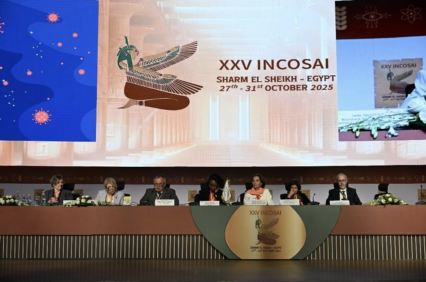
During Sharm El-Sheikh INCOSAI XXV, the General Court of Audit (GCA) of the Kingdom of Saudi Arabia organized a side event titled “FISP Meet & Greet”, bringing together beneficiaries of the Saudi Fund for Improved SAI Performance (FISP). The Saudi FISP is a funding initiative established by the GCA under the leadership of its President, H.E. Dr. Hussam Alangari. Since 2020, the GCA has allocated 1 million U.S. dollars annually to support the needs of Supreme Audit Institutions (SAIs) in developing countries, helping INTOSAI respond to the increasing demand for direct capacity-building assistance. By 2026, the fund had reached a total value of 7 million U.S. dollars, with continued growth anticipated.
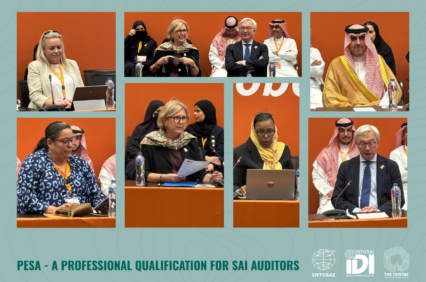
Collage PESA INCOSAI
PESA Leads the Way as Professional Qualification for SAI Auditors in Public Sector Auditing at INCOSAI XXV

At the XXV INCOSAI, a dedicated side event celebrated INTOSAI’s formal recognition of the Professional Education for Supreme Audit Institution (SAI) Auditors (PESA) qualification, highlighted the launch of INTOSAI co-branding and the Arabic version of the qualification, and supported a key motion at INCOSAI. The INTOSAI community came together to support PESA in its journey, including Supreme Audit Institutions, (SAIs), experts, and partners who had contributed to professionalising public sector auditing.

Jurisai meeting at INCOSAI
JURISAI is Now an Associated Entity of INTOSAI! 

INCOSAI 2025, the INTOSAI Congress, represented a decisive step for JURISAI members since the inaugural General Assembly held in Paris in October 2024.

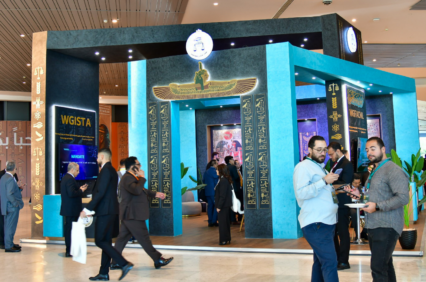
INCOSAI Booths

Numerous INTOSAI bodies, regional organizations and other affiliated groups were represented at booth spaces throughout the INCOSAI.

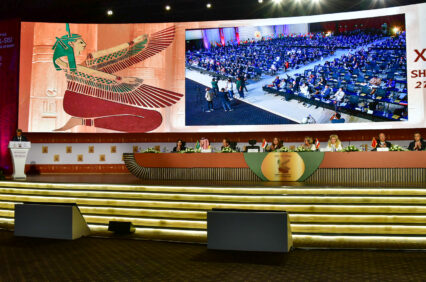
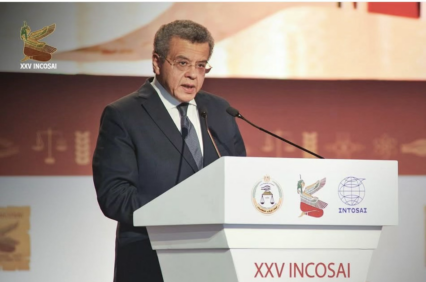
Accountability State Authority President and INTOSAI Chair Mohamed El-Faisal Youssef presented the Sharm El-Sheikh Declaration
INTOSAI Approves the Sharm Declaration at INCOSAI XXV

At the XXV International Congress of Supreme Audit Institutions (INCOSAI), deliberations on its two technical themes, INTOSAI formally adopted the Sharm El-Sheikh Declaration. The Declaration embodies the collective commitment of INTOSAI to advancing public sector auditing. It captures the key strategic insights, achievements, and recommendations emerging from the Congress, while articulating a forward-looking vision that strengthens innovation, professionalism, and the global impact of Supreme Audit Institutions (SAIs).

Key Adoptions, Endorsements, and Appointments Made at INCOSAI XXV

A successful INCOSAI is reflected in broad knowledge exchange, meaningful dialogue, strengthened international cooperation, and collective decision-making on priority matters. During the Congress, and at the preceding 79th INTOSAI Governing Board meeting, the INTOSAI community convened to present, deliberate, and reach consensus on several significant issues, including the adoption of the triennial budget, the endorsement of new professional pronouncements, the approval of the Sharm El-Sheikh Declaration, and the appointment of new INTOSAI Governing Board members, among other important outcomes.

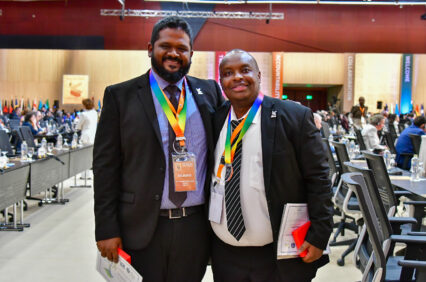
SAI Young Leaders from Kenya and the Maldives Recognized for Excellence in Transformation and Innovation

The INTOSAI Development Initiative (IDI)’s SAI Young Leaders Awards celebrate and recognize innovation, collaboration and transformation brought by young leaders through their change strategy projects from the SAI Young Leaders Initiative. The SAI Young Leaders Initiative aims to support young leaders from SAIs to implement a change strategy to bring real and positive shifts in the SAI. 

The Use of Artificial Intelligence Techniques in Auditing

During INCOSAI XXV, deliberations focused on the growing role of artificial intelligence (AI) in shaping the future of public sector auditing. Delegates from Supreme Audit Institutions (SAIs) around the world convened to examine the opportunities of a technological development that can have far-reaching implications for accountability, governance, and public trust.

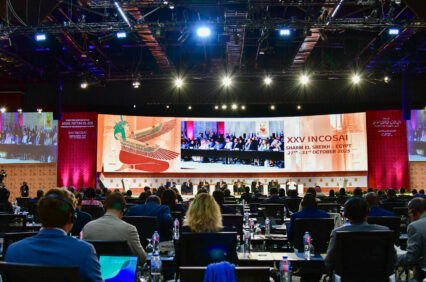
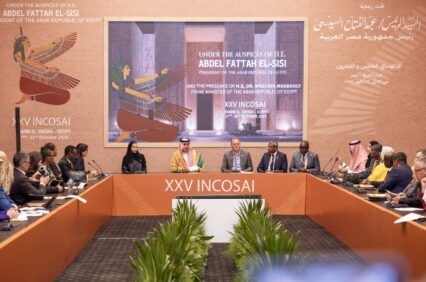
The XXV INCOSAI: A Renewed Audit Vision for a Rapidly Transforming World

Within the context of the long-standing journey of the International Organization of Supreme Audit Institutions (INTOSAI), and its role as a unifying international framework that entrenches the professional values of independence and integrity, the convening of the XXV INCOSAI represented a qualitative milestone in the evolution of global public sector auditing. It reaffirmed the ability of Supreme Audit Institutions (SAIs) to keep pace with the accelerating transformations occurring worldwide, particularly in the financial and economic spheres.

Women’s Leadership in Supreme Audit Institutions 

The Beijing Declaration in 1995 set a roadmap for gender equality and women’s empowerment. Since then, the international community has been increasingly aware that women’s leadership is essential for the development of public strategies and programs, so that rights, priorities, and needs of all members of society are fairly represented. 

A Journey of Institutional Development Towards the Creation of a Truly Specialized and Independent SAI: How Mozambique’s SAI Became a Benchmark in Specialized Audits and its Prospects

Mozambique’s supreme audit institution (SAI) continues to operate under a hybrid model inherited from the colonial epoch, resembling the jurisdictional model. Mozambique’s Administrative Court (Tribunal Administrativo, TA) consolidates three distinct courts within a single organization, represented by its respective chambers. The First and Second Chambers are focused on Administrative, and Tax and Customs litigation, respectively. The Third Chamber performs the functions of an SAI. Despite a visible and steady process of institutional development in recent years, the main obstacle to its progress has been its hybrid structure. This configuration hinders the institution’s organizational, financial, and functional independence, the foundational basis for the effective functioning of an SAI as recognized in the 1977 Lima Declaration. Consequently, there is no fully functional SAI in Mozambique that meets the recommendations of the United Nations (UN), INTOSAI, and international best practices.

The Independence of the Supreme Audit Institution: Challenges and Opportunities

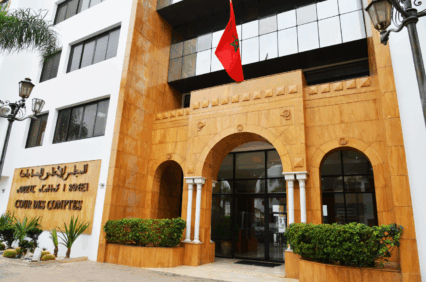
The issue of the independence of Supreme Audit Institutions (SAIs) is back in the spotlight, more than ever before, in the context of complex and intertwined geopolitical, economic and environmental changes and crises. At a time when there is an urgent need for independent and effective oversight institutions, particularly given the steady increase in public spending and the growth of public debt, coupled with limited revenue growth, these institutions are facing pressures that undermine their independence and negatively affect their ability to perform their mandated roles. These pressures have taken various forms, such as budget cuts or failure to provide sufficient resources to carry out their work, interference in their programs and results, and in some cases the dismissal of officials or delays in their appointment

Advancing SAI Independence Through the AFROSAI-E Model Public Audit Act

Across Africa, the independence of Supreme Audit Institutions (SAIs) faces growing pressure. Political transitions, fiscal crises, and governance challenges have, in some cases, led to attempts to limit the authority of SAIs, restrict access to resources, or interfere with the tenure of Auditors General. Such threats undermine not only the credibility of SAIs but also their ability to deliver impartial audits that safeguard public funds and strengthen trust in government. In this context, legislative, administrative, and financial independence is not a theoretical aspiration; it is a practical necessity for SAIs to fulfil their constitutional mandates without fear or favor.

Digitalising Contract Oversight: Somalia’s Office of the Auditor General Leads the Way

Office of the Auditor General of Somalia (OAGS) has achieved a significant milestone by implementing a digital Contract Management System (CMS), representing a pivotal step toward promoting transparency, accountability, and operational efficiency across public institutions. As part of a broader public financial management reform agenda, the CMS signals Somalia’s commitment to modernising governance structures and aligns with the global drive to digitalise public sector oversight. This experience offers valuable lessons to other members of the International Organization of Supreme Audit Institutions (INTOSAI), particularly those in developing or fragile states where building transparent systems remains a pressing priority.

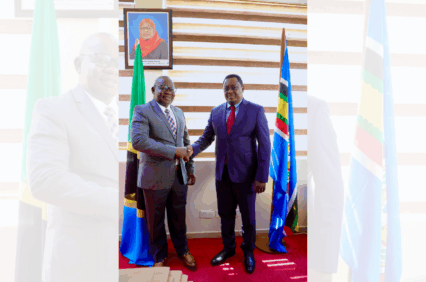
Enhancing Collaboration between Supreme Audit Institution and Anti-Corruption Agencies: Lessons Learnt from Tanzania

Tanzania is one of the East African countries vested with stunning landscapes, rich culture, and iconic tourist attractions. Tanzania’s economy is classified as lower-middle-income, with a Gross Domestic Product (GDP) of around $75 billion US dollars. The economy is diverse, with agriculture, mining, and tourism being key contributors.  In recent years, Tanzania has made significant strides in infrastructure development, energy production, and social services, which have collectively bolstered economic growth. Despite these advancements, the country continues to grapple with challenges related to corruption and financial crimes.  The government has intensified efforts in combating these issues, corruption remains a significant impediment to development and poverty reduction. The country’s ranking on international anti-corruption indexes reflects ongoing challenges, with Transparency International placing Tanzania at 94th out of 180 countries in its Corruption Perceptions Index (CPI) for 2023.

Best Practices for Conducting Public Financial Audits

Effective public financial audits are vital tools in promoting transparency, accountability, and good governance in the public sector. Supreme Audit Institutions (SAIs) play a key role in evaluating how public funds are managed and ensuring that public officials act in accordance with laws, policies, and ethical standards. This article outlines best practices for conducting public financial audits, grounded in the International Standards of Supreme Audit Institutions (ISSAIs).

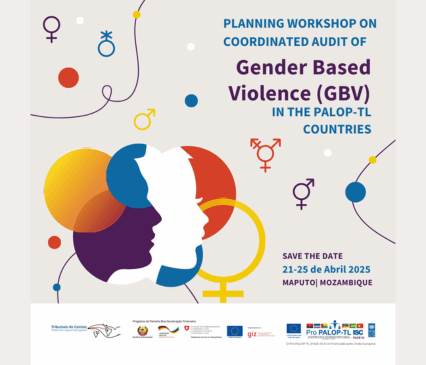
Strengthening the Fight Against Gender-Based Violence in PALOP-TL through Coordinated Auditing

The Organization of Supreme Audit Institutions of Portuguese-speaking Countries (OISC-CPLP), with the support of the European Union-Funded United Nations Development Programme (UNDP) Multicountry Public Financial Management (Pro PALOP-TL), in collaboration with the Good Financial Governance Programme in Mozambique of the Deutsche Gesellschaft für Internationale Zusammenarbeit GmbH, (GIZ), successfully launched the Coordinated Performance Audit on Gender-Based Violence (CAGBV) on December 2, 2024. Hosted by the Tribunal de Contas de Cabo Verde, the international seminar marked a significant milestone in the collective efforts of Portuguese-speaking Countries: Angola, Cape Verde, Guinea-Bissau, Mozambique, São Tomé and Príncipe, and Timor-Leste (PALOP-TL) Supreme Audit Institutions to address the pervasive issue of gender-based violence.

Building a Sustainable Future: The National Audit Office of Tanzania  Audits Infrastructure for Resilience and Innovation 

Assessing infrastructure resilience is key to mitigating risks, enhancing service delivery, and ensuring long-term value for citizens. Rigorous audits allow us to identify areas for improvement, strengthen governance, promote accountability, and optimize resource utilization. Given the pressures of urbanization, climate change, and technological progress, infrastructure planning and management must be forward-thinking, inclusive, and adaptive to evolving challenges.

Inside INTOSAI
Inside INTOSAI
The 10th General Assembly of the Association of Supreme Audit Institutions (SAIs) with French as a common language (AISCCUF) took a number of important decisions.
July 7, 2025
Inside INTOSAI
Inside INTOSAI
Planning Workshop Brings Together Portuguese-speaking SAIs to Advance Gender-Based Violence Audit
April 21, 2025
PAP-APP 2018-2024: A game-changer designed to increase the impact of Supreme Audit Institutions

Supreme Audit Institutions (SAIs) aim to make a difference in the lives of citizens. For SAIs operating in challenging contexts, reaching this lofty aim is not always obvious. In 2018 the INTOSAI Development Initiative (IDI), African Organisation of English-speaking Supreme Audit Institutions (AFROSAI-E), and African Organisation of French-speaking Supreme Audit Institutions (CREFIAF), came up with a groundbreaking model to support SAIs operating in challenging contexts.

Inside INTOSAI
Inside INTOSAI
IDI and INTOSAI General Secretariat Voice Concerns Over Sierra Leone’s Auditor General Removal
July 31, 2024