Author: International Journal of Government Auditing
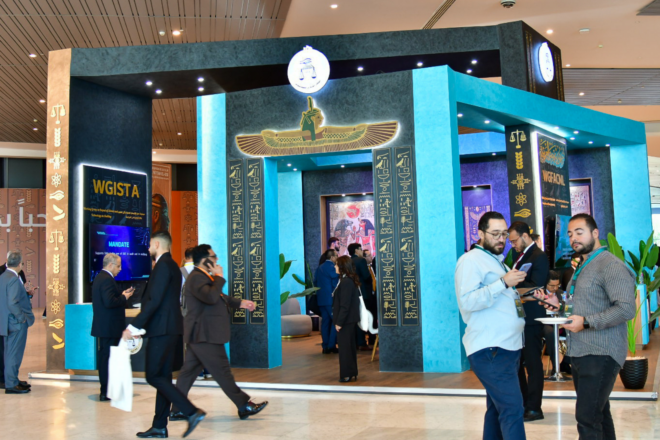
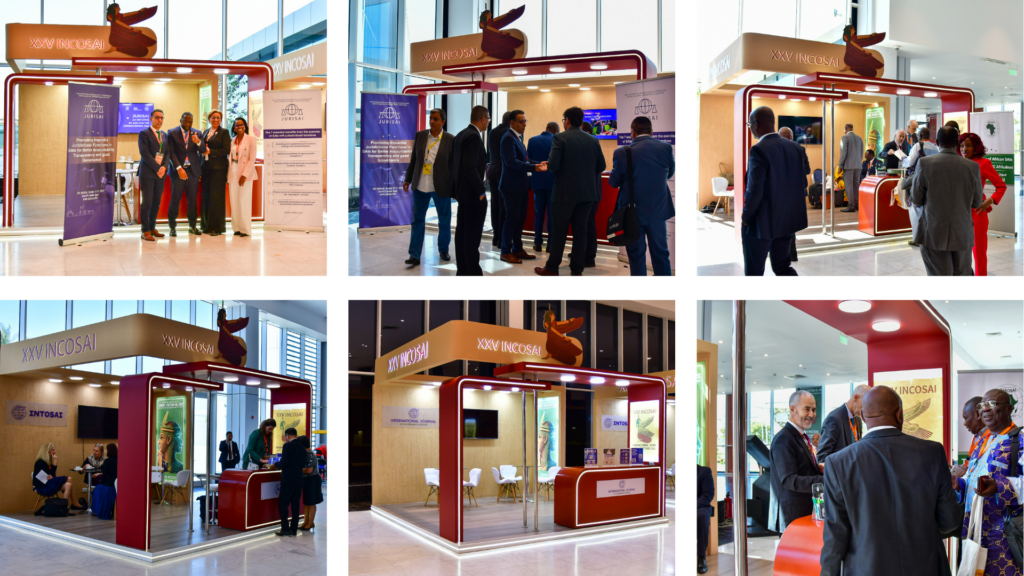
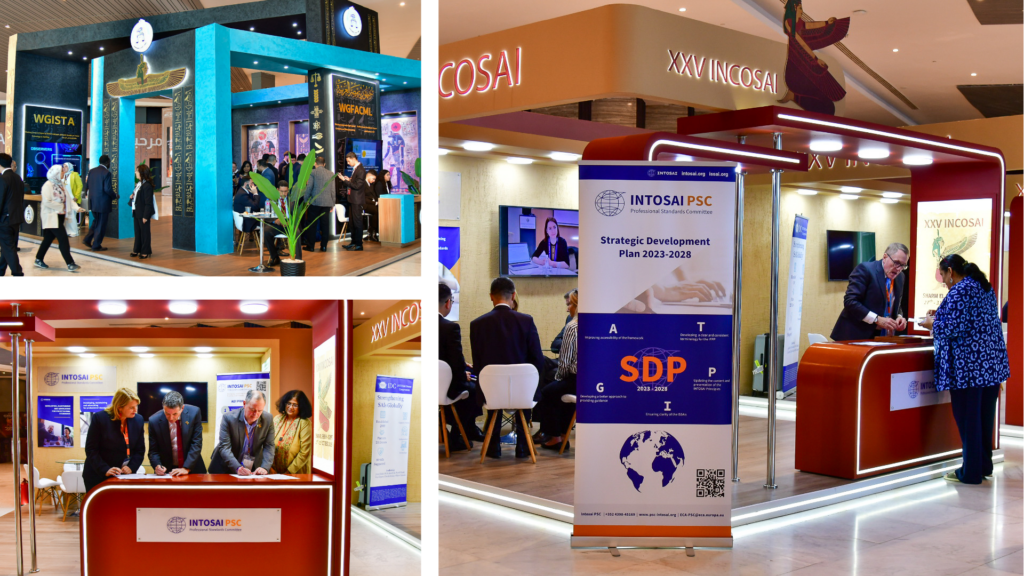
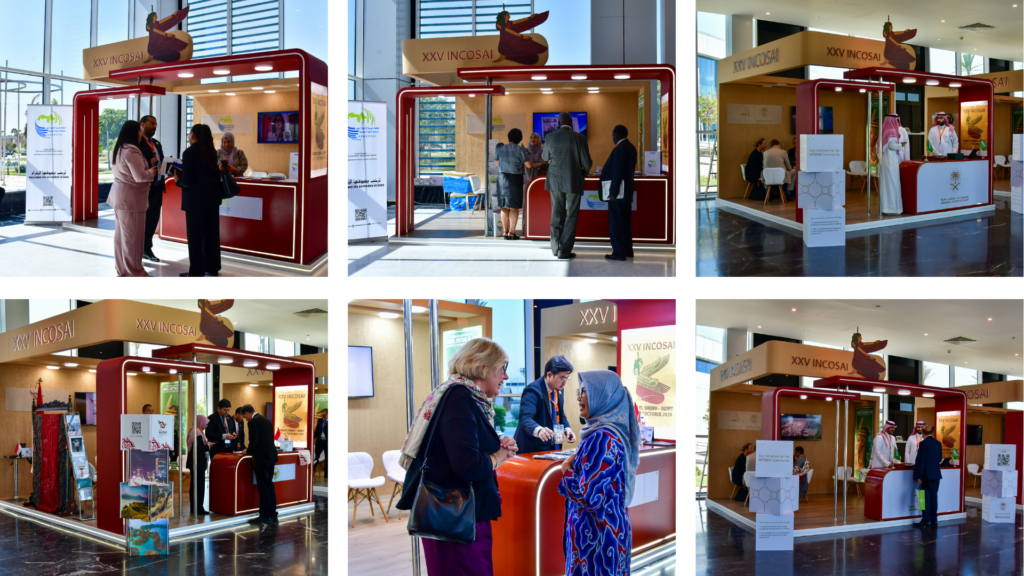
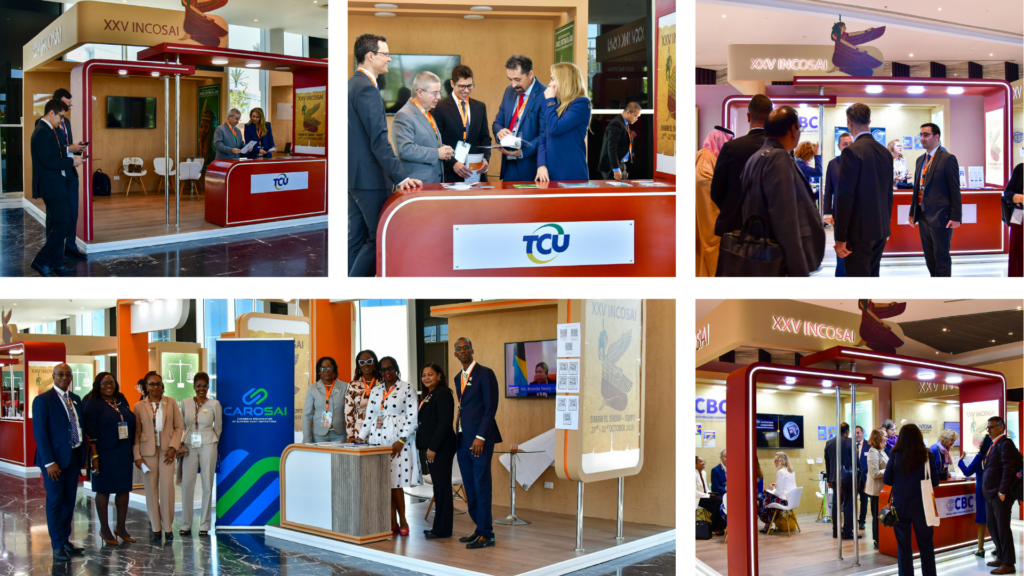
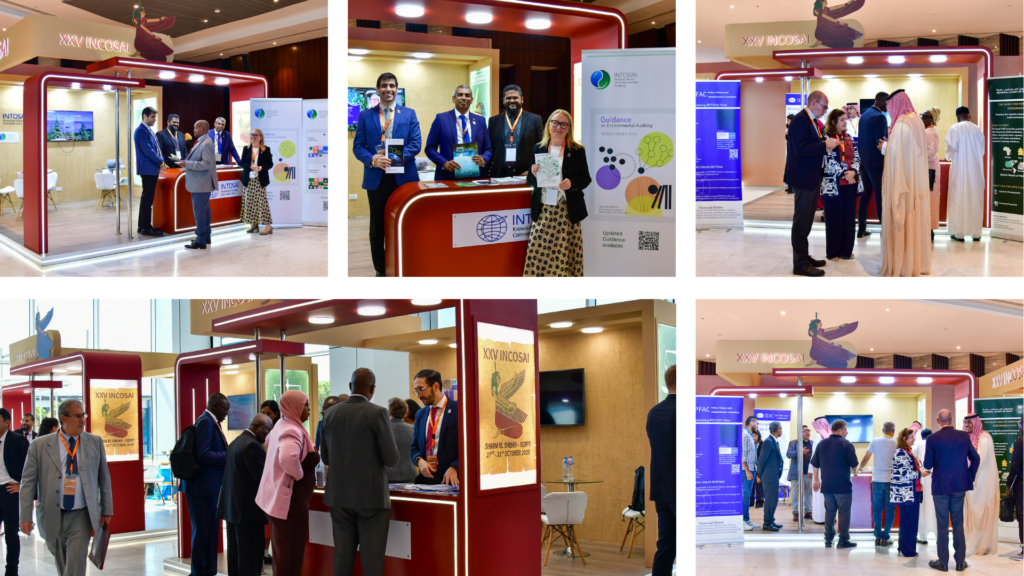
Numerous INTOSAI bodies, regional organizations and other affiliated groups were represented at booth spaces throughout the INCOSAI.
INCOSAI delegates utilized the booths as a meaningful opportunity to connect with one another.
Clockwise from top left: (1) JURISAI; (2) JURISAI; (3) AFROSAI; (4) AFROSAI; (5) INTOSAI Journal; (6) INTOSAI General Secretariat. Source: INTOSAI JournalClockwise from top left: (1) INTOSAI Chair, SAI Egypt and the INTOSAIWorking Group on Impact of Science and Technology on Auditing (WGISTA), and the INTOSAI Working Group on the Fight Against Corruption and Money Laundering (WGFACML); (2) INTOSAI Professional Standards Committee; (3) INTOSAI Professional Standards Committee (PSC) and IDI Memorandum of Understanding Signing at the PSC Booth. Source: INTOSAI JournalClockwise from top left: (1) ARABOSAI; (2) ARABOSAI; (3) The General Court of Audit of Saudi Arabia; (4) The General Court of Audit of Saudi Arabia; (4) The INTOSAI General Secretariat, Dr. Margit Kraker, meets with Dr. Isma Yatun, Audit Board of Indonesia Chairwoman and INTOSAI Vice Chair at the SAI Indonesia booth; (5) The Audit Board of Indonesia, INTOSAI Vice Chair. Source: INTOSAI JournalClockwise from top left: (1) Brazilian Federal Court of Accounts; (2) Brazilian Federal Court of Accounts; (3) INTOSAI Capacity Building Committee; (4) INTOSAI Capacity Building Committee; (5 CAROSAI. Source: INTOSAI JournalClockwise from top left: (1) INTOSAI Knowledge Sharing Committee and the INTOSAI Working Group on Environmental Auditing; (2) INTOSAI Knowledge Sharing Committee and the INTOSAI Working Group on Environmental Auditing; (3) INTOSAI Policy, Finance, and Administration Committee; (4) INTOSAI Policy, Finance, and Administration Committee; (5) INTOSAI Development Initiative. Source: INTOSAI Journal
In 2009, the International Organization of Supreme Audit Institutions (INTOSAI) and 15 donor organizations signed a landmark Memorandum of Understanding (MOU) to augment and strengthen support to Supreme Audit Institutions (SAIs) in developing countries. The MOU recognized (1) the importance of well-functioning, multidisciplinary and independent SAIs, and (2) support to SAIs from both the INTOSAI and Donor communities could be more effective…
Ms. Goh Soon Poh was appointed Auditor General of Singapore on February 8, 2018, by the President of Singapore. She succeeds Mr. Tan Yoke Meng Willie, who retired on the same date. Prior to joining the Auditor General’s Office (AGO)…