Tag: performance audit

Filter By:
Sort By:
Innovative Approaches in Performance Auditing: Comparative Lessons from Supreme Audit Institutions

Performance auditing is undergoing significant transformation within the international public auditing community. Supreme Audit Institutions (SAIs) are increasingly moving beyond traditional economy-efficiency-effectiveness assessments toward more sophisticated evaluation-oriented approaches based on data analytics, impact assessment, risk analysis, and evidence-based policymaking.


Windmill park in espel, netherlands, with a boat among renewable energy turbines
Using AI and Data Analysis in a Performance Audit to Determine Overlap Between Energy Efficiency Policies 

At the beginning of 2026, the Netherlands Court of Audit published a report on the use of taxpayers’ money to fund both voluntary and obligatory energy saving measures. To carry out the audit we relied heavily on AI to analyse the data and map the overlap between incentives and obligatory measures. In this article we explain how we approached the audit topic and the use we made of AI.

Making a Difference Through Data: How Data Analysis Enhances Performance Audits and Evaluations

Data has become a central part for the management of complex public programmes. It helps to highlight trends, better understand impacts and identify the need for policy adjustments. For Supreme Audit Institutions (SAIs), the question is therefore no longer whether data analysis should be used in performance audits and evaluations. Rather, the key issue is how data analysis can be planned, prepared and integrated into audit work in such a way that it is driven by the audit questions and contributes to better insights, more convincing recommendations and, ultimately, greater impact.

Enhancing Public Value Through Thematic Auditing: Institutional Learning from BPK’s Experience

Supreme Audit Institutions (SAIs) play an essential role in strengthening accountability and transparency within democratic governance systems. As public policy challenges become increasingly complex and interconnected, SAIs are expected not only to provide assurance, but also to contribute more directly to governance improvement and sustainable development outcomes. This expectation is reflected in INTOSAI-P 12, which emphasizes that SAIs should create value and deliver tangible benefits to citizens through stronger accountability, transparency, and public sector performance (INTOSAI, 2013). International discussions have also highlighted the growing need for SAIs to address cross-sectoral and long-term governance challenges, including sustainable development and governance resilience (INTOSAI Journal, 2021).

U.S. GAO’s Fraud Estimates: Key Steps Ensure Decision-Makers Fully Accept and Understand Innovative Approaches

Over the past several years, the U.S. Government Accountability Office (GAO) estimated fraud facing the U.S. government using rigorous approaches that helped communicate the extent and impact of fraud in federal programs to Congress, the American public and antifraud professionals.

Beyond the Surface: Using Community Insights, Spatial Data, and Underwater Verification to Strengthen Environmental Audits

Environmental audits, especially in marine protected areas, face challenges in obtaining reliable evidence as environmental conditions often evolve gradually and are not completely reflected in routine monitoring records. Such challenges may necessitate an approach beyond conventional audit methods.

From Compliance to Performance Evaluation—the State Audit and Administrative Control Bureau of Palestine’s Performance Audit Transition

In a world of rapid changes and increasing challenges, governments are asked more than ever to have concrete findings, provide high quality public service and manage the available resources efficiently, effectively and responsibly. With these changes, the public audit is not only viewed as just ensuring compliance with laws and protocols but also evaluating the performance and measuring the actual influence of government policies and programs on lives of citizens.

Protected: Preparing for a Digital Audit Workforce: Lessons Learned from Applying Agentic AI at the Swiss Federal Audit Office

There is no excerpt because this is a protected post.

A Journey of Institutional Development Towards the Creation of a Truly Specialized and Independent SAI: How Mozambique’s SAI Became a Benchmark in Specialized Audits and its Prospects

Mozambique’s supreme audit institution (SAI) continues to operate under a hybrid model inherited from the colonial epoch, resembling the jurisdictional model. Mozambique’s Administrative Court (Tribunal Administrativo, TA) consolidates three distinct courts within a single organization, represented by its respective chambers. The First and Second Chambers are focused on Administrative, and Tax and Customs litigation, respectively. The Third Chamber performs the functions of an SAI. Despite a visible and steady process of institutional development in recent years, the main obstacle to its progress has been its hybrid structure. This configuration hinders the institution’s organizational, financial, and functional independence, the foundational basis for the effective functioning of an SAI as recognized in the 1977 Lima Declaration. Consequently, there is no fully functional SAI in Mozambique that meets the recommendations of the United Nations (UN), INTOSAI, and international best practices.

Integrated Approach for Impactful Financial Audit: Insights from SAI Indonesia

This paper examines the integration of performance audit perspectives into financial audits on the Audit Board of the Republic of Indonesia’s (BPK) by using the Financial Audit with Performance Audit Perspective (FAPA) framework. This paper demonstrates how FAPA approach, documented through Long-Form Audit Reports, enhances audit impact by evaluating both financial accuracy and operational effectiveness. Despite challenges in methodological alignment, stakeholder management, timing, and coordination, we present a structured workflow model for effective implementation of the FAPA framework. The paper advocates for further integration of sustainability and foresight elements to promote long-term value creation in public financial management, better meeting evolving stakeholder expectations and supporting Sustainable Development Goals.

Crisis Management System on Rail Networks in Poland

The audit of crisis management functioning within rail infrastructure was undertaken on the Supreme Audit Office of Poland, Najwyższa Izba Kontroli (NIK)’s own initiative and covered among other, procedures applied during the biggest breakdown of rail traffic control that occurred in March 2022, 3 weeks after Russia invaded Ukraine. The audit was also driven by a significant number of issues and accidents on railways. In 2020, 516 railway accidents occurred, of which 6 were serious accidents caused by collisions or derailment of trains and affected the safety of people within railway areas. Moreover, 1,218 incidents were noted that did not result in any fatalities or serious injuries or in material or environment damage. However, these incidents could have turned into events requiring actions provided for in crisis management plans. The also audit investigated issues identified during the mass coal transports from seaports at the turn of 2022-2023, issues related to movements of refugees from Ukraine, difficulties in rail traffic in the area of ​​Warsaw Junction caused by investment works in 2020-2023 and disturbances in rail traffic caused by an unauthorized broadcasting of radio-stop signals in 2020-2023.

How Can Supreme Audit Institutions Select the Right Topics for Evaluations and Performance Audits? Results from the 2024 Meeting of the INTOSAI Working Group on Evaluation of Public Policies and Programs (WGEPPP)

Evaluations and performance audits require a robust selection process to ensure success. A thorough and systematic examination of potential performance audit topics allows the identification of those that present the highest risks and offer the greatest potential for improvement respectively. Furthermore, it facilitates determining the optimal timing for results to be integrated into the further development of respective public policies. Consequently, a well-considered selection of evaluation topics is more likely to influence existing public policies positively.

Greenwashing State Forest Harvesting in Poland

The Supreme Audit Office of the Republic of Poland (NIK) audited the implementation of a strategic pilotage project, Forest carbon farms, to verify its performance and if funds were spent efficiently during its implementation by the General Directorate of State Forests. The audit also looked at whether it enabled obtaining the best outcomes, and if forest divisions correctly and reliably planned and performed their activities included in the project. 

Assessing Norway’s Support to Climate Change Adaptation in Developing Countries: A Performance Audit

Climate change already has severe consequences for developing countries. Through the Paris Agreement, adopted in 2015, Norway and other industrialised countries committed to support climate change adaptation efforts in developing countries. 

BPK Audit: A Lighthouse Guiding Indonesia in Sailing the Ocean of Climate Crisis

According to the State of the Climate in Asia (2023) report, the average temperature of Asian countries in 2023 rose by 0.91 degrees Celsius compared to the period from 1991-2020. This results in a rise in sea surface temperature, which further intensifies tropical cyclones and severe rainfall that leads to floods and landslides. Indonesia has encountered a total of 300 natural disasters, including 200 instances of flooding between 1990 and 2021. These events have caused harm to around 11 million individuals. Figure 1 shows that all-natural disasters that happened in Indonesia were caused by climate change.

Combatting Climate Change in Cyprus – Water Resource Management: A Performance Audit Carried Out in The Framework of the INTOSAI IDI’s Global Cooperative Audit of Climate Adaptations Actions

Cyprus has been facing water scarcity for years. The lack of natural surface water systems, such as lakes and rivers, has historically led to excessive exploitation of groundwater. Over-extraction from underground water bodies, in combination with reduced rainfall, as a result of climate change, have led to the current situation, where most of Cyprus’ aquifers are in poor condition. To address the need for sufficient water reserves, in the past, the government has constructed dams to collect rainwater that would otherwise flow into the sea and has developed infrastructure to transfer water to areas with less rainfall, with the Southern Conveyor Project being the most significant. However, the reduction in rainfall mentioned above impacts adversely on the quality of water collected in the dams.

Applying Strategic Foresight in Performance Audit: Case Study of Audit of Energy Transition in Indonesia

Future uncertainty, driven by factors such as climate change, technological advancements, and global dynamics, poses challenges that require organizations and governments to adopt more flexible, adaptive, and resilient approaches to planning. SAIs play a crucial role in addressing climate change and future uncertainty by providing insights into the effectiveness of climate-related initiatives and fostering greater accountability and transparency. Strategic foresight in auditing is essential for anticipating and preparing for future uncertainties, enabling organizations to navigate risks and opportunities proactively. Applying a six-step foresight framework in auditing the energy transition, particularly in the electricity sector, allows auditors to evaluate progress, identify gaps, and provide recommendations for more sustainable and resilient energy policies. By integrating strategic foresight into auditing practices, organizations can better prepare for the complexities of a rapidly changing world and build resilience against future uncertainties.

Systematic Approaches to Performance Audits of Environmental Policies

Auditing the performance of government environmental programs is concerned with the three E’s, Economy, Efficiency, and Effectiveness, like most performance audits. However, it is very difficult to set up performance indicators and select adequate methodology to analyze the performance results for auditing in various environmental programs.

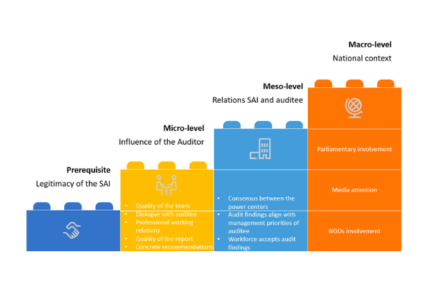
Boost the Impact of Your Performance Audits: Building Blocks for a Theory on the Impact of Supreme Audit Institutions

Many Supreme Audit Institutions (SAIs) have in recent decades adopted performance auditing as one of their main tasks. Performance audits extend a SAI’s role from main public auditor to judge, jury and even management consultant. INTOSAI has promoted performance auditing as a method to establish the economy, effectiveness and efficiency of government policy (‘the 3Es’) and a means to strengthen government accountability and transparency. 

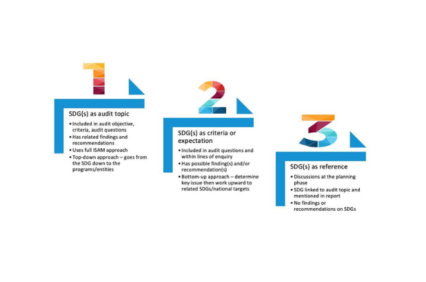
Incorporating a Sustainable Development Goal Lens in Performance Audits

Auditing the Sustainable Development Goals (SDGs) can increase accountability of government for commitments made to the 2030 Agenda for Sustainable Development as well as expedite progress towards achieving these goals.

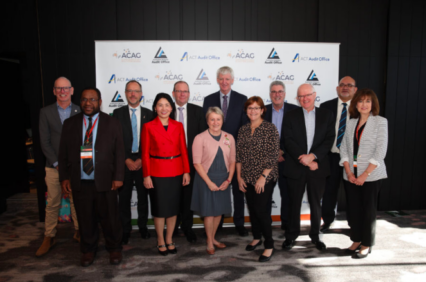
The Australian National Audit Office and the Australian Capital Territory Audit Office host the International Meeting of Performance Audit Critical Thinkers (IMPACT) Conference

The International Meeting of Performance Audit Critical Thinkers (IMPACT) Conference, an initiative of the Australasian…

Civil Society Participation in Audit – the Australian National Audit Office Office’s Approach to Citizen Engagement in Performance Audits

The Australian National Audit Office (ANAO) uses several approaches to engage with citizens and CSOs during the course of a performance audit, particularly during the fieldwork phase.