Tag: oversight

Filter By:
Sort By:
Financial Audits and Mechanisms for Good Governance of Public Funds

To finance government activities and provisions of public goods and services like healthcare, education, infrastructure, defense, and social welfare programs, public funds are used. These funds are usually managed by government entities and are subject to firm rules and oversight to ensure that they are used in most appropriate manner. Good governance, specifically with respect to public funds, discusses the principles and practices that ensure resources are managed appropriately, clearly, and in the best of public interest. Generally, good governance includes the following key principles: 

Financial Audits and Mechanisms for Good Governance of Public Funds: Promoting Accountability, Transparency, and Citizen Trust through Oversight and Best Practices

Good governance depends on the efficient and transparent management of public funds. Financial audits and oversight mechanisms have become increasingly important as public trust is closely tied to financial accountability. These audits and mechanisms have two main purposes: detecting and preventing corruption and mismanagement, as well as promoting transparency and strengthening institutions to deliver tangible benefits to citizens.

Implementation of Strategic Management Principles in the Public Sector: The Experience of The Chamber Of Accounts Of The Republic Of Azerbaijan

Over the past 20–25 years, strategic management has been widely accepted as one of the methods for modernizing public policy. The Strategic Plan of the Chamber of Accounts for 2021–2025, which outlines the Chamber’s long-term development, reflects its vision, mission, core values, outcomes and outputs, and relevant activities. It was developed based on international expert evaluations and recommendations, progressive practices, the “Strategic Management Handbook for Supreme Audit Institutions,” and the principles of INTOSAI P-12 (The Value and Benefits of SAIs – Making a Difference to the Lives of Citizens). The Strategic Plan serves as a roadmap for the Chamber of Accounts’ operations from 2021 to 2025. It aims to strengthen institutional capacity and enhance the role of high-quality auditing in public financial management and oversight, through greater engagement with the parliament, government, and society.

3D Isometric Flat Illustration of Link Building, Mobile Applications Marketing
Strategic-Based Audit Model: A Vessel in Navigating Dynamic Governmental Landscape

The Audit Board of the Republic of Indonesia (BPK) is constitutionally mandated as an independent body, reflecting the INTOSAI Lima Declaration (1977), which underscores the importance of legal, organizational, and operational independence in ensuring accountability. However, Indonesia’s evolving political and institutional landscape introduces challenges to this mandate. The 2024 presidential transition initiated a new development cycle under Law No. 25/2004, requiring each administration to prepare a National Medium-Term Development Plan (RPJMN) aligned with the Long-Term Development Plan (RPJPN). This process has involved ministerial restructuring, the establishment of new agencies, and the launch of flagship initiatives, such as the free nutritious meal program, all of which reshape governance arrangements and audit priorities.

The Role of General Court of Audit in Saudi Arabia’s Fiscal Oversight: Financial Audits and Mechanisms for Good Governance of Public Funds

Public sector accounting in the kingdom of Saudi Arabia is undergoing significant transformation, shifting from cash-based to full-accrual accounting. This shift represents a strategic pillar of Vision 2030, which includes large-scale capital projects. In light of this transformation, financial audits must evolve into proactive tools that identify risks, and help redirect public resources toward citizens’ priorities, rather than solely being passive year-end exercises. In response to these changes, Saudi Arabia’s General Court of Audit (GCA) has taken on an increasingly strategic role in strengthening financial oversight and public accountability. 

Benford’s Law as a Tool for Audit Planning and Control: An Analysis of Municipal Expenditures

This study presents a practical application of Benford’s Law to the expenditure data of two Greek municipalities, Messini and Trifylia, aiming to evaluate the extent to which these financial transactions conform to the expected digit distributions as defined by Benford’s Law. The primary goal is to assess the utility of Benford’s Law as a tool in public sector auditing processes and determine whether it can raise red flags to prompt further investigative procedures.

Bringing Audits to the People: Making Audit Reports More Engaging and Relevant

Audit institutions serve as guardians of transparency and accountability in various societies around the world. Yet for too long, their work has remained cloaked in dense language, legal references, and technical jargon that are largely inaccessible to the general public. While audit reports contain findings that can impact every citizen—from public transportation delays to failures in health systems—most people never read them. In an age where information is expected to be instantaneous, visual, and emotionally resonant, audit institutions around the world must reimagine how they present their work.

Impact of Government Use of Trusts and Funds on Financial Accountability: The Manitoba Experience

Governments at a global level, can create various financial structures to segregate funds, set aside funds for specific objectives and manage funds on behalf of other parties. These structures can take the form of various types of trusts, funds, and special-purpose accounts.  Although they provide alternative financing mechanisms that are advantageous in certain circumstances, they can also present challenges from an accounting and auditing perspective.

Financial Disclosure Audit: Best Practices and Impact in the Public Sector Segments Reporting

Financial statement disclosure is considered an important aspect of enhancing transparency and accountability, thus combating corruption. Financial audits conducted by Supreme Audit Institutions (SAIs) play an effective role in auditing these disclosures. In this article, we shall be tackling the disclosure audit of segments reports in the public sector, presenting a case study on these disclosures as an important aspect of enhancing transparency and accountability.

Spending Review of Brazil’s National Housing Initiative (PMCMV): Lessons for Ensuring Accountability in the Allocation and Expenditure of Government Funds

While financial audits of public expenditures are a cornerstone of government accountability, a critical dimension of public finance often escapes equivalent scrutiny: revenue losses through tax expenditures. In 2023–2024, Brazil’s Supreme Audit Institution (SAI Brazil), conducted an audit of federal tax benefits which revealed significant governance gaps and risks to fiscal sustainability.

Championing Fiscal Accountability: How SAI Philippines Leads Global Public Debt Oversight and Pioneers Citizen Participatory Audits

Strong public financial oversight is indispensable to good governance. Financial audits, public debt audits, and citizen-centered mechanisms play essential roles in ensuring the accountability of public funds and protecting fiscal integrity. The Philippines offers a compelling example of how a Supreme Audit Institution (SAI) can lead globally by pioneering a major audit reform initiative and advancing collaboration to strengthen public debt oversight. Together, the Citizen Participatory Audit (CPA) and its Chairmanship of the INTOSAI Working Group on Public Debt (WGPD), highlight the Philippine Commission on Audit’s (COA) commitment to transparency, accountability, and public sector reform.

Independence through Governance

Since its adoption in 2007, the Mexico Declaration on SAI Independence has been a landmark in strengthening the independence of Supreme Audit Institutions (SAIs) worldwide. By codifying eight principles, it established a global consensus: independence is essential for credible public audit.

Digitalising Contract Oversight: Somalia’s Office of the Auditor General Leads the Way

Office of the Auditor General of Somalia (OAGS) has achieved a significant milestone by implementing a digital Contract Management System (CMS), representing a pivotal step toward promoting transparency, accountability, and operational efficiency across public institutions. As part of a broader public financial management reform agenda, the CMS signals Somalia’s commitment to modernising governance structures and aligns with the global drive to digitalise public sector oversight. This experience offers valuable lessons to other members of the International Organization of Supreme Audit Institutions (INTOSAI), particularly those in developing or fragile states where building transparent systems remains a pressing priority.

Enhancing Accountability through Audits: Lessons from Collaborations Between Supreme Audit Institutions and Civil Society Organizations

The International Budget Partnership (IBP) initiated the Audit Accountability Initiative to bring together supreme audit institutions (SAIs) and civil society organizations (CSOs) to strengthen government responsiveness to audit recommendations through more effective communication and engagement.

INTOSAI Regional Coordination Platform (IRCP) Back Together After Pandemic

In the first week of June in 2022, this INTOSAI-Regions Coordination Platform (IRCP) gathered in a hybrid format to discuss INTOSAI’s response to capacity development challenges and opportunities faced by SAIs.

The Uzbekistan Chamber Accounts Launches a “State Audit” E-Platform

The Uzbekistan Chamber of Accounts launched a special e-platform, named “State Audit”, which allows the Chamber of Accounts to track control activities of public funds through a centralized system.

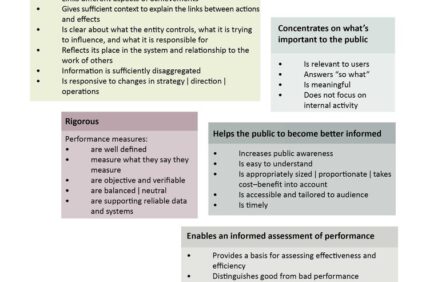
SAI New Zealand Publishes New “Good Practice Guidance on Performance Reporting”

In April 2022, SAI New Zealand published good practice guidance on performance reporting to support public organisations in improving how they report to Parliament and the public on their performance.

Strengthening the Relationship between SAIs and the IMF

As an international lender of last resort, the International Monetary Fund (IMF) has been the largest provider of emergency financing for COVID-19, making available an unprecedented $250 billion to over 85 member countries. These funds, which have largely been used as domestic budget support, have been critical in bolstering governments’ responses to the pandemic. However, the rapid dispersal of these vast sums has increased the risk of…

SAI New Zealand Publishes Report on Sustainable Development Goals

During a nationwide lockdown in August 2021, the New Zealand Office of the Auditor-General, the country’s Supreme Audit Institution (SAI), published its report on The Government’s Preparedness to Implement the Sustainable Development Goals. The SAI’s report presented the results of…

SAI Costa Rica Uses Innovative, Agile Approaches to Oversee Pandemic Response

In 2020, the Office of the Comptroller General of the Republic of Costa Rica, the country’s Supreme Audit Institution (SAI), designed a strategic audit approach to assess Bono Proteger, a government program that provides $100-200 USD cash payments, for up to three months, to…

SAI Philippines Contributes to International Budget Partnership Discussion on Managing COVID-19 Funds

Commission on Audit (COA) Chairperson Michael G. Aguinaldo shared the experiences of the Philippines’ Supreme Audit Institution (SAI) at the International Budget Partnership’s (IBP) online discussion, “Managing COVID Funds: A Global Scorecard of Accountability,” held on May 24, 2021. The discussion centered on…

National Audit Office of China Ensures Implementation of Recommendations, Appoints Special Audit Advisors

On June 7, 2021, Mr. Hou Kai, Auditor General of the National Audit Office of China (CNAO), presented a report to the legislature during the 29th Session of the Standing Committee of the 13th National People’s Congress (NPC). The report outlined the results of…