Tag: innovation

Filter By:
Sort By:

Citizen-Centered Performance Auditing: Lessons from Brazil’s Federal Court of Accounts

Supreme Audit Institutions (SAIs) have increasingly expanded their role beyond legal compliance and administrative regularity to improve public policies and the quality of services delivered to society. Despite this evolution, many audits still focus on bureaucratic processes, governance structures, and institutional indicators, without fully capturing how public-sector shortcomings affect citizens’ daily lives.

30 Years of Performance Audit in the Board of Audit and Inspection of Korea: Development and Achievements

Performance audit aims to secure government accountability by examining the economy, efficiency, and effectiveness of government activities. Although INTOSAI established universal standards for performance audit, the specific manners of how each SAI operates, shows different developmental stages and outcomes of their performance audits are all different depending on their own historical background and political, administrative landscape.

Transformation In Performance Audits: The Comptroller and Auditor General of India’s Technology Driven Audit Innovation

The expanding complexity of digital governance has fundamentally reshaped the audit landscape. Supreme Audit Institutions (SAIs) today confront voluminous financial records, and rapidly evolving programme architectures that strain conventional audit methods. Sample based scrutiny, and conventional data analysis methodologies are increasingly inadequate to detect systemic risks, hidden relationships, and governance failures embedded within interconnected digital systems.

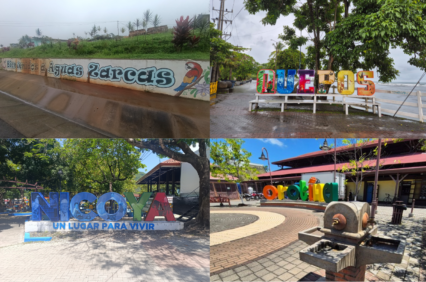
The Center-Periphery Divide: Performance Auditing and Systems Thinking in Costa Rica’s Intermediate Cities

In recent years, intermediate cities have emerged as critical drivers of regional development, yet evaluating their public services poses unique challenges for Supreme Audit Institutions (SAIs). To address this gap, Costa Rica’s SAI developed and implemented an innovative performance audit methodology specifically tailored to these distinct urban centers. This specialized framework advances traditional performance auditing by integrating a pragmatic assessment of public value, equity, and sustainable development within decentralized contexts.

Innovation in Performance Auditing Processes in Light of Modern Technologies

The field of auditing faces challenges in keeping pace with unprecedented changes in perspectives and tools brought about by contemporary technologies resulting from technological advancements and the growing reliance on artificial intelligence tools. The information technology environment is no longer merely an assisting vehicle to improve audit quality; rather, it has become the primary driver for redefining the concept of auditing, as affirmed by INTOSAI in its professional pronouncements, which advocate for the development of audit tools and methods to align professional practice with the digital environment. This has prompted the Accountability State Authority (ASA), as the Organization’s chair, to move swiftly in this direction by putting forward pioneering initiatives, such as the Maat Initiative, which was brought up to the 25th INCOSAI agenda in Sharm El-Sheikh in October 2025. This initiative represents a contemporary vision that reflects the importance of utilizing artificial intelligence in the development of audit work, particularly in terms of performance audits that focus on evaluating the performance of government entities to verify the efficiency of public spending, thereby supporting governance and the protection of public funds.

Innovation in Performance Auditing to Enhance Transparency, Good Governance, and Anti-Corruption at the State Audit Office of Viet Nam

At present, countries around the world are facing significant pressure to strengthen public governance, achieve the United Nations Sustainable Development Goals, and fulfill commitments to preventing and combating corruption, wastefulness, and other negative practices. In this context, Sustainable Development Goal 16 highlights the importance of enhancing transparency, good governance, and combating corruption in all its forms. At the same time, the Abu Dhabi Declaration of the International Organization of Supreme Audit Institutions (INTOSAI) also emphasizes and reinforces the role of Supreme Audit Institutions (SAIs) in preventing and combating corruption more effectively.

Data Science to Measure Out-of-Pocket Costs for Women with Breast Cancer

What do women with breast cancer actually pay for their treatment? Providing a rigorous answer based on available data poses a significant methodological challenge.

Innovative Approaches in Performance Auditing: Comparative Lessons from Supreme Audit Institutions

Performance auditing is undergoing significant transformation within the international public auditing community. Supreme Audit Institutions (SAIs) are increasingly moving beyond traditional economy-efficiency-effectiveness assessments toward more sophisticated evaluation-oriented approaches based on data analytics, impact assessment, risk analysis, and evidence-based policymaking.

Windmill park in espel, netherlands, with a boat among renewable energy turbines
Using AI and Data Analysis in a Performance Audit to Determine Overlap Between Energy Efficiency Policies 

At the beginning of 2026, the Netherlands Court of Audit published a report on the use of taxpayers’ money to fund both voluntary and obligatory energy saving measures. To carry out the audit we relied heavily on AI to analyse the data and map the overlap between incentives and obligatory measures. In this article we explain how we approached the audit topic and the use we made of AI.

Making a Difference Through Data: How Data Analysis Enhances Performance Audits and Evaluations

Data has become a central part for the management of complex public programmes. It helps to highlight trends, better understand impacts and identify the need for policy adjustments. For Supreme Audit Institutions (SAIs), the question is therefore no longer whether data analysis should be used in performance audits and evaluations. Rather, the key issue is how data analysis can be planned, prepared and integrated into audit work in such a way that it is driven by the audit questions and contributes to better insights, more convincing recommendations and, ultimately, greater impact.

Enhancing Public Value Through Thematic Auditing: Institutional Learning from BPK’s Experience

Supreme Audit Institutions (SAIs) play an essential role in strengthening accountability and transparency within democratic governance systems. As public policy challenges become increasingly complex and interconnected, SAIs are expected not only to provide assurance, but also to contribute more directly to governance improvement and sustainable development outcomes. This expectation is reflected in INTOSAI-P 12, which emphasizes that SAIs should create value and deliver tangible benefits to citizens through stronger accountability, transparency, and public sector performance (INTOSAI, 2013). International discussions have also highlighted the growing need for SAIs to address cross-sectoral and long-term governance challenges, including sustainable development and governance resilience (INTOSAI Journal, 2021).

U.S. GAO’s Fraud Estimates: Key Steps Ensure Decision-Makers Fully Accept and Understand Innovative Approaches

Over the past several years, the U.S. Government Accountability Office (GAO) estimated fraud facing the U.S. government using rigorous approaches that helped communicate the extent and impact of fraud in federal programs to Congress, the American public and antifraud professionals.

Beyond the Surface: Using Community Insights, Spatial Data, and Underwater Verification to Strengthen Environmental Audits

Environmental audits, especially in marine protected areas, face challenges in obtaining reliable evidence as environmental conditions often evolve gradually and are not completely reflected in routine monitoring records. Such challenges may necessitate an approach beyond conventional audit methods.

From Mystery to Practice: How the Swedish National Audit Office Approaches AI in Its Performance Auditing

Across Supreme Audit Institutions, conversations about artificial intelligence (AI) often focus on technology. Discussions highlight models, data infrastructure, governance frameworks and future potential. Talk about AI is often shrouded in a certain air of mystery; practical applications tend to be conflated with more visionary ideas such as autonomous agents or even quantum computing. For many auditors, this can make AI seem complex − sometimes even intimidating.

Protected: Preparing for a Digital Audit Workforce: Lessons Learned from Applying Agentic AI at the Swiss Federal Audit Office

There is no excerpt because this is a protected post.

SDG Side Event World Sector Report Image
SAIs Demonstrate Value by Auditing the 2030 Agenda and the Sustainable Development Goals

Supreme Audit Institutions (SAIs) and the International Organization of Supreme Audit Institutions (INTOSAI) have increasingly positioned themselves as key actors in advancing sustainable development. Successive INTOSAI strategic plans (2017–2022 and 2023–2028) identify the contribution of SAIs to the implementation, follow-up, and review of the Sustainable Development Goals (SDGs) as a strategic priority. This longstanding commitment has provided an enabling institutional framework that has stimulated numerous initiatives— often supported by the INTOSAI Development Initiative (IDI) — and yielded a growing set of tools, methodologies, and audit reports across diverse sectors and SDG targets.

25 Years in French Polynesia: A Recognized Presence and Independence

Created in 1990, the Territorial Chamber of Accounts of French Polynesia has been based in Papeete (Tahiti) since 2000. Since then, as a supreme audit institution (SAI), it has carried out its judicial and audit functions. With a total staff of 13, including six magistrates, it contributes to informing citizens and improving local public management.

Digitalising Contract Oversight: Somalia’s Office of the Auditor General Leads the Way

Office of the Auditor General of Somalia (OAGS) has achieved a significant milestone by implementing a digital Contract Management System (CMS), representing a pivotal step toward promoting transparency, accountability, and operational efficiency across public institutions. As part of a broader public financial management reform agenda, the CMS signals Somalia’s commitment to modernising governance structures and aligns with the global drive to digitalise public sector oversight. This experience offers valuable lessons to other members of the International Organization of Supreme Audit Institutions (INTOSAI), particularly those in developing or fragile states where building transparent systems remains a pressing priority.

Innovation in Improvements to Concurrent Control Reports for Government Auditing of Large Public Infrastructure Projects

Some Supreme Audit Institutions (SAIs) have been implementing the Concurrent Control, a process created by the SAI of Peru, as it is a valuable tool for control of large projects. However, it is appropriate to raise innovative proposals aimed at improving the process of concurrent control in order to improve adverse situations identified by government auditors. Based on the lessons learned to date, it is important to improve the levels of effectiveness and efficiency in their interventions, with the goal of replicating their effect on the control by other SAIs that have decided to implement similar controls.

Building a Sustainable Future: The National Audit Office of Tanzania  Audits Infrastructure for Resilience and Innovation 

Assessing infrastructure resilience is key to mitigating risks, enhancing service delivery, and ensuring long-term value for citizens. Rigorous audits allow us to identify areas for improvement, strengthen governance, promote accountability, and optimize resource utilization. Given the pressures of urbanization, climate change, and technological progress, infrastructure planning and management must be forward-thinking, inclusive, and adaptive to evolving challenges.

GCA’s Digital Transformation: Innovative Solutions for Recommendation Implementation and Audit Follow-up

In recent years, the General Court of Audit (GCA), Saudi Arabia’s Supreme Audit Institution (SAI), has undertaken measures to bolster its framework, aiming to elevate its oversight capacity with a focus on objectivity, efficiency, and professionalism. Embracing a proactive stance, the GCA is committed to adapting to the swift evolution in financial auditing and performance oversight. GCA leveraged a modern technologies and methodologies to conduct audits with heightened effectiveness and quality, ensuring alignment with contemporary standards and practices. On the other hand, government agencies and ministries within the Kingdom of Saudi Arabia’s public sector have also undergone significant transformations in recent years. These efforts are aligned with the ambitious goals outlined in Vision 2030 of the Kingdom of Saudi Arabia, which aims to diversify the economy, enhance public sector efficiency, and promote sustainable development. 

Beyond Compliance: Elevating Audit Impact through Behavioral Insights

Through their work, Supreme Audit Institutions (SAIs) are compelled to promote positive changes in people’s lives. To achieve this purpose, auditing stands out as one of the most important tools at SAIs’ disposal to increase the public value generation. By carrying out audits, a SAI can evaluate whether processes are executed in compliance with established norms, identify performance improvements (under the usual principles of effectiveness, efficiency, and economy), or conclude on the financial information of an entity.