Tag: good governance

Filter By:
Sort By:
Financial Audits and Mechanisms for Good Governance of Public Funds

To finance government activities and provisions of public goods and services like healthcare, education, infrastructure, defense, and social welfare programs, public funds are used. These funds are usually managed by government entities and are subject to firm rules and oversight to ensure that they are used in most appropriate manner. Good governance, specifically with respect to public funds, discusses the principles and practices that ensure resources are managed appropriately, clearly, and in the best of public interest. Generally, good governance includes the following key principles: 

Financial Audits and Mechanisms for Good Governance of Public Funds: Promoting Accountability, Transparency, and Citizen Trust through Oversight and Best Practices

Good governance depends on the efficient and transparent management of public funds. Financial audits and oversight mechanisms have become increasingly important as public trust is closely tied to financial accountability. These audits and mechanisms have two main purposes: detecting and preventing corruption and mismanagement, as well as promoting transparency and strengthening institutions to deliver tangible benefits to citizens.

Implementation of Strategic Management Principles in the Public Sector: The Experience of The Chamber Of Accounts Of The Republic Of Azerbaijan

Over the past 20–25 years, strategic management has been widely accepted as one of the methods for modernizing public policy. The Strategic Plan of the Chamber of Accounts for 2021–2025, which outlines the Chamber’s long-term development, reflects its vision, mission, core values, outcomes and outputs, and relevant activities. It was developed based on international expert evaluations and recommendations, progressive practices, the “Strategic Management Handbook for Supreme Audit Institutions,” and the principles of INTOSAI P-12 (The Value and Benefits of SAIs – Making a Difference to the Lives of Citizens). The Strategic Plan serves as a roadmap for the Chamber of Accounts’ operations from 2021 to 2025. It aims to strengthen institutional capacity and enhance the role of high-quality auditing in public financial management and oversight, through greater engagement with the parliament, government, and society.

3D Isometric Flat Illustration of Link Building, Mobile Applications Marketing
Strategic-Based Audit Model: A Vessel in Navigating Dynamic Governmental Landscape

The Audit Board of the Republic of Indonesia (BPK) is constitutionally mandated as an independent body, reflecting the INTOSAI Lima Declaration (1977), which underscores the importance of legal, organizational, and operational independence in ensuring accountability. However, Indonesia’s evolving political and institutional landscape introduces challenges to this mandate. The 2024 presidential transition initiated a new development cycle under Law No. 25/2004, requiring each administration to prepare a National Medium-Term Development Plan (RPJMN) aligned with the Long-Term Development Plan (RPJPN). This process has involved ministerial restructuring, the establishment of new agencies, and the launch of flagship initiatives, such as the free nutritious meal program, all of which reshape governance arrangements and audit priorities.

Strengthening Good Governance Through Financial Audits: The Albanian Experience

Effective financial oversight is foundational to good governance. The Supreme State Audit Institution of Albania (KLSH) plays a vital role in safeguarding public resources, promoting accountability, and reinforcing trust in public institutions. This article shares key findings from the institution’s 2023 audit activities, assesses their impact on public sector governance, and identifies best practices applicable across INTOSAI member SAIs.

The Role of General Court of Audit in Saudi Arabia’s Fiscal Oversight: Financial Audits and Mechanisms for Good Governance of Public Funds

Public sector accounting in the kingdom of Saudi Arabia is undergoing significant transformation, shifting from cash-based to full-accrual accounting. This shift represents a strategic pillar of Vision 2030, which includes large-scale capital projects. In light of this transformation, financial audits must evolve into proactive tools that identify risks, and help redirect public resources toward citizens’ priorities, rather than solely being passive year-end exercises. In response to these changes, Saudi Arabia’s General Court of Audit (GCA) has taken on an increasingly strategic role in strengthening financial oversight and public accountability. 

Benford’s Law as a Tool for Audit Planning and Control: An Analysis of Municipal Expenditures

This study presents a practical application of Benford’s Law to the expenditure data of two Greek municipalities, Messini and Trifylia, aiming to evaluate the extent to which these financial transactions conform to the expected digit distributions as defined by Benford’s Law. The primary goal is to assess the utility of Benford’s Law as a tool in public sector auditing processes and determine whether it can raise red flags to prompt further investigative procedures.

Financial Disclosure Audit: Best Practices and Impact in the Public Sector Segments Reporting

Financial statement disclosure is considered an important aspect of enhancing transparency and accountability, thus combating corruption. Financial audits conducted by Supreme Audit Institutions (SAIs) play an effective role in auditing these disclosures. In this article, we shall be tackling the disclosure audit of segments reports in the public sector, presenting a case study on these disclosures as an important aspect of enhancing transparency and accountability.

Championing Fiscal Accountability: How SAI Philippines Leads Global Public Debt Oversight and Pioneers Citizen Participatory Audits

Strong public financial oversight is indispensable to good governance. Financial audits, public debt audits, and citizen-centered mechanisms play essential roles in ensuring the accountability of public funds and protecting fiscal integrity. The Philippines offers a compelling example of how a Supreme Audit Institution (SAI) can lead globally by pioneering a major audit reform initiative and advancing collaboration to strengthen public debt oversight. Together, the Citizen Participatory Audit (CPA) and its Chairmanship of the INTOSAI Working Group on Public Debt (WGPD), highlight the Philippine Commission on Audit’s (COA) commitment to transparency, accountability, and public sector reform.

Accountability State Authority President and INTOSAI Chair Mohamed El-Faisal Youssef presented the Sharm El-Sheikh Declaration
INTOSAI Approves the Sharm Declaration at INCOSAI XXV

At the XXV International Congress of Supreme Audit Institutions (INCOSAI), deliberations on its two technical themes, INTOSAI formally adopted the Sharm El-Sheikh Declaration. The Declaration embodies the collective commitment of INTOSAI to advancing public sector auditing. It captures the key strategic insights, achievements, and recommendations emerging from the Congress, while articulating a forward-looking vision that strengthens innovation, professionalism, and the global impact of Supreme Audit Institutions (SAIs).

Independence through Governance

Since its adoption in 2007, the Mexico Declaration on SAI Independence has been a landmark in strengthening the independence of Supreme Audit Institutions (SAIs) worldwide. By codifying eight principles, it established a global consensus: independence is essential for credible public audit.

Financial Audits and Mechanisms for Good Governance of Public Funds: Levers in the Accountability Ecosystem for Greater Impact

Like many people, when I travel, I often take a taxi from the airport into the city center where I’m visiting or working. In my experience, taxi rides are a fantastic opportunity to learn about the local culture, find out which sights are worth a visit, or get recommendations about where to eat. What’s more, these drives are a prime opportunity to find out some more nuanced (and personal) information: how people perceive their government. In many instances, issues of corruption, inefficiency, and waste are openly shared by the driver, alongside personal perceptions of particular politicians. It’s a great, albeit anecdotal, way to get a feel for what local people are thinking or feeling. 

Strengthening Public Fund Governance through Financial Audits: Insights from the Albania Supreme Audit Institution’s Practice

Public finances are like the lifeblood of a country – they fund social programs, build infrastructure, and provide essential services that people rely on every day. Keeping public administration efficient and transparent is key to earning people’s trust – it’s about more than just good governance; it’s about showing citizens that their institutions truly work for them. Financial audits are the main instrument used by Albania’s Supreme Audit Institution (ALSAI) to guarantee efficiency, accountability, and transparency in the administration of public funds.

SAI Somalia’s Remarkable Strategic Journey, 2017-2020

In a post-conflict Somalia, strong Auditor General leadership and peer-to-peer cooperation with international partners have been key to improving the performance of the country’s SAI. In the span of about three years, the Office of the Auditor General of the Federal Republic of Somalia (OAGS) has transformed itself into an organization that…

Algerian Court of Accounts Continues Contributions to Good Governance

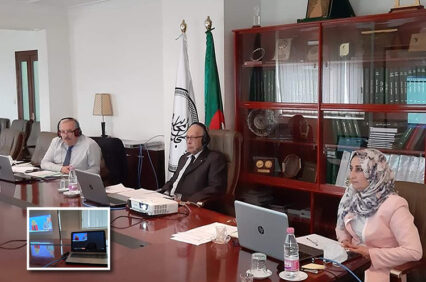
A COA delegation chaired by Mr. Abdelkader Benmarouf, COA President, contributed to numerous high-level events, including the International Organization of Supreme Audit Institutions (INTOSAI) 74th Governing Board meeting and the Arab Organization of Supreme Audit Institutions 61st Executive Council meeting. The COA also contributed to the…

Investing in Social Responsibility to Build Social Capital

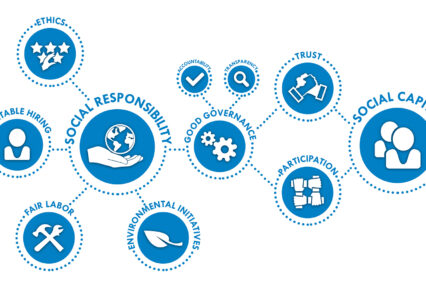
For SAIs, as representatives of citizens in evaluating and monitoring government expenditures, social responsibility is demonstrated through audit work quality and performance in a manner that satisfies public opinion and contributes to government accountability and transparency (the main components of good governance). In this way, SAIs strengthen public confidence, which helps promote social capital…

GAO Center for Audit Excellence Marks Five-Year Anniversary

On September 30, 2020, GAO’s CAE marked its fifth anniversary, having made significant progress in expanding GAO capabilities to build audit capacity and promote good governance around the country and around the world. The CAE, which reports to GAO’s Strategic Planning and External Liaison (SPEL) office, provides…

Addressing the “Cancer of Corruption” with Communication, Collaboration, Capacity Development

Though we have made progress in addressing corruption, given the global climate where uncertainties are inherent in complex systems of governance—shifting demographics, economic changes, new and evolving risks and technological innovation—we still have work to do…

Good Governance: A Look Into The Free-Riding Phenomenon

Some citizens do not contribute to the common public good. This global phenomenon, free-riding, is widespread, often manifesting itself in several forms, such as not voting in elections or evading taxes. States themselves may also be guilty of free-riding (when not paying proportional contributions to help solve international problems yet still reaping the benefits of positive outcomes). Is free-riding really detrimental to anyone…

GAO Center for Audit Excellence Builds Worldwide Capacity, Good Governance

The U.S. Comptroller General (CG), Gene L. Dodaro, had a vision: establish a team dedicated to building capacity and fostering effective accountability on a global scale. The CG’s vision and legislation led to the creation of the Center for Audit Excellence (CAE). The CAE, which was officially launched by the U.S. Government Accountability Office (GAO) in October 2015…

Delegates Attend ACCA Conference in Myanmar

Mr. Maw Than, Union Auditor General from the Supreme Audit Institution (SAI) of Myanmar, alongside…

UKNAO Releases Publication on SAIs, Governance

The United Kingdom National Audit Office (NAO) has released “Governance and Supreme Audit Institutions: Reflections from the UK.” One of the challenges for Supreme Audit Institutions (SAIs) is to “practice what we preach,” and this publication shows…