Supreme Audit Institutions in Small Island Developing States Come Together to Enhance Impact and Strengthen Accountability Ecosystems
This article was originally published on the INTOSAI Development Initiative website on August 12, 2026.
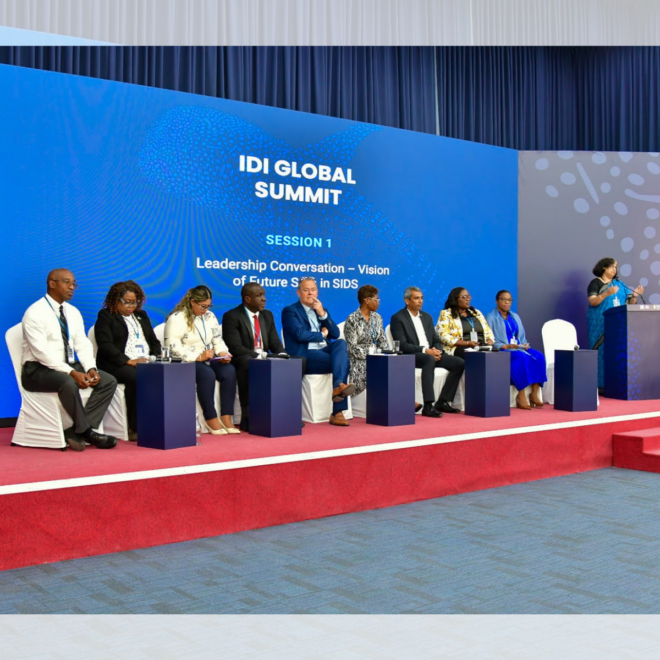
MALDIVES, 11 August 2026 – The INTOSAI Development Initiative (IDI) wraps up the Global Summit 2026: Building Sustainable Ecosystems for Future-Ready Supreme Audit Institutions (SAIs) in Small Island Developing States (SIDS).
Held in the Maldives, the Global Summit brought together Supreme Audit Institutions (SAIs), INTOSAI bodies, development partners, United Nations organisations, and other key stakeholders to reflect on the unique context and challenges facing SIDS. The Summit also provided a space for participants to jointly explore sustainable pathways for collaborating to enhance the capacity, relevance, and impact of SAIs in SIDS.
“Today, resilience can no longer be measured solely by the height of our seawalls or the scale of our infrastructure. True resilience is built upon strong institutions. It is reflected in responsible fiscal management. It is strengthened through transparency. And it is sustained by the confidence that citizens place in their governments. This is why the work of Supreme Audit Institutions has never been more important” – His Excellency Dr Mohamed Muizzu, President of the Republic of Maldives
SIDS face a range of complex and interconnected challenges, including economic uncertainties, vulnerability to climate change and external shocks, limited human and financial resources, and geographic isolation, to name a few. Within these challenging contexts, public institutions often face difficulties in securing and using the resources needed to implement policies effectively and deliver meaningful outcomes for its people.
Such complex and challenging contexts also affect the national accountability ecosystem of SIDS, where SAIs are included. Therefore, such challenges also affect SAIs in playing their role of ensuring transparency and accountability in the public sector.
“Yet these challenges are matched by inspiring examples of innovation, resilience and impact,” said Mr Einar Gørrissen, IDI Director General. “Many SAIs in SIDS have demonstrated that meaningful change is possible through strong leadership, collaboration, and a clear focus on public value.”
SAIs play a critical role within national accountability ecosystems. Through their audit work, they can contribute to stronger transparency and accountability, improved public financial management systems, more effective governance, and the implementation of national development priorities and the Sustainable Development Goal (SDG).
The Summit was hosted by the Auditor General’s Office of the Maldives, from 6—7 August. It was held back-to-back with the SIDS Symposium, “Strengthening the Capacity of SAIs in SIDS to Audit the Implementation of the SDGs,” which took place from 3–5 August, and organised jointly by SAI Maldives and the United Nations Department of Economic and Social Affairs (UNDESA).
The discussions held during the Global Summit identified a set of key messages and concrete next steps to address some of the challenges faced by SAIs in SIDS:
- Strengthening collaboration within the INTOSAI community. Greater collaboration can help address the specific needs and challenges of SAIs in SIDS through a range of support approaches, including cooperative audits tailored to their needs; a network for SAIs in SIDS to exchange experiences and good practices; and stronger advocacy and visibility through platforms such as INCOSAI side events, the IDC platform, and the forthcoming UN/INTOSAI Symposium in 2027.
- Building stronger partnerships beyond the INTOSAI community. Partnerships with external stakeholders can help strengthen the role of SAIs in SIDS within their national accountability ecosystems and mobilise additional support. This could include sustained engagement between SAIs and Public Accounts Committees (PACs), supported by collaboration with the Inter-Parliamentary Union (IPU); engaging development partners working in the context of SIDS; leveraging UNDESA’s convening power in the international community; and raising global awareness of the specific challenges and needs of SAIs in SIDS through publications such as the UN DESA World Public Sector Report (WPSR), policy briefs, and a potential global publication on the independence of SAIs in SIDS.
- Harnessing technology and AI as opportunities for SAIs in SIDS. While technological change and AI present new challenges, they also offer significant opportunities for SAIs. Tools such as A-SEAT can support SAIs in modernising their audit management processes, while collaboration across the INTOSAI community could help develop platforms and approaches for auditing AI and using AI in public auditing. Digitalisation and AI solutions can serve as force multipliers for SAIs in SIDS, and need to be tailored to their specific operating environments, capacities and needs.
- Demonstrating and communicating the value of audit. Strengthening the case for additional resources and support requires SAIs in SIDS to demonstrate the value added by their work. This includes focusing on areas of high relevance to their countries and people, such as sustainable development, technology and AI, public debt; measuring audit impact; and strengthening communication capacities to demonstrate impact and value. SAIs can draw on relevant tools and initiatives as well as support from bodies across the INTOSAI community, including IDI.
- Positioning SAIs in SIDS as regional and national points of reference. SAIs in SIDS have an opportunity to strengthen their position as trusted sources of oversight and accountability within their countries and regions. Peer-to-peer collaboration, knowledge exchange, and pooled or shared resources among SAIs in SIDS could help build institutional capacity, address common challenges, and make more effective use of limited resources.
Photo credit: International Journal of Government Auditing