Financial Audits as Pillars of Democratic Accountability: State Audit Office of North Macedonia’s Journey Toward Transparent Governance
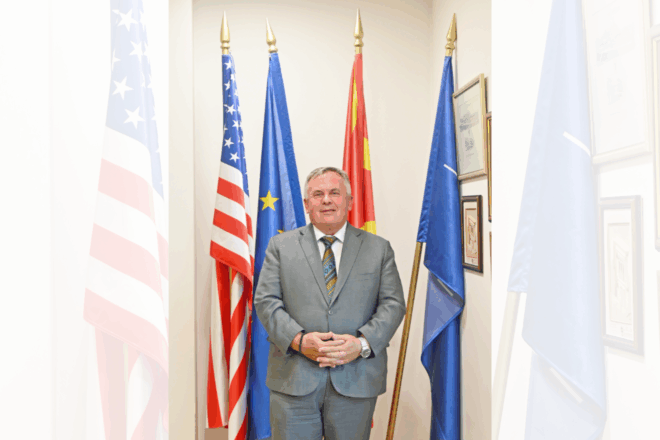
By Maksim Acevski, MSc, Auditor General of the State Audit Office of Republic of North Macedonia
In times of growing demand for public accountability and transparency, supreme audit institutions (SAIs) serve as guardians of good governance. At the State Audit Office (SAO) of the Republic of North Macedonia, we remain persistent in our mission to ensure sound stewardship of public resources through financial, compliance and performance audits grounded in international standards and national priorities.
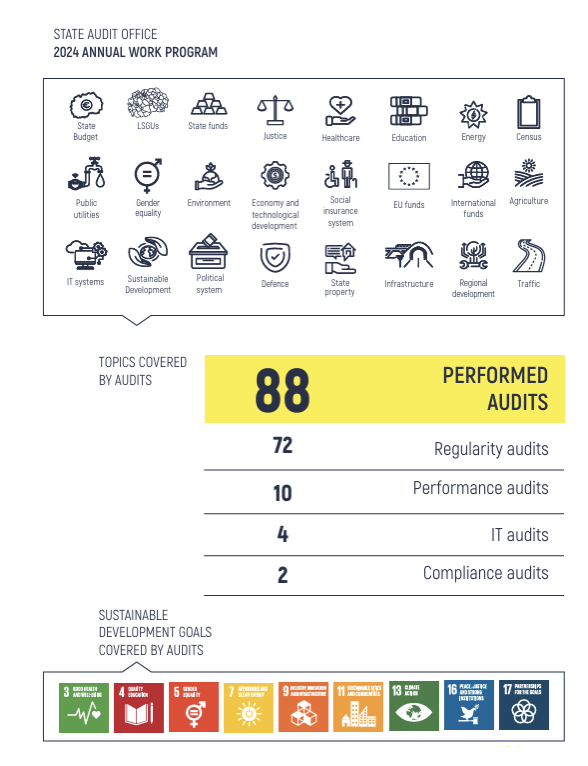
According to the latest Annual Report for 2024, the SAO conducted 88 audits—covering financial statements, compliance, performance, and information technology (IT)—with findings documented in 132 final audit reports. These audits resulted in 882 audit recommendations based on 1,240 findings and issues. While these numbers reflect our operational efficiency, they also underscore our commitment to systemic improvement across the public sector.
Financial Audits Anchored in Strategic Relevance
The SAO’s audit mandate is implemented through a robust Strategic Audit Plan and Development Strategy (2023–2027), aligned with INTOSAI principles and the national Public Finance Management Reform Program “Smart Public Finances.” Our aim is not only to assess financial regularity but to examine value for money in public spending and policy outcomes.
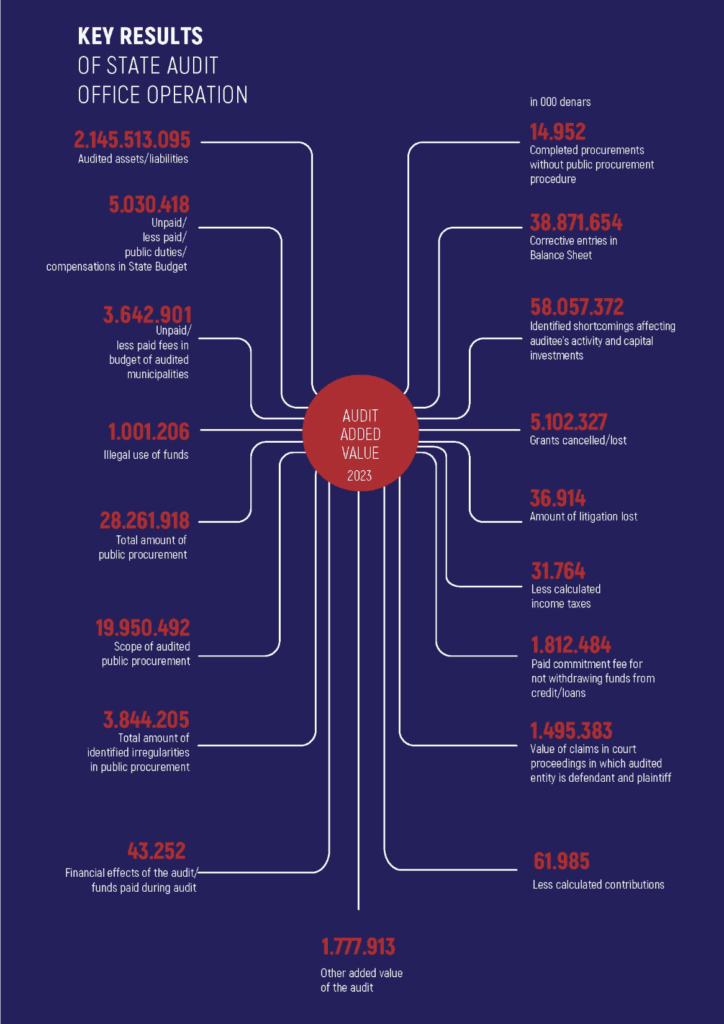
A core tenet of our work is the concept of added value. In 2023, our audits uncovered over 5 billion denars in unpaid or underpaid obligations to the central budget, alongside 3.6 billion denars affecting municipal finances. Moreover, illegal use of funds exceeded 1 billion denars, and identified irregularities in public procurements exceeded 3.8 billion denars, as a result of our findings. These figures not only highlight inefficiencies but also demonstrate the transformative potential of audit interventions when met with institutional responsiveness.
Accountability Through Communication and Stakeholder Engagement
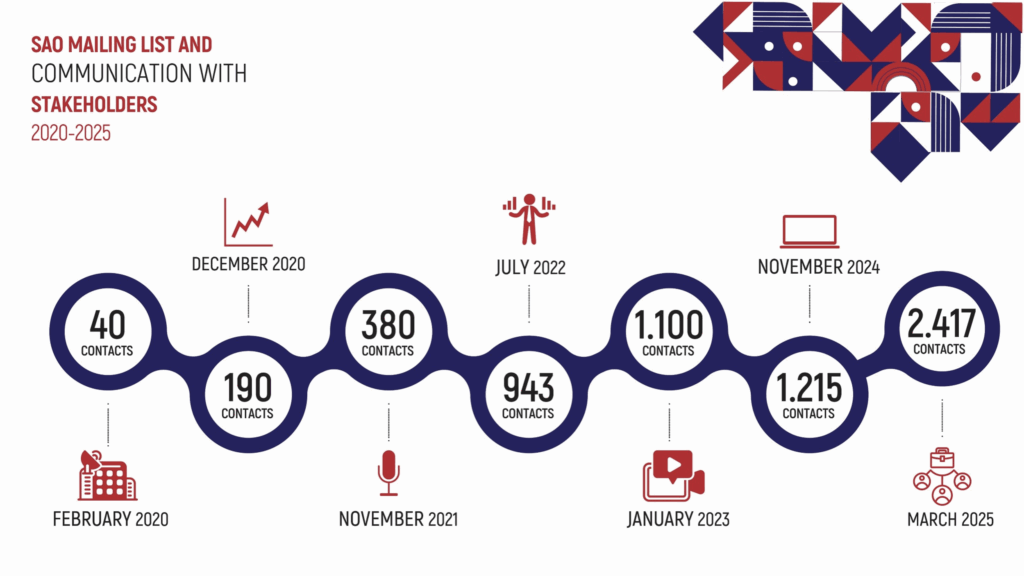
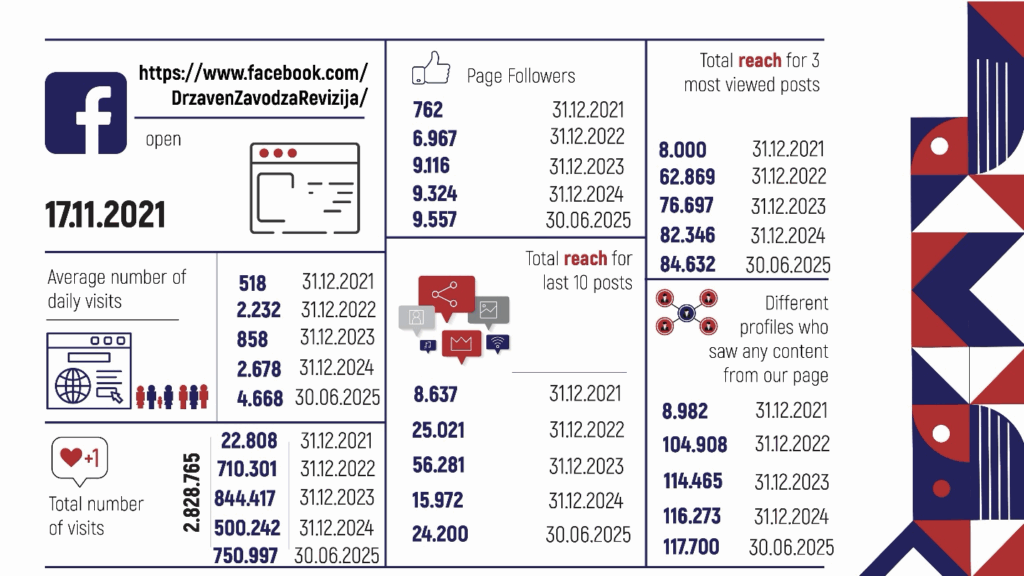
Transparency is a foundational value for SAO North Macedonia. Our updated Communication Strategy (2024–2027) promotes proactive dialogue with stakeholders—ranging from Parliament and the judiciary to civil society and the media. Currently, we reached more than 2,400 stakeholders through briefings, reports and digital platforms. Our social media presence expanded steadily, with our Facebook reach surpassing 2.5 billion visits since its establishment in November 2021 with more than 9,000 regular followers and website traffic exceeding 220,000 visits in the past year.
We actively support public understanding of audit findings through infographics, abstracts, press releases and video materials, ensuring that citizens—not just institutions—are informed participants in the audit ecosystem. According to our satisfaction survey, 93% of stakeholders rated our work as impartial, professional, and transparent.
Cooperation with the Assembly and Justice Institutions
Strong institutional cooperation remains vital. In 2024, we strengthened our engagement with the Assembly of the Republic of North Macedonia through regular reporting and participation in committee sessions. The Finance and Budget Committee expanded its review of individual audit reports, a practice now institutionalized through our Memorandum of Cooperation.
We also advanced our collaboration with the Public Prosecutor’s Office. In 2024, we implemented joint guidelines for reporting audit findings with elements of criminal liability and conducted a series of joint workshops with prosecutors to harmonize audit and investigative processes. This initiative has already improved communication flow and expedited legal responses to critical findings.
International Cooperation and Shared Learning
SAO actively participates in the INTOSAI and EUROSAI communities and has signed 43 memorandums of cooperation with supreme audit institutions and entities from international, professional, educational, and governmental sectors, strengthening partnerships and promoting the exchange of knowledge and best practices.
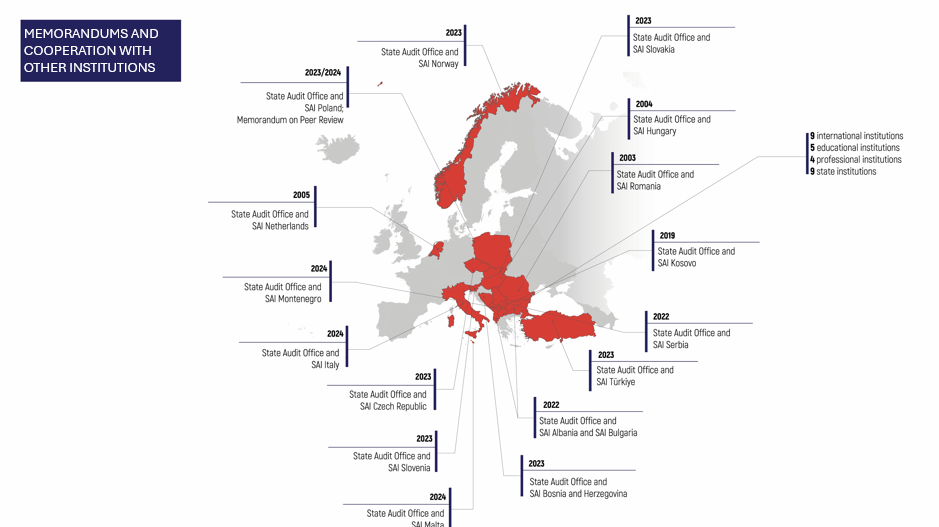
In 2024, we conducted 10 performance audits in cooperation with SAIs and international organisations. These projects covered strategic themes such as gender equality, implementation of the Sustainable Development Goals (SDGs), and digital public services.
Our leadership in coordinating a cooperative audit on SDG 5—Gender Equality—resulted in an official presentation at the 68th Commission on the Status of Women at the UN Headquarters in New York. Through such joint efforts, we not only elevate our own standards but contribute to shared international accountability goals.
Building Capacity and Fostering Integrity
No audit institution can thrive without investing in its people. Our Human Resources Strategy (2024–2027) emphasizes continuous learning, ethical integrity, and digital proficiency, in accordance with the Annual Plan for Continuous Professional Development. In 2023, 101 SAO staff received certification and 17 were certified for trainers in corruption risk management —more than any other institution in the country.
In the 2024 National Integrity System assessment conducted by Transparency International, the SAO was ranked as the top institution with an overall score of 87.6 points, including 92 in the governance category and 87.5 regarding anti-corruption, as for its high level of transparency, accountability, and integrity.
SAO has been ranked as the top institution in the 2024 Integrity System Implementation Monitoring Report, published by the State Commission for the Prevention of Corruption. Among 160 assessed institutions from central and government and the judiciary—the SAO secured first place with a 92.3% implementation rate of the integrity system.
We also maintain ISO 9001 certification and are actively preparing for certification under ISO 37001 (anti-corruption) and ISO/IEC 27001 (information security), reinforcing our commitment to quality and ethics.
Looking Ahead: Independence and Reform
Our priorities for 2025 and beyond include securing full constitutional and operational independence for the SAO. The adoption of a new State Audit Law, aligned with EU standards and INTOSAI principles, remains a legislative priority. Institutional independence is not merely a legal ideal—it is a practical necessity for delivering credible, unimpeded audit oversight.
The evolving landscape of public finance presents both challenges and opportunities for SAIs worldwide. Digital transformation, environmental accountability, and crisis response auditing require new methodologies and competencies. SAO is adapting to these realities through continuous learning and introducing innovations in the audit processes.
As we move forward, we reaffirm our belief that financial audits are more than assessments of compliance—they are instruments for democratic accountability, better policymaking, and restored public trust. By addressing weaknesses, advising on reforms, and fostering institutional learning, SAIs can and must lead the way toward more transparent and resilient governance.
Let us continue to collaborate, innovate, and lead by example—true to the values that unite the global INTOSAI community.