Tag: financial audit

Filter By:
Sort By:
Financial Audits and Mechanisms for Good Governance of Public Funds

To finance government activities and provisions of public goods and services like healthcare, education, infrastructure, defense, and social welfare programs, public funds are used. These funds are usually managed by government entities and are subject to firm rules and oversight to ensure that they are used in most appropriate manner. Good governance, specifically with respect to public funds, discusses the principles and practices that ensure resources are managed appropriately, clearly, and in the best of public interest. Generally, good governance includes the following key principles: 
Strengthening Good Governance Through Financial Audits: The Albanian Experience

Effective financial oversight is foundational to good governance. The Supreme State Audit Institution of Albania (KLSH) plays a vital role in safeguarding public resources, promoting accountability, and reinforcing trust in public institutions. This article shares key findings from the institution’s 2023 audit activities, assesses their impact on public sector governance, and identifies best practices applicable across INTOSAI member SAIs.

The Office of the Auditor General of the Union of Myanmar: Strengthening Financial Audit Mechanisms to Improve Public Financial Management

In the context of Myanmar’s ongoing political, economic, social, and administrative reforms, public expectations are increasing regarding the effective use of citizen-owned resources and the sound public financial management by the government.

The Role of General Court of Audit in Saudi Arabia’s Fiscal Oversight: Financial Audits and Mechanisms for Good Governance of Public Funds

Public sector accounting in the kingdom of Saudi Arabia is undergoing significant transformation, shifting from cash-based to full-accrual accounting. This shift represents a strategic pillar of Vision 2030, which includes large-scale capital projects. In light of this transformation, financial audits must evolve into proactive tools that identify risks, and help redirect public resources toward citizens’ priorities, rather than solely being passive year-end exercises. In response to these changes, Saudi Arabia’s General Court of Audit (GCA) has taken on an increasingly strategic role in strengthening financial oversight and public accountability. 

Benford’s Law as a Tool for Audit Planning and Control: An Analysis of Municipal Expenditures

This study presents a practical application of Benford’s Law to the expenditure data of two Greek municipalities, Messini and Trifylia, aiming to evaluate the extent to which these financial transactions conform to the expected digit distributions as defined by Benford’s Law. The primary goal is to assess the utility of Benford’s Law as a tool in public sector auditing processes and determine whether it can raise red flags to prompt further investigative procedures.

Impact of Government Use of Trusts and Funds on Financial Accountability: The Manitoba Experience

Governments at a global level, can create various financial structures to segregate funds, set aside funds for specific objectives and manage funds on behalf of other parties. These structures can take the form of various types of trusts, funds, and special-purpose accounts.  Although they provide alternative financing mechanisms that are advantageous in certain circumstances, they can also present challenges from an accounting and auditing perspective.

Financial Disclosure Audit: Best Practices and Impact in the Public Sector Segments Reporting

Financial statement disclosure is considered an important aspect of enhancing transparency and accountability, thus combating corruption. Financial audits conducted by Supreme Audit Institutions (SAIs) play an effective role in auditing these disclosures. In this article, we shall be tackling the disclosure audit of segments reports in the public sector, presenting a case study on these disclosures as an important aspect of enhancing transparency and accountability.

Spending Review of Brazil’s National Housing Initiative (PMCMV): Lessons for Ensuring Accountability in the Allocation and Expenditure of Government Funds

While financial audits of public expenditures are a cornerstone of government accountability, a critical dimension of public finance often escapes equivalent scrutiny: revenue losses through tax expenditures. In 2023–2024, Brazil’s Supreme Audit Institution (SAI Brazil), conducted an audit of federal tax benefits which revealed significant governance gaps and risks to fiscal sustainability.

The Use of Drones in Financial Audits by Supreme Audit Institutions: A Case Study in São Paulo Municipality Court of Accounts

In the ever-evolving landscape of financial auditing, the integration of technology has become not just advantageous but essential. This article explores how the use of drones in financial audits, particularly by the São Paulo Municipality Court of Accounts (TCMSP), can enhance accountability and improve the integrity of public resources. The focus will be on the assertion of integrity as cited in International Standards on Auditing (ISA) 315 (Identifying and Assessing the Risks of Material Misstatement), specifically regarding the accounting cycle of real estate assets. The case study illustrates a pragmatic approach to auditing that not only adheres to established norms but also introduces innovative methodologies to address significant issues in public financial management.

Financial Audits and Mechanisms for Good Governance of Public Funds: Levers in the Accountability Ecosystem for Greater Impact

Like many people, when I travel, I often take a taxi from the airport into the city center where I’m visiting or working. In my experience, taxi rides are a fantastic opportunity to learn about the local culture, find out which sights are worth a visit, or get recommendations about where to eat. What’s more, these drives are a prime opportunity to find out some more nuanced (and personal) information: how people perceive their government. In many instances, issues of corruption, inefficiency, and waste are openly shared by the driver, alongside personal perceptions of particular politicians. It’s a great, albeit anecdotal, way to get a feel for what local people are thinking or feeling. 

Best Practices for Conducting Public Financial Audits

Effective public financial audits are vital tools in promoting transparency, accountability, and good governance in the public sector. Supreme Audit Institutions (SAIs) play a key role in evaluating how public funds are managed and ensuring that public officials act in accordance with laws, policies, and ethical standards. This article outlines best practices for conducting public financial audits, grounded in the International Standards of Supreme Audit Institutions (ISSAIs).

Integrated Approach for Impactful Financial Audit: Insights from SAI Indonesia

This paper examines the integration of performance audit perspectives into financial audits on the Audit Board of the Republic of Indonesia’s (BPK) by using the Financial Audit with Performance Audit Perspective (FAPA) framework. This paper demonstrates how FAPA approach, documented through Long-Form Audit Reports, enhances audit impact by evaluating both financial accuracy and operational effectiveness. Despite challenges in methodological alignment, stakeholder management, timing, and coordination, we present a structured workflow model for effective implementation of the FAPA framework. The paper advocates for further integration of sustainability and foresight elements to promote long-term value creation in public financial management, better meeting evolving stakeholder expectations and supporting Sustainable Development Goals.

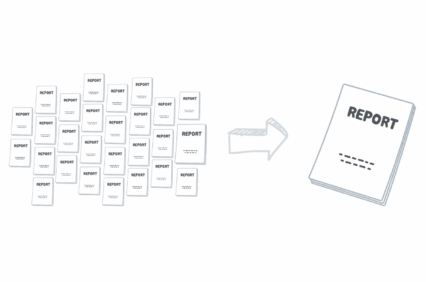
Improving Financial Audit Efficiency: One Report Instead of 27

In response to public demand and global trends, the State Audit Office of Latvia (SAI of Latvia) has initiated the most significant transformation in its audit operations in the past two decades.

Evaluating the Sufficiency and Appropriateness of Evidence in Financial Audits: A Case Study on the Cash and Cash Equivalents Accounting Cycle

Undoubtedly, evidence is the cornerstone that auditors rely on to substantiate their findings during financial audits. A critical question for auditors is whether the quantity and quality of the evidence gathered during testing unequivocally support their conclusions. 

Strengthening Public Fund Governance through Financial Audits: Insights from the Albania Supreme Audit Institution’s Practice

Public finances are like the lifeblood of a country – they fund social programs, build infrastructure, and provide essential services that people rely on every day. Keeping public administration efficient and transparent is key to earning people’s trust – it’s about more than just good governance; it’s about showing citizens that their institutions truly work for them. Financial audits are the main instrument used by Albania’s Supreme Audit Institution (ALSAI) to guarantee efficiency, accountability, and transparency in the administration of public funds.

Financial Audits as Pillars of Democratic Accountability: State Audit Office of North Macedonia’s Journey Toward Transparent Governance

In times of growing demand for public accountability and transparency, supreme audit institutions (SAIs) serve as guardians of good governance. At the State Audit Office (SAO) of the Republic of North Macedonia, we remain persistent in our mission to ensure sound stewardship of public resources through financial, compliance and performance audits grounded in international standards and national priorities.

The Development of Financial Audit Approaches and Impact on Efficiency and Effectiveness 

The financial statement audit, aims to provide confidence in financial statements for users’ decisions. Financial statement auditors give an independent opinion on whether financial statements are presented in accordance with the designated framework and accurately represent an entity’s financial position and activity outcomes. As organizations have developed and grown in size, so has the complexity of their operations, which have greatly influenced financial statement audit approaches. These developments do not erase the previous methods; instead, it builds upon them to make the audit process more efficient and effective.

AFROSAI-E Engages Member Countries and Key Stakeholders at the 2022 Strategic Review & 18th Governing Board Meeting

Over 110 delegates from AFROSAI-E’s 26 member countries, partner institutions, and key stakeholders attended its 2022 Strategic Review and 18th Governing Board meeting.

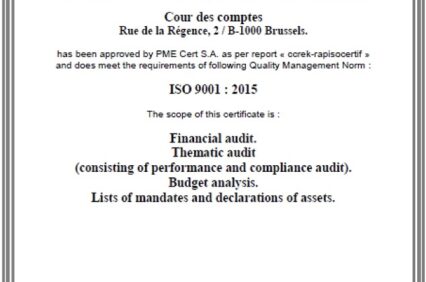
Belgian Court of Audit Receives ISO 9001:2015 certification

The Belgian Court of Audit received its ISO 9001:2015 certification for the processes leading to its core products.