Driving Innovation in Environmental Auditing – SAI Finland Concludes INTOSAI WGEA Chairmanship
Author: Vivi Niemenmaa, Secretary General of the INTOSAI WGEA in 2020-2025 at SAI Finland
SAI Finland handed over the INTOSAI Working Group on Environmental Auditing (WGEA) Chairmanship to SAI Thailand at the XXV INCOSAI. This article highlights our chairmanship period 2020-2025 with a focus on innovation, as well as key takeaways in organising meetings, communicating effectively, and investing in stakeholder relations. It also includes a set of tips that may provide inspiration for other Working Group Chairs.
The vision “For a common sustainable future – Innovative environmental auditing”, guided our work. When we initiated the Secretariat functions at the beginning of 2020, few could have predicted that our first months would unfold against the backdrop of a global pandemic. Yet, it was precisely this unexpected context that pushed us to experiment, adapt, and reimagine how a global working group could flourish.
Bridging Initiatives Through Workplans
INTOSAI WGEA has published more than fifty guidance materials and studies over the years. One of our first actions was to visualise this entire body of work in a WGEA Tree to make it easier to grasp what has been achieved and, when starting a new project, to remember what has been done earlier.
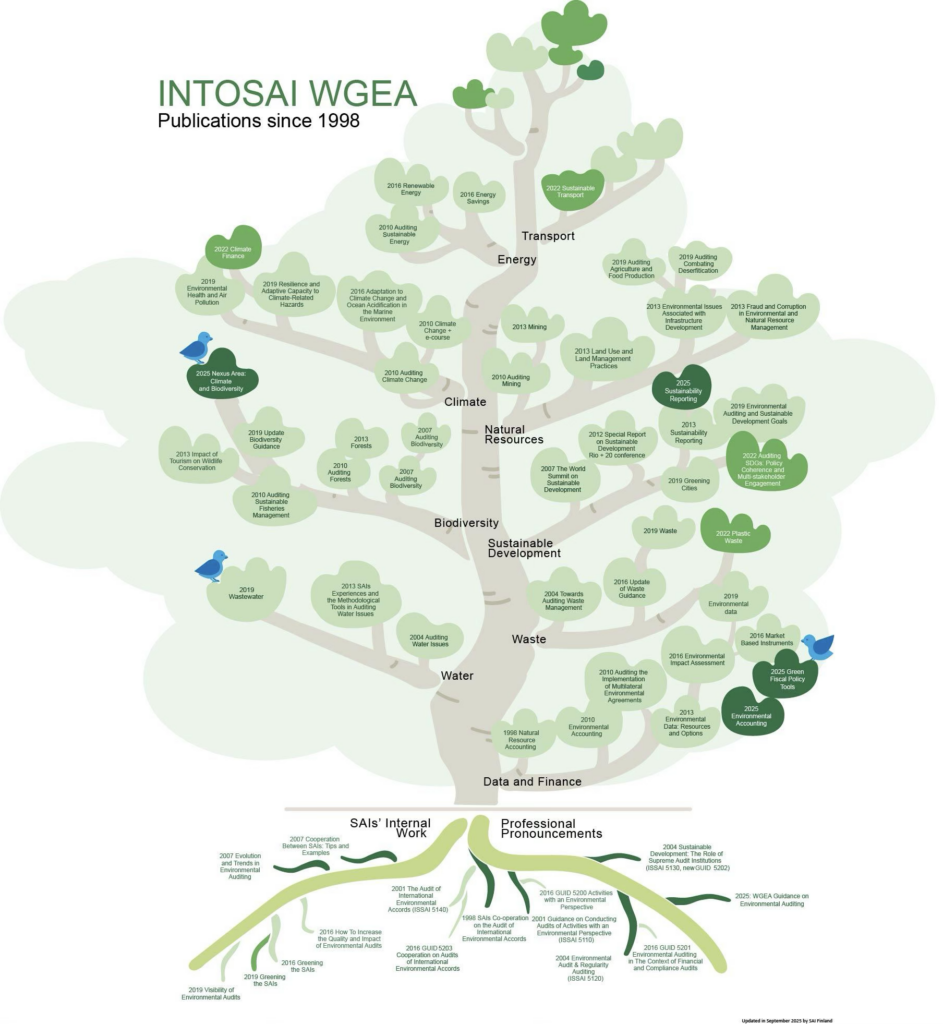
The WGEA projects aiming at supporting auditing are led by Steering Committee SAIs. In 2020-2022 the focus was on plastic waste, climate finance, sustainable transport, as well as policy coherence and multi-stakeholder engagement. During 2023-2025, the projects were organized under two thematic hubs: climate and biodiversity, and green economy. Project leaders included SAIs of Canada, China, India, Indonesia, Thailand, UK, USA, and European Court of Auditors, with other Steering Committee SAIs contributing.
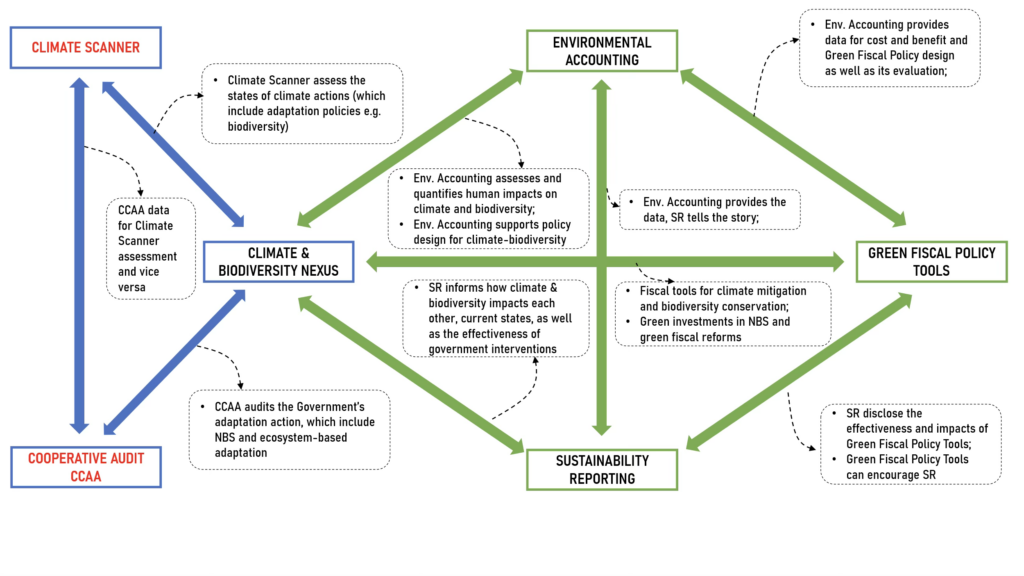
During the last three years, with the hub structure, we sought to build linkages between projects, including two influential global projects: the ClimateScanner led by SAI Brazil and Cooperative Audit on Climate Change Adaptation Actions carried out with the IDI.
The interlinkages and systemic nature of projects are illustrated in a WGEA fish!
Another aligning element was the Sustainable Development Goals (SDGs). We stressed that SDG audits can be conducted in many ways. On the one hand, WGEA has addressed individual environmental SDG targets, such as climate finance under the SDG 13A. On the other hand, we highlighted the interlinkages between goals and targets and emphasized the need for policy coherence, offering practical tools for assessments.
The projects were complemented by training through Massive Open Online Courses (MOOCs) organised by SAI Estonia, as well as both in-person and webinar training hosted by iCED in SAI India. As key resource is also the WGEA audit database. We were pleased to learn that this resource has recently been used not only by auditors but also by researchers.
Strengthening Outreach and Stakeholder Relations
Communication was one of Secretariat’s key considerations throughout six years. We introduced new publication types, including blogs, podcasts, bulletins for global stakeholders, and videos. A training video on environmental auditing — now replaced by the updated Basics of Environmental Auditing — reached a staggering 6,400 views in six years. LinkedIn became our primary social media channel, allowing us to reach auditors and other stakeholders.
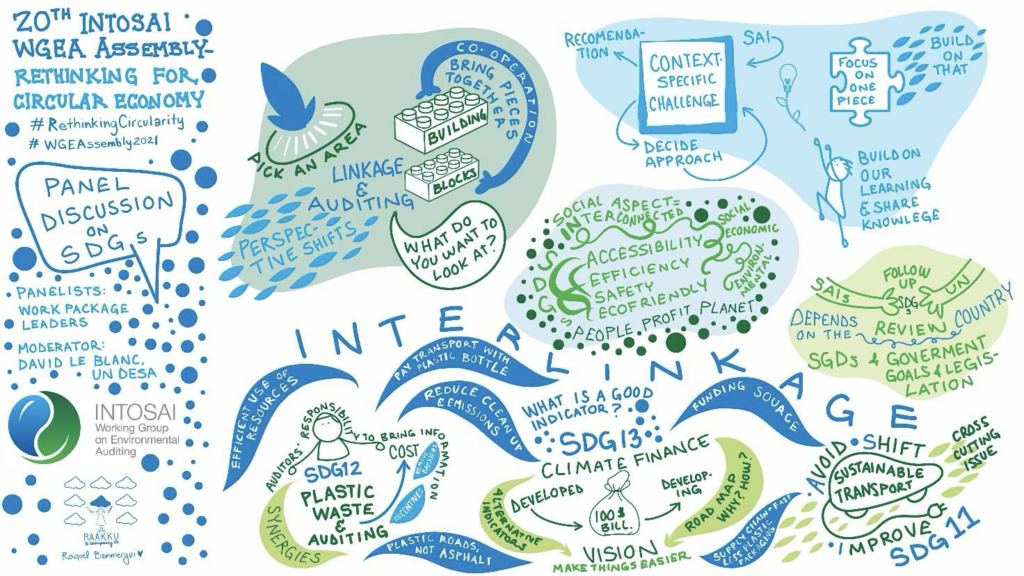
We also developed visualisations, such as the WGEA Tree. In a big online Assembly, we also experimented with visual facilitation, with an artist capturing discussions as they happened. We also produced SDG leaflets to spark brainstorming in workshops.
We approached stakeholder relations from two angles. On the one hand, we wanted auditors to have up-to-date data and information on topical developments. On the other hand, we worked to ensure that SAIs’ messages are heard by international organisations. WGEA, for example, commented on issues related to international climate funding, stressing that the amount of funding alone does not guarantee much when the impact is what matters. Similarly, the summary of the CCAA adaptation audits offer more granular information on adaptation planning and implementation than many global analyses based on quantitative data.
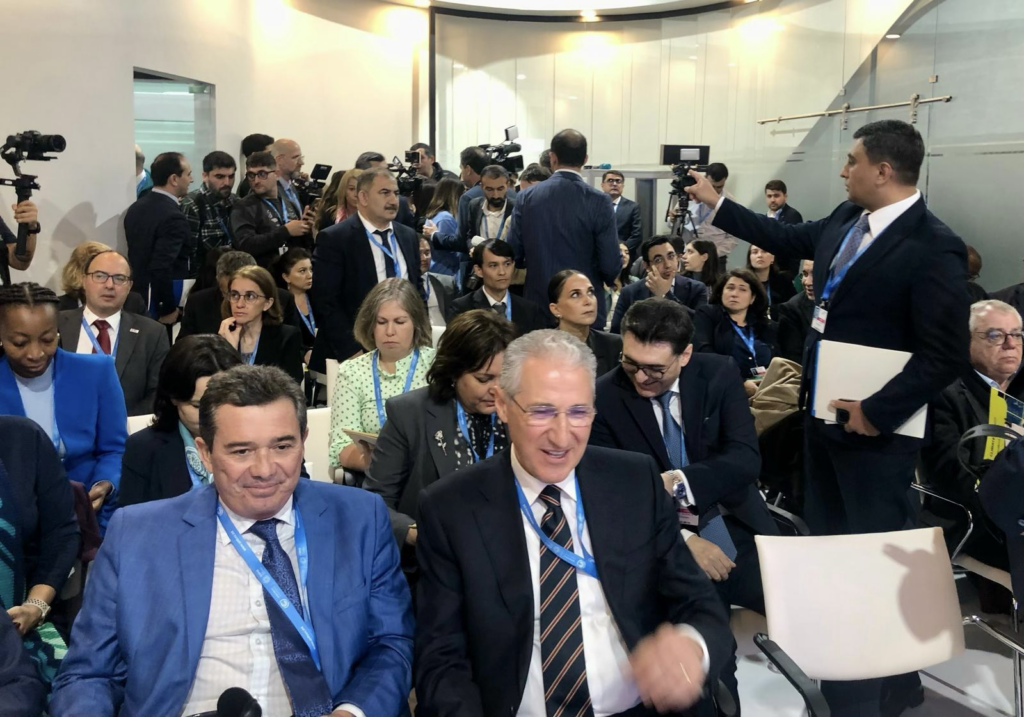
SAIs’ messages must be brought to the places where policies are shaped. The most visible events for WGEA have been climate conferences, where we participated three times with our own side event. Securing access and organising such events requires collaboration with the host country SAI (SAI UAE at COP28, SAI Azerbaijan at COP29, and SAI Brazil at COP30) and national delegations, as well as nerves of steel to handle last-minute arrangements and uncertainties. A highlight was COP29 in Baku and the presence of the COP President at our event.
Meetings must bring value for emissions
The unexpected pandemic had also some positive implications. Online meetings became standard practice, as did webinars. These practices have helped to reduce environmental burden – important factor for an environmental group – as well as the budget burden associated with travel. However, online work also has downsides, not least related to different times zones. It usually was New Zealand that had to compromise their nights’ sleep!
Despite the new virtual realities, we never lost sight of the value of in-person meetings and the sense of place. This helped raise the bar for in-person meetings: we met only when necessary, and we ensured they were well planned. For example, we emphasised connecting meeting locations with locally relevant environmental matters. Meetings do not take place in random locations. Instead, they can offer deeper understanding of regional environmental challenges and help participants better understand global linkages.
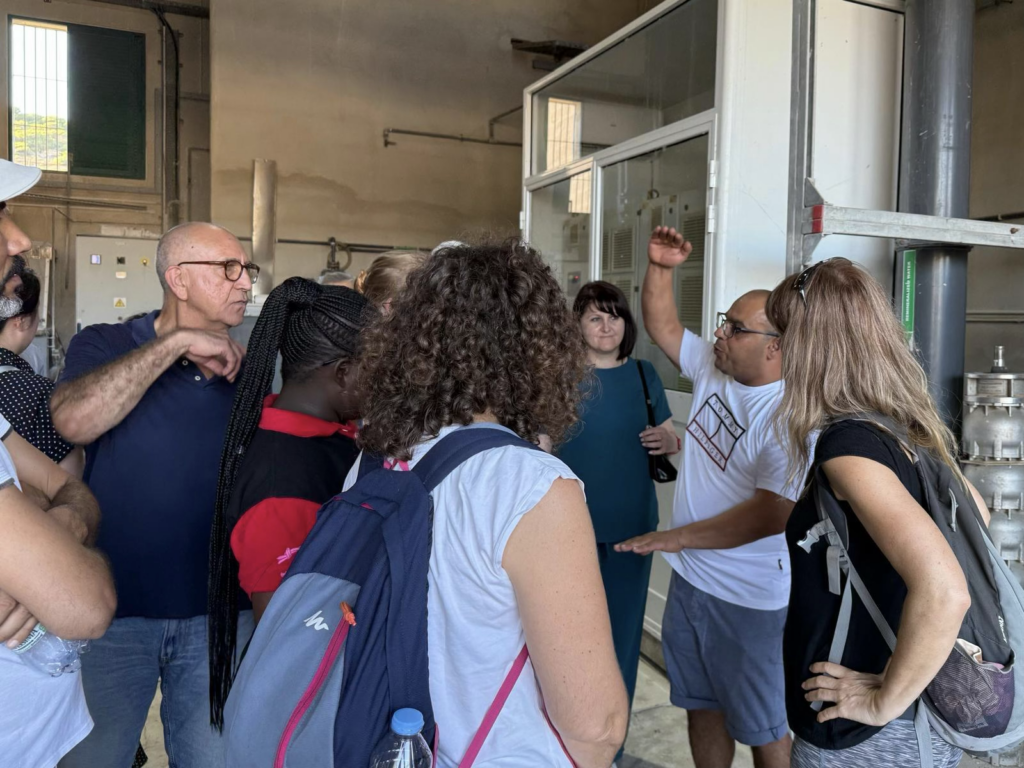
For the 21st Assembly in Ukulhas, Maldives, we travelled through rough seas to discuss climate resilience; during the 22nd Assembly, we experienced freezing Arctic winter weather in Rovaniemi; and at the 23rd Assembly in Malta, we learned about water-related challenges in the Mediterranean region. These meetings included visits to a sandbank, reindeer herders, and a water recycling centre.
Place-based strategies also enabled us to introduce new topics. In Ukulhas, we highlighted the perspective of small island developing states (SIDS), and in Rovaniemi we discussed indigenous knowledge — valuable for understanding rapidly changing environments in the Arctic and beyond. I am very proud that this meeting initiated a global network of auditors examining indigenous affairs in auditing, extending beyond environmental themes.
Celebrating the Success and Turning Challenges into Triumphs
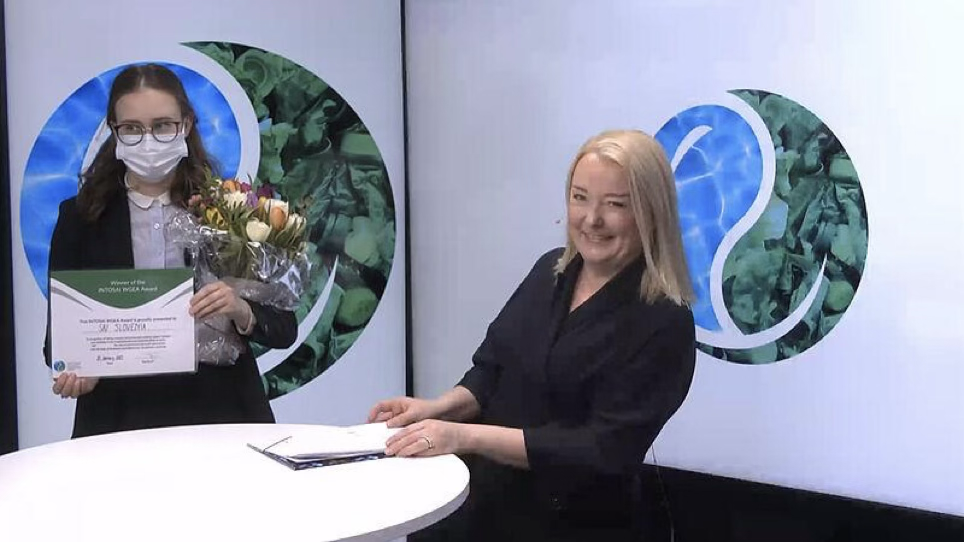
An innovation in celebrating success was the launch of the WGEA Award “Inspiration in Environmental Auditing”. The purpose of the Award is to recognise achievements and encourage auditors to explore new approaches and good practices. It has now been awarded four times at the WGEA Assembly.
A real innovation was the development and piloting of the Audit Clinic, a new and agile support model. It emerged as a response to a failed attempt to establish a heavier peer-to-peer support model. As this approach did not gain traction, we reversed the concept. The Audit Clinic allows a SAI to book a one-hour slot to discuss any environmental auditing topic with more experienced colleagues. The pilot phase received excellent feedback from participants.
Institutionally, we enhanced the WGEA structure by establishing the Vice Chair role and inviting SAI Maldives to serve in this role. The need was practical: sharing the workload and gaining valuable insights from a SAI operating in a different context. It also provides an opportunity for a small SAI to take part in a leadership role that it might not otherwise have the resources to undertake.
Agility Provides Opportunities for a Small SAI
We consider the six-year chairmanship — long established tradition in the WGEA — to be a good timeline. It is long enough for the chair to grow into the role. For example, we first observed the slow progress in updating INTOSAI standards, and in our second three-year mandate, after no progress in the INTOSAI due process for standard setting, we simply renewed outdated WGEA guidance materials through the INTOSAI Quality Assurance Process for Non-IFPP products as a WGEA guidance. This reflects our belief that the most important goal of the INTOSAI Working Groups is to serve auditors.
Each SAI has its own style of management. The Secretariat in Finland strongly believed in informal interaction. In our opinion, very formal settings with strict protocols block discussion and kill innovation.
One advantage of hosting the Secretariat within SAI Finland was the high degree of autonomy and the organisation’s flat hierarchy, which allowed for rapid top-management decisions when needed. As a result, the Secretariat could work in a very independent and agile manner. This is an important lesson: with the right attitude, even a relatively small SAI can effectively lead a global Working Group.
In mid-2025 we did an outreach analysis. Despite having 86 Members, WGEA was able to reach as many as 174 SAIs through various projects and trainings. This has been possible only through collaboration — thanks to the work of previous leaders, the steadfast support of the Steering Committee, and the dedication of our project leaders
It has been an honour to serve the WGEA community — a community deeply committed to advancing environmental auditing. We were extremely pleased to pass the baton to SAI Thailand. With new ideas, WGEA will continue to flourish and drive impactful audits contributing to a more sustainable future.
Vivi Niemenmaa, Secretary General of the INTOSAI WGEA in 2020-2025 at SAI Finland
Tips for the INTOSAI Working Group Chairs:
- Define a clear vision and set priorities – focus on what matters most.
- Give credit where it’s due – those contributing voluntary work deserve acknowledgment.
- Strike a balance between online and in-person meetings– consider costs, sustainability, and the value of face-to-face interaction.
- Secure reliable IT support for online meetings if in-house expertise is limited.
- Handle copyright and personal data with utmost care -comply with laws, security standards, and safety requirements.
- Maps and organizational decisions can carry political sensitivities – use accurate map projections and approach such matters thoughtfully.
- Rotate the Chairmanship regularly – fresh perspectives drive innovation.