Tag: audit innovation

Filter By:
Sort By:
Innovative Approaches in Performance Auditing: Comparative Lessons from Supreme Audit Institutions

Performance auditing is undergoing significant transformation within the international public auditing community. Supreme Audit Institutions (SAIs) are increasingly moving beyond traditional economy-efficiency-effectiveness assessments toward more sophisticated evaluation-oriented approaches based on data analytics, impact assessment, risk analysis, and evidence-based policymaking.


Windmill park in espel, netherlands, with a boat among renewable energy turbines
Using AI and Data Analysis in a Performance Audit to Determine Overlap Between Energy Efficiency Policies 

At the beginning of 2026, the Netherlands Court of Audit published a report on the use of taxpayers’ money to fund both voluntary and obligatory energy saving measures. To carry out the audit we relied heavily on AI to analyse the data and map the overlap between incentives and obligatory measures. In this article we explain how we approached the audit topic and the use we made of AI.

Making a Difference Through Data: How Data Analysis Enhances Performance Audits and Evaluations

Data has become a central part for the management of complex public programmes. It helps to highlight trends, better understand impacts and identify the need for policy adjustments. For Supreme Audit Institutions (SAIs), the question is therefore no longer whether data analysis should be used in performance audits and evaluations. Rather, the key issue is how data analysis can be planned, prepared and integrated into audit work in such a way that it is driven by the audit questions and contributes to better insights, more convincing recommendations and, ultimately, greater impact.

Enhancing Public Value Through Thematic Auditing: Institutional Learning from BPK’s Experience

Supreme Audit Institutions (SAIs) play an essential role in strengthening accountability and transparency within democratic governance systems. As public policy challenges become increasingly complex and interconnected, SAIs are expected not only to provide assurance, but also to contribute more directly to governance improvement and sustainable development outcomes. This expectation is reflected in INTOSAI-P 12, which emphasizes that SAIs should create value and deliver tangible benefits to citizens through stronger accountability, transparency, and public sector performance (INTOSAI, 2013). International discussions have also highlighted the growing need for SAIs to address cross-sectoral and long-term governance challenges, including sustainable development and governance resilience (INTOSAI Journal, 2021).

U.S. GAO’s Fraud Estimates: Key Steps Ensure Decision-Makers Fully Accept and Understand Innovative Approaches

Over the past several years, the U.S. Government Accountability Office (GAO) estimated fraud facing the U.S. government using rigorous approaches that helped communicate the extent and impact of fraud in federal programs to Congress, the American public and antifraud professionals.

Beyond the Surface: Using Community Insights, Spatial Data, and Underwater Verification to Strengthen Environmental Audits

Environmental audits, especially in marine protected areas, face challenges in obtaining reliable evidence as environmental conditions often evolve gradually and are not completely reflected in routine monitoring records. Such challenges may necessitate an approach beyond conventional audit methods.

From Mystery to Practice: How the Swedish National Audit Office Approaches AI in Its Performance Auditing

Across Supreme Audit Institutions, conversations about artificial intelligence (AI) often focus on technology. Discussions highlight models, data infrastructure, governance frameworks and future potential. Talk about AI is often shrouded in a certain air of mystery; practical applications tend to be conflated with more visionary ideas such as autonomous agents or even quantum computing. For many auditors, this can make AI seem complex − sometimes even intimidating.

Protected: Preparing for a Digital Audit Workforce: Lessons Learned from Applying Agentic AI at the Swiss Federal Audit Office

There is no excerpt because this is a protected post.

Benford’s Law as a Tool for Audit Planning and Control: An Analysis of Municipal Expenditures

This study presents a practical application of Benford’s Law to the expenditure data of two Greek municipalities, Messini and Trifylia, aiming to evaluate the extent to which these financial transactions conform to the expected digit distributions as defined by Benford’s Law. The primary goal is to assess the utility of Benford’s Law as a tool in public sector auditing processes and determine whether it can raise red flags to prompt further investigative procedures.

Bringing Audits to the People: Making Audit Reports More Engaging and Relevant

Audit institutions serve as guardians of transparency and accountability in various societies around the world. Yet for too long, their work has remained cloaked in dense language, legal references, and technical jargon that are largely inaccessible to the general public. While audit reports contain findings that can impact every citizen—from public transportation delays to failures in health systems—most people never read them. In an age where information is expected to be instantaneous, visual, and emotionally resonant, audit institutions around the world must reimagine how they present their work.

Beyond Promises and Plans: Making Climate Adaptation Deliver

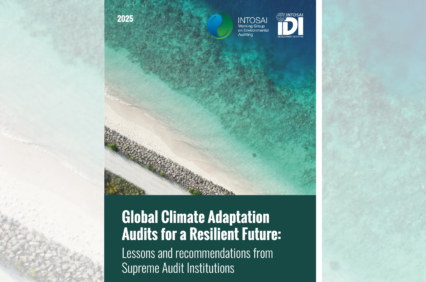
Due to climate change, communities across the world are losing their homes to floods, crops to drought, and coastlines to rising seas. The financial risks related to lacking or poor adaptation are also growing. Governments have been responding with their plans and promises—but adaptation on the ground remains fragile. The recent Global Cooperative Audit of Climate Change Adaptation Actions (CCAA) from 54 SAIs revealed why adaptation is failing—and what Supreme Audit Institutions (SAIs) can do to change that trajectory.

SDG Side Event World Sector Report Image
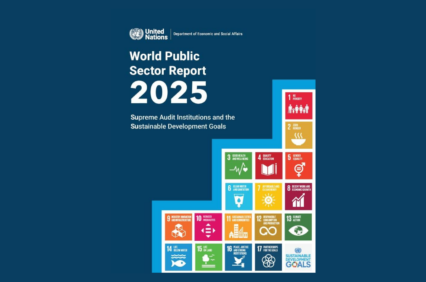
SAIs Demonstrate Value by Auditing the 2030 Agenda and the Sustainable Development Goals

Supreme Audit Institutions (SAIs) and the International Organization of Supreme Audit Institutions (INTOSAI) have increasingly positioned themselves as key actors in advancing sustainable development. Successive INTOSAI strategic plans (2017–2022 and 2023–2028) identify the contribution of SAIs to the implementation, follow-up, and review of the Sustainable Development Goals (SDGs) as a strategic priority. This longstanding commitment has provided an enabling institutional framework that has stimulated numerous initiatives— often supported by the INTOSAI Development Initiative (IDI) — and yielded a growing set of tools, methodologies, and audit reports across diverse sectors and SDG targets.

25 Years in French Polynesia: A Recognized Presence and Independence

Created in 1990, the Territorial Chamber of Accounts of French Polynesia has been based in Papeete (Tahiti) since 2000. Since then, as a supreme audit institution (SAI), it has carried out its judicial and audit functions. With a total staff of 13, including six magistrates, it contributes to informing citizens and improving local public management.

Digitalising Contract Oversight: Somalia’s Office of the Auditor General Leads the Way

Office of the Auditor General of Somalia (OAGS) has achieved a significant milestone by implementing a digital Contract Management System (CMS), representing a pivotal step toward promoting transparency, accountability, and operational efficiency across public institutions. As part of a broader public financial management reform agenda, the CMS signals Somalia’s commitment to modernising governance structures and aligns with the global drive to digitalise public sector oversight. This experience offers valuable lessons to other members of the International Organization of Supreme Audit Institutions (INTOSAI), particularly those in developing or fragile states where building transparent systems remains a pressing priority.

Innovation in Improvements to Concurrent Control Reports for Government Auditing of Large Public Infrastructure Projects

Some Supreme Audit Institutions (SAIs) have been implementing the Concurrent Control, a process created by the SAI of Peru, as it is a valuable tool for control of large projects. However, it is appropriate to raise innovative proposals aimed at improving the process of concurrent control in order to improve adverse situations identified by government auditors. Based on the lessons learned to date, it is important to improve the levels of effectiveness and efficiency in their interventions, with the goal of replicating their effect on the control by other SAIs that have decided to implement similar controls.

Building a Sustainable Future: The National Audit Office of Tanzania  Audits Infrastructure for Resilience and Innovation 

Assessing infrastructure resilience is key to mitigating risks, enhancing service delivery, and ensuring long-term value for citizens. Rigorous audits allow us to identify areas for improvement, strengthen governance, promote accountability, and optimize resource utilization. Given the pressures of urbanization, climate change, and technological progress, infrastructure planning and management must be forward-thinking, inclusive, and adaptive to evolving challenges.

GCA’s Digital Transformation: Innovative Solutions for Recommendation Implementation and Audit Follow-up

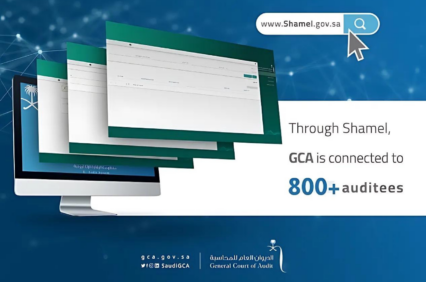
In recent years, the General Court of Audit (GCA), Saudi Arabia’s Supreme Audit Institution (SAI), has undertaken measures to bolster its framework, aiming to elevate its oversight capacity with a focus on objectivity, efficiency, and professionalism. Embracing a proactive stance, the GCA is committed to adapting to the swift evolution in financial auditing and performance oversight. GCA leveraged a modern technologies and methodologies to conduct audits with heightened effectiveness and quality, ensuring alignment with contemporary standards and practices. On the other hand, government agencies and ministries within the Kingdom of Saudi Arabia’s public sector have also undergone significant transformations in recent years. These efforts are aligned with the ambitious goals outlined in Vision 2030 of the Kingdom of Saudi Arabia, which aims to diversify the economy, enhance public sector efficiency, and promote sustainable development. 

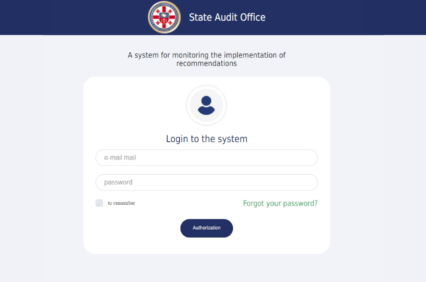
State Audit Office of Georgia’s real time experience in recommendation follow-up with innovative ARIS platform

The State Audit Office of Georgia (SAO) has emerged as an inspiration for innovation and accountability for advancing effective public financial management. To fulfill its mandate of identifying and addressing systemic deficiencies in public administration, the SAO has embraced innovative technology, launching a transformative initiative of Audit Recommendation Implementation System (ARIS). This article explores the impact of the ARIS, the groundbreaking platform that has significantly changed the follow-up process of audit recommendations in Georgia.

Beyond Compliance: Elevating Audit Impact through Behavioral Insights

Through their work, Supreme Audit Institutions (SAIs) are compelled to promote positive changes in people’s lives. To achieve this purpose, auditing stands out as one of the most important tools at SAIs’ disposal to increase the public value generation. By carrying out audits, a SAI can evaluate whether processes are executed in compliance with established norms, identify performance improvements (under the usual principles of effectiveness, efficiency, and economy), or conclude on the financial information of an entity.

The Uzbekistan Chamber Accounts Launches a “State Audit” E-Platform

The Uzbekistan Chamber of Accounts launched a special e-platform, named “State Audit”, which allows the Chamber of Accounts to track control activities of public funds through a centralized system.

SAI Egypt Participates in Various INTOSAI Events

From June through August 2021, the Accountability State Authority (ASA) of Egypt, the country’s Supreme Audit Institution (SAI), participated virtually in…

SAI Philippines Wins First Place in Hackathon BPK Competition

The Commission on Audit (COA), the Supreme Audit Institution (SAI) of the Philippines, won first place at the professional level in the Hackathon BPK Competition—whose theme was…