The Office of the Auditor General of the Union of Myanmar: Strengthening Financial Audit Mechanisms to Improve Public Financial Management
Author: Office of the Auditor General of the Union of Myanmar
Introduction
In the context of Myanmar’s ongoing political, economic, social, and administrative reforms, public expectations are increasing regarding the effective use of citizen-owned resources and the sound public financial management by the government.
Government departments and organizations are actively carrying out their responsibilities to support national development and fulfill the expectations of citizens. In alignment with this, the Office of the Auditor General of the Union (OAG) envisions itself as an institution that safeguards and promotes public interests, placing national priorities and citizens’ well-being at the core of its mission. As the Supreme Audit Institution (SAI), it plays a vital role in overseeing the implementation of government programs and activities to ensure they obtain effective results as intended and contribute to the improvement of public financial management. The OAG is committed to conducting audits with professionalism and efficiency, with a strong emphasis on serving the public interest.
OAG’s Audit Responsibilities
Public financial management systems of government departments and organizations in the public sector, along with the actions of civil servants, must uphold the principles of accountability and transparency. Transparency means that the public is informed about how public funds are used and how organizations perform. Accountability means that those responsible for managing public resources are answerable for their actions and must take corrective measures when necessary. These principles are essential for the effective and responsible management of public finances.
The OAG, together with the regional audit offices, is responsible for reporting on the extent to which responsible individuals and organizations have effectively utilized public resources entrusted to state-owned entities. Thus, the OAG provides external oversight that is essential for strengthening the public financial management system. In each ministry and organization, financial statements are prepared by respective accountants and issued with the approval of management. Auditors are responsible for examining the accuracy and completeness of these financial statements and related budget information by reviewing relevant supporting documents. They must then express an audit opinion on whether the financial statements are presented fairly, in all material respects, in accordance with the applicable financial reporting framework.
Legal Framework to Audit
To support the effective execution of auditors’ responsibilities, the Auditor General of the Union Law was enacted in 2010 and subsequently amended in 2013, 2014, and 2018. These amendments were introduced to address emerging needs and challenges, with the aim of enhancing the timely detection and monitoring of waste, leakage, damage, loss, and misuse of public funds; promoting public cooperation in audit processes; safeguarding the public interest; strengthening the effectiveness of audit activities; and ensuring alignment with the International Standards of Supreme Audit Institutions (ISSAIs) and international best practices.
The OAG conducts its audit in accordance with the Auditor General of the Union Law. As stipulated in Section 11 of the Law, the primary responsibility of the Union Auditor General is to audit the accounts of the receipts and payments of the Nation. Section 11 outlines a total of 27 specific duties. To effectively implement these responsibilities, the OAG has established a clear vision, defined tasks, and formulated relevant policies and strategies. The OAG carries out its audit processes with competence and efficiency, in alignment with the public’s expectations for good governance and clean government.
Reforming the OAG Office
As part of its reform efforts, the OAG has implemented several key initiatives. These include amending the Auditor General of the Union Law to strengthen the legal framework; delegating expanded responsibilities to Region and State Auditors General and Audit Officers to enhance decentralized oversight; formulating Strategic Plans for 2018-2022 and 2023-2027; engaging in efforts to adopt International Standards on Accounting and Auditing; and participating in Public Financial Management reform initiatives.
As of 2025, the OAG has established 410 audit offices across the country, including Region and State Auditor General Offices, as well as the Nay Pyi Taw Audit Office. The OAG is responsible for auditing 16,304 entities nationwide and is supported by a workforce of 3,651 audit staff and 851 non-audit staff, totaling 4,502 personnel.
OAG Financial Audits and Budgetary Oversight
According to the provisions of the Union Budget Law, the OAG shall audit the accounts of the receipt and payment of the Union; whether measures have been taken to obtain fully the receipts contained in the Budget Estimates; whether the sanctioned money contained in the Budget Estimates are utilized effectively, and shall submit the report at least once a year and on the unusual situation from time to time to the highest Authority of the State.
In accordance with the Auditor General of the Union Law, the OAG and various levels of audit offices examine whether the revenues collected from citizens, other sources of income, and foreign grants or loans during the fiscal year are utilized in the most cost-effective, efficient, and impactful manner for the benefit of the nation. They also assess and report the extent to which these funds contribute to the public and national interest. During the audits, the Union Budget Law, Region or State Budget Law, National Plan Law, Regional Plan Law, Union Taxation Law, Public Debt Management Law, and relevant financial rules, regulations, notifications and directives pertaining to the budget are used as audit criteria for evaluation and assessment.
In reporting audit findings that are inconsistent with established criteria, the Union Budget is assessed to determine whether it is being used transparently and effectively by Union-level organizations, and the findings are submitted annually to the highest Authority of the State. Similarly, the Region/State Budget is evaluated to determine its transparent and effective use by Region/State-level organizations, with the findings submitted to the respective Region/State Governments.
Beyond Financial Audits
The OAG previously conducted financial, compliance, and performance audits to assess the effectiveness, efficiency, and economy of government operations. At present, its audit scope has been expanded to include real-time audits, which enable more timely detection of irregularities during ongoing processes, and information technology (IT) audits, which evaluate the reliability, security, and effectiveness of government information systems.
Beyond its audit work, OAG provides a unique service by providing comments and recommendations on accounting and financial matters, financial regulations and procedures, and the procurement process to government entities, with the aim of strengthening public financial management. This proactive advice, offered upon request, helps entities avoid issues, mitigate risks, improve outcomes, and seize opportunities when developing new policies, procedures, projects, or other initiatives. Additionally, it ensures alignment with established policies, procedures, and regulations.
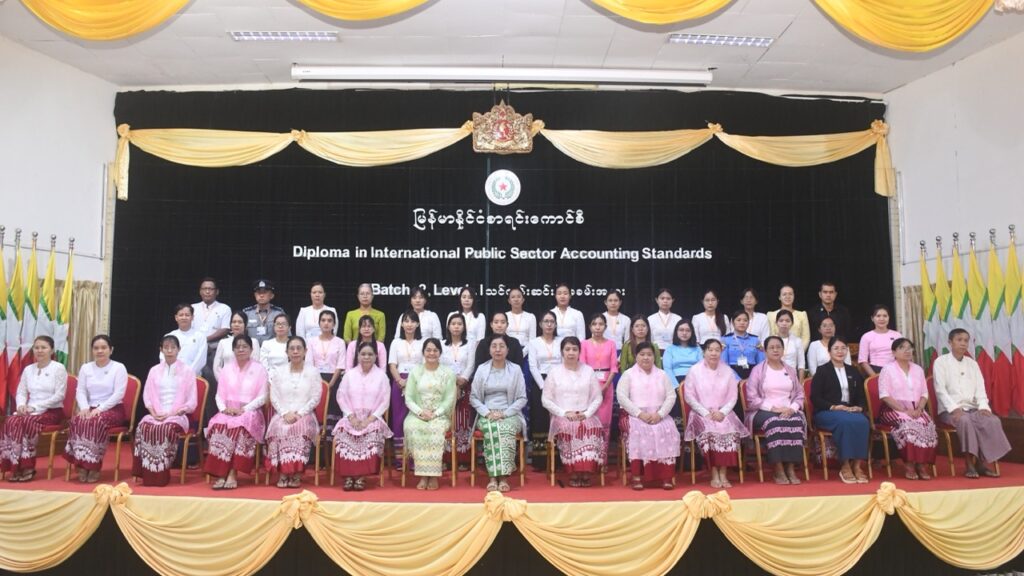
In addition, the Institute of Advanced Accounting and Auditing, under the Office of the Auditor General (OAG), offers accounting training courses, including programs on the Diploma in International Public Sector Accounting Standards (IPSAS) and the Diploma in International Financial Reporting Standards (IFRS). Region and State Auditor General Offices also conduct basic accounting training. These training initiatives aim to develop professional accountants who uphold ethical standards and promote greater transparency in financial reporting within government organizations. Moreover, staff from the OAG have been trained in ISSAI-based financial audits to enable them to perform audits and report in accordance with international standards. As a result, ISSAI-based financial audits were implemented in 100% of audit offices since the 2022–2023 financial year, following the development of a nationwide roll-out plan and the practical execution of audits. The OAG also contributes to capacity building by developing the accounting and auditing syllabus for the Public Financial Management Academy under the Ministry of Planning and Finance and by assigning lecturers to deliver these subjects.
Conclusion
Conducting financial audits helps ensure that public funds are utilized transparently, thereby supporting the prevention of corruption, minimizing losses and waste, and reinforcing public trust. Consequently, Myanmar is promoting transparent financial practices to advance sustainable development, while ongoing improvements in governance continue to strengthen public financial management.