INTOSAI Donor Cooperation – the Journey and Possible Way Forward
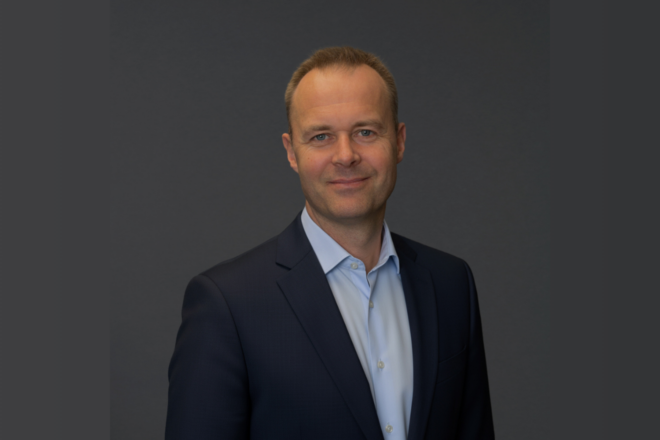
Author: Ola Hoem, Deputy Director General, SAI Governance, INTOSAI Development Initiative
As the INTOSAI Development Initiative (IDI) marks its 40th anniversary, it is timely to reflect on an important milestone: the establishment of the INTOSAI-Donor Cooperation (IDC) in 2009. Over the years, the IDC has become an important platform for helping the INTOSAI community, including IDI, engage more effectively with development partners. With the INTOSAI-Donor Cooperation Strategy 2020–2030 now entering its final phase, and with official development assistance undergoing major shifts, this is also an opportune moment to consider how the Cooperation can be repositioned to maximise its future value.
The History
The INTOSAI-Donor Cooperation (IDC) was established to address a long-standing global challenge: many Supreme Audit Institutions (SAIs), particularly in developing countries, lacked the capacity, independence, and resources needed to oversee public finances effectively. Although donors had supported SAIs for decades, this support was often fragmented, duplicative, or insufficiently aligned with country needs. In response, INTOSAI and major development partners came together in 2009 to create a more coordinated and strategic approach to strengthening SAIs worldwide.
A key milestone came on 20 October 2009, when INTOSAI and fifteen donor organisations signed a Memorandum of Understanding (MoU). This agreement established the INTOSAI-Donor Cooperation and committed to shared priorities for both communities:
- A shared strategic framework for SAI capacity development
- Better coordination of donor support
- Increased and more predictable funding
- Stronger alignment with international aid effectiveness principles
- A sustained focus on SAI independence and long-term institutional strengthening
The MoU attracted additional signatories. Over time, the donor group expanded to twenty-three organisations, including multilateral development banks, United Nations agencies, and bilateral development partners. The Cooperation became the first global platform dedicated specifically to aligning and scaling up support for SAIs.
Building the Cooperation’s Foundations (2009-2018)
The IDC’s early years focused on establishing the structures, governance arrangements, and practical tools needed to turn the Memorandum of Understanding into an effective platform for action.
INTOSAI and the donor community created and co-chaired a Steering Committee to guide the Cooperation. It set priorities, monitored progress, and helped ensure that both communities remained committed to the principles of the MoU.
Key Achievements
In its early years, the INTOSAI-Donor Cooperation built a stronger evidence base for support to SAIs. One of the Cooperation’s first milestones was to undertake the Global Stocktaking which showed that many SAIs faced medium- to high-capacity development needs, while follow-up surveys indicated progress in financial, compliance, and performance auditing. This helped the Cooperation identify priorities and shape more targeted support.
During this period, the Cooperation introduced important tools and support mechanisms, including the SAI Performance Measurement Framework (SAI PMF) and the SAI Capacity Development Fund. Meanwhile, an independent external evaluation found evidence of positive behavioural change among both donors and SAIs and offered recommendations to strengthen impact. The Secretariat’s work was supported by financial contributions from Austria, Australia, Ireland, France, Norway, Switzerland, and the United Kingdom, alongside in-kind support from SAI Brazil, SAI Norway, and others.
As the Cooperation matured, it also introduced new mechanisms to better connect SAI needs with donor resources. One of its flagship initiatives was the Global Call for Proposals, launched in 2015. This mechanism enabled SAIs—especially those with limited access to donor support—to submit proposals for capacity development, which donors could then consider for funding or technical assistance.
By 2018, the Global Call for Proposals had received more than 100 submissions, with around half successfully matched to support providers. To help SAIs define their needs more clearly and engage more effectively with donors, the IDC later introduced a two-tier support model.
The Current Phase (2018-2026)
Through its support mechanisms and related initiatives, the Cooperation helped mobilise significant resources. In 2018 alone, it facilitated USD 83 million in committed support across global, regional, and national levels.
In 2018, the Steering Committee requested that IDI integrate the Cooperation’s functions into its regular operations. As a result, the Cooperation would no longer operate as a separate ring-fenced entity hosted by IDI. IDI agreed to this arrangement and has since continued with the Cooperation’s functions.
This period also coincided with the adoption of the 2020-2030 Strategy, approved by the IDC Steering Committee at its 12th meeting in Tokyo, Japan, in July 2019. The Strategy was built around four strategic goals:
- Independent, professional, capable, transparent, and well-governed SAIs
- Enhanced partnerships and scaled-up support to SAIs
- SAI-led capacity development
- Agenda 2030 and the achievement of the Sustainable Development Goals
During this phase, the Cooperation met important milestones, including:
- Strengthened engagement on SAI independence, including the development of the SAI Independence Rapid Advocacy Mechanism at the request of the European Commission, the appointment of the first IDC Goodwill Ambassador on SAI Independence, and support for the World Bank’s Independence of SAI (InSAI) assessment tool.
- Enhanced support to SAIs through dedicated initiatives such as PAP-APP, the Accelerated Peer-support Partnership, the Global SAI Accountability Initiative (GSAI), the Central Asian Accountability Initiative (CASAI), and the Saudi Fund for Improved SAI Performance (Saudi FISP).
- Deeper engagement with SAIs and development partners on key issues such as the audit of donor-funded projects, where reliance on SAIs has increased significantly. A notable example is engagement with the Global Fund and Gavi, where SAIs are playing a growing role in strengthening accountability in the health sector.
This phase also exposed important challenges. The number of signatories to the MoU has stagnated, and financial support to SAIs appears to have declined in recent years. The reason this matters is because the original rationale for the Cooperation was not only to improve coordination, but also to help mobilise stronger, more predictable, and better-aligned support for SAI development. Reduced funding raises questions about whether SAIs are receiving sufficient attention within the wider development financing landscape, particularly at a time when public accountability, debt oversight, and the effective use of scarce resources are becoming even more critical. For the IDC, this reinforces the need to renew its value proposition, strengthen its strategic outreach, and make a clearer case for why investment in SAIs should remain part of broader governance and financing-for-development agendas.
The Way Forward
While the strategic direction remains highly relevant, the global context has changed significantly. Fiscal pressures, rising debt vulnerabilities, governance and integrity risks, and declining public trust in institutions all demand strong accountability ecosystems. At the same time, digital transformation and greater data availability are reshaping how coordination and knowledge exchange can take place.
The agenda emerging from the Fourth International Conference on Financing for Development (FFD4) adds further relevance to this discussion. The Sevilla Commitment and its outcome framework place strong emphasis on expanding fiscal space, addressing debt vulnerabilities, improving the effectiveness of international development cooperation, and reforming the international financial architecture. These priorities speak directly to the IDC’s comparative advantage: helping position SAIs as part of the solution to better public financial management, stronger domestic accountability, and more credible, country-led use of development finance. In that sense, the FFD4 agenda offers the IDC an opportunity to frame support to SAIs not only as an institutional governance issue, but also as a practical contribution to more effective and accountable financing for development.
In this context, the IDC is well-positioned, but not yet fully leveraged, to serve as a visible, dynamic, and influential global platform. Current engagement remains centred on annual Steering Committee meetings, while digital tools and knowledge assets could be modernised to better support coordination, influence, and learning.
A revitalised IDC could align with the following mutually reinforcing pillars:
- Visibility and strategic outreach: reposition the IDC from a coordination platform into a stronger strategic voice and a recognised global reference point for SAI capacity development and accountability partnerships.
- Knowledge, innovation, and coalition building: move beyond coordination towards thematic leadership by strengthening the IDC’s role as a hub for knowledge generation, consolidation, and innovation.
- Continuous engagement and coordination: transform the IDC from an annual event into a year-round platform for dialogue, collaboration, and joint action.
These initiatives would not replace the current IDC Strategy. Rather, they would help translate it into concrete, time-bound actions that are also responsive to the wider financing-for-development debate. By aligning more explicitly with the global momentum around the FFD4 commitments, the IDC can strengthen its strategic relevance and show how investment in capable, independent, and credible SAIs contributes to more effective, accountable, and sustainable development financing.