Beyond Promises and Plans: Making Climate Adaptation Deliver
Authors: Raisa Ojala & Vivi Niemenmaa, coordinators of the drafting of the CCAA publication at the INTOSAI WGEA Secretariat in 2025
Adaptation Is Urgent—But Progress Is Fragile
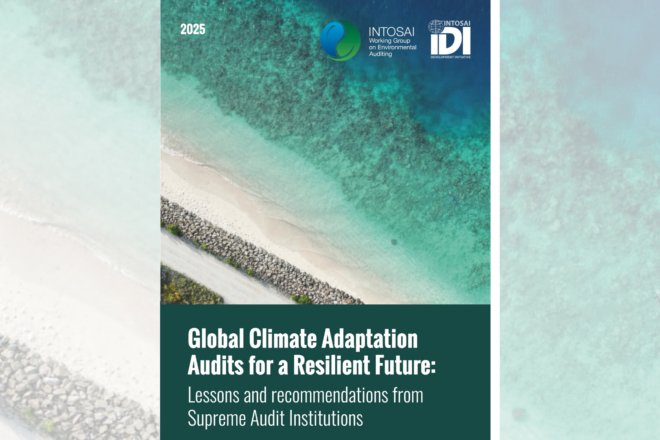
Due to climate change, communities across the world are losing their homes to floods, crops to drought, and coastlines to rising seas. The financial risks related to lacking or poor adaptation are also growing. Governments have been responding with their plans and promises—but adaptation on the ground remains fragile. The recent Global Cooperative Audit of Climate Change Adaptation Actions (CCAA) from 54 SAIs revealed why adaptation is failing—and what Supreme Audit Institutions (SAIs) can do to change that trajectory.
The CCAA audits were a milestone. They provided a global snapshot of adaptation governance and identified clear recommendations for governments, SAIs and global stakeholders for improvement. But audits are not an end in themselves—they are a means to drive change. Without systematic follow-up, even SAIs’ best recommendations risk being forgotten. To enhance impact, SAIs need to monitor the implementation of these recommendations, engage with key stakeholders within the accountability ecosystem and track whether adaptation indicators improve over time. Robust follow-up systems and tools like ClimateScanner can help SAIs identify high-priority adaptation risks to include in the audit portfolio.
What the CCAA Audits Revealed
The CCAA audits focused on four thematic areas:
- Climate change adaptation planning and actions
- Water resources management
- Disaster risk reduction
- Sea level rise and coastal erosion
Across these themes, SAIs identified recurring challenges that explain why adaptation efforts often fail:
1. Risk Assessments Are Incomplete or Ignored
Effective adaptation begins with understanding climate risks. Yet many countries lacked comprehensive, up-to-date risk assessments. Where assessments existed, they were often fragmented, sector-specific, or disconnected from planning and budgeting. Some audits found that risk assessments were not used to guide resource allocation, leaving governments reactive rather than proactive.
2. Plans Exist—But Lack Specificity and Coherence
Most audited countries had national adaptation plans or sectoral strategies. However, many plans lacked operational detail: clear roles, timelines, measurable indicators, and budget alignment. Fragmentation was common—plans were scattered across ministries, with little coordination between national and local levels. Without coherence, adaptation actions risk duplication, inefficiency, or outright failure.
3. Implementation Is Weak
Even well-designed plans stalled during implementation. SAIs found governance gaps, insufficient capacity, and poor coordination among implementing agencies. In some cases, adaptation efforts were reduced to isolated projects rather than integrated strategies. Legal backing and enforcement mechanisms were often missing, making adaptation commitments aspirational rather than actionable.
4. Financing Is Inadequate and Uncoordinated
Funding gaps were a universal finding. Many governments lacked dedicated climate finance strategies or systems to track adaptation spending. Budget tagging and cost-effectiveness analysis were rare. As a result, resources were not systematically directed to high-risk sectors or vulnerable populations. Heavy reliance on international funds added complexity especially in small island developing states, with countries struggling to access and manage climate finance effectively.
5. Monitoring and Evaluation Are Almost Non-existent
Perhaps the most critical gap identified was the absence of robust monitoring and evaluation (M&E) systems. Without M&E, governments cannot assess whether adaptation actions reduce vulnerability or deliver intended benefits. SAIs reported that most countries lacked indicators, baselines, or centralised data systems for adaptation. This makes accountability—and learning—extremely difficult.
6. Inclusiveness Is Limited
Adaptation measures often overlook the voices of those most affected: indigenous peoples, women, rural communities, and other vulnerable groups. While some audits highlighted good practices in participatory planning, most found engagement insufficient or inconsistent. Poor inclusion undermines trust, equity, and the sustainability of adaptation actions.
The Role of SAIs in Follow-Up
SAIs have a unique mandate to provide independent oversight of public spending and policy implementation. SAIs can:
- Verify whether governments have addressed gaps identified in the CCAA audits.
- Assess progress on key enablers: risk assessment, planning, coordination, finance, inclusiveness, and monitoring systems.
- Highlight good practices and share lessons across countries and regions.
- Strengthen transparency and trust in climate governance.
Follow-up audits should not be one-off exercises. They must become part of a sustained audit practice, embedded in annual plans and supported by institutional strategies. This requires capacity building, tailored methodologies, and collaboration across SAIs.
Leveraging ClimateScanner for Continuous Tracking
Monitoring adaptation progress is challenging. Benefits often materialise decades later, and metrics are hard to define. SAIs can include climate adaptation as a thematic area in the strategic audit portfolio and identify audits that can be taken up over a period of time looking at the different dimensions of climate change adaptation actions.
ClimateScanner, an INTOSAI WGEA initiative created by SAI Brazil, can complement performance audit efforts related to adaption.
ClimateScanner provides a rapid review of climate governance, policies, and finance. As a scanner, it does not replace audits. However, by integrating CCAA follow-up audits with ClimateScanner assessments, SAIs can:
- Track whether adaptation indicators improve over time.
- Compare progress across countries and regions.
- Identify emerging risks and priorities for future audits.
- Provide evidence for global frameworks such as the Paris Agreement and the Sustainable Development Goals.
For example, if a CCAA audit recommended establishing a national climate finance strategy, SAIs can use ClimateScanner to check whether such a strategy exists and whether budget tagging is operational. Similarly, if an audit highlighted gaps in risk assessment, ClimateScanner can help verify whether updated, inclusive risk frameworks have been institutionalised.
From Recommendations to Results: A Call to Action
The CCAA summary report, individual audit reports as well as a question bank consisting of audit questions developed for the online training as well as the questions that SAIs actually used, all provide a great source of information and inspiration for SAIs around the world.
The CCAA audits delivered a clear message: adaptation fails because of gaps in governance, financing, and follow-through. SAIs have shown that these gaps can be identified—and addressed. But the next step for the SAIs that have audited adaptation is crucial: monitoring whether governments act on audit recommendations and whether adaptation outcomes improve.
Climate adaptation is a race against time. Every delay increases risks to lives, livelihoods, and public budgets. The CCAA audits have illuminated the path forward: systematic, inclusive, and accountable adaptation. Now, SAIs can initiate audits on the topic and follow up the progress, enforcing accountability, and ensuring that every dollar spent delivers resilience where it is needed most.
You can find the audit report in three languages:
English: CCAA-Global-Publication.pdf
Spanish: CCAA-Global-Publication-SPA.pdf
Arabic: CCAA-Global-Publication_AR-Final.pdf
An audit question bank collects the questions based on the online training and conducted audits: Microsoft Word – CCAA_Climate Adaptation Audit Question Bank