The Use of Artificial Intelligence Techniques in Auditing

Author: Jessica Du, Vice President and Editor of the International Journal of Government Auditing
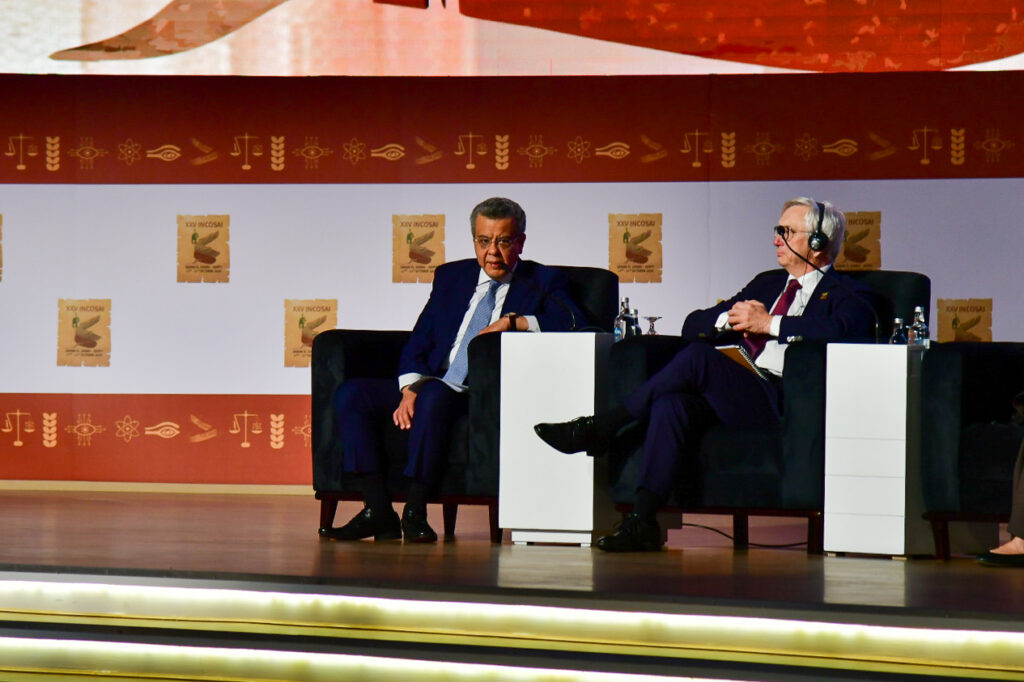
During INCOSAI XXV, deliberations focused on the growing role of artificial intelligence (AI) in shaping the future of public sector auditing. Delegates from Supreme Audit Institutions (SAIs) around the world convened to examine the opportunities of a technological development that can have far-reaching implications for accountability, governance, and public trust.
The Technical Theme II topic, “The Use of Artificial Intelligence Techniques in Auditing,” was chaired by Mohamed El-Faisal Youssef, President of the Accountability State Authority of Egypt and INTOSAI Chair. In his opening remarks, he situated the discussion within a framework of continuity and responsibility, underscoring that the integration of AI should be approached not as a departure from established processes, but as a deliberate and carefully governed evolution grounded in professional judgment, ethical standards, and robust institutional oversight.

Assessing the Global Landscape: Encouraging Outlook with Clear Safeguards
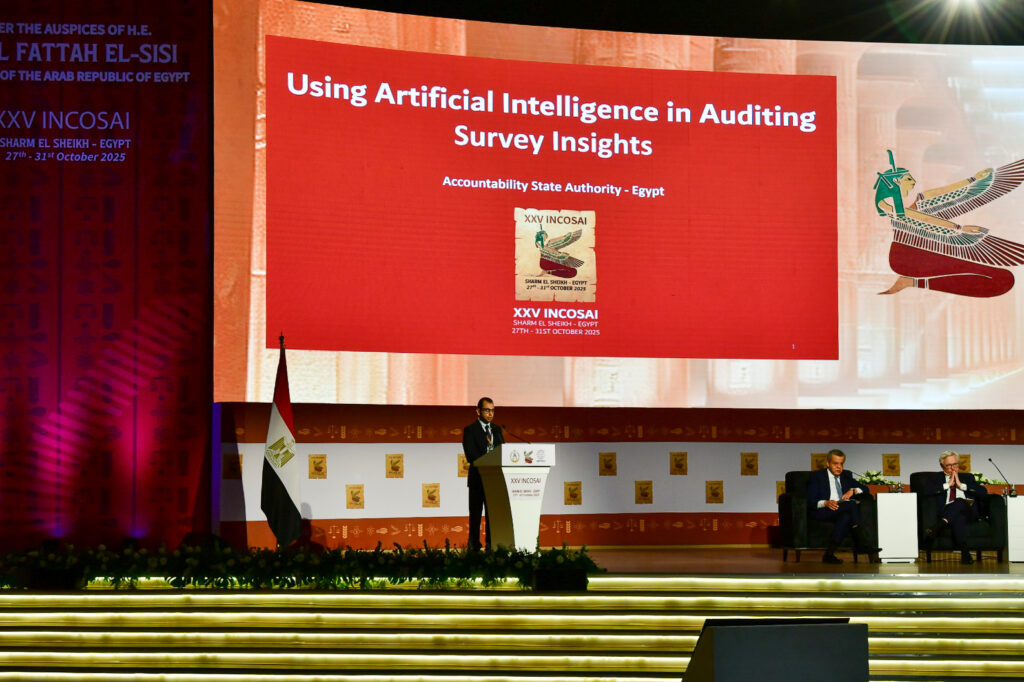
SAI Egypt presented the results of a comprehensive global survey conducted within INTOSAI as part of the Theme II paper. More than 60 SAIs contributed their perspectives, revealing a positive outlook toward the adoption of AI in auditing.
An overwhelming 92 percent of respondent SAIs believe AI can enhance audit results. 87 percent see clear advantages for AI to support risk assessments. 90 percent are planning AI integration into their auditing processes. More than half anticipate a reduction in routine tasks by utilizing AI in audits.
Yet, this optimism was not naïve. Survey respondents emphasized concerns with data quality, algorithmic transparency, governance frameworks, and digital literacy. AI integration, they agreed, requires more than software procurement—it demands digital transformation, algorithm literacy, and a hybrid model where machine capability complements human expertise. INCOSAI delegates overwhelmingly agreed that AI is not a replacement for auditors, but a partner.
Across the 24 case studies presented from 13 SAIs showcasing the practical applications of AI, as well as strategic initiatives, a consistent theme emerged: the hybrid approach is the most effective path forward, combining algorithmic capabilities with human experience and pairing automation with strong ethical oversight.
The Science of Better Government
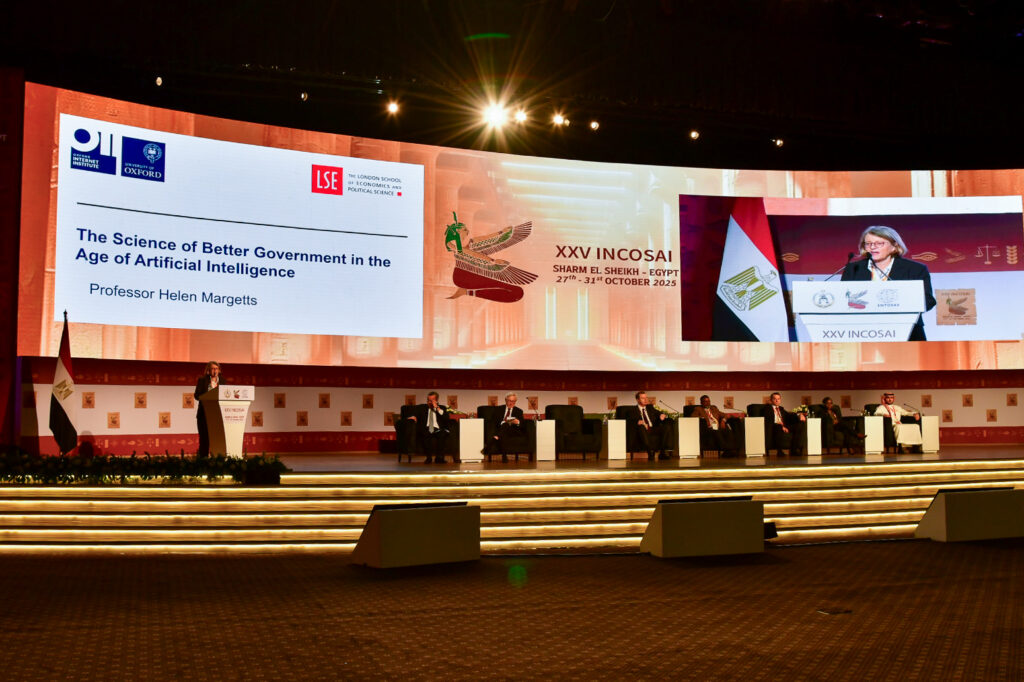
The intellectual lens widened with insights from Helen Margetts, Professor of Society and the Internet at the University of Oxford and Director of the Public Policy Programme at the Alan Turing Institute.
She reminded delegates that most AI systems today have been designed by and for the private sector. Governments are not yet leading this revolution, but they could. The potential, she argued, is vast. AI could transform how governments communicate with citizens, grant rights, process applications, and allocate resources. Behind every license approval or social benefit payment lies a chain of “micro-decisions.” Many of these repetitive, high-volume tasks could be automated with AI safely and efficiently.
Ms. Margetts issued a clear warning: productivity alone is not enough. Equity must remain central to the AI discussion. AI systems replicate the biases embedded in historical data and human decisions. Without deliberate safeguards, inequity may be amplified rather than reduced.
Governments, she stressed, cannot release machine learning systems that are “85% correct.” Public trust requires near certainty. That demands experimentation, pilots, and gradual scaling—paired with digital inclusion, governance clarity, and international collaboration.
AI in Practice: Financial Audit and Beyond
From theory to practice, Gareth Davies, Comptroller and Auditor General of the National Audit Office of the United Kingdom, shared how AI is already reshaping financial audits.
Machine learning models are being used for fraud risk analysis. Off-the-shelf tools such as Data Snipper automate routine audit testing. Generative AI tools assist in reviewing board minutes. Early results have shown increased efficiency, time savings, and a richer experience for trainees. Recruitment intake has even been adjusted as productivity rises.
But Comptroller and Auditor General Davies was unequivocal: AI changes how audits are conducted, not why they are conducted. Professional judgment remains paramount. Auditors must also scrutinize governments’ own use of AI systems, ensuring transparency, fairness, and sound governance.

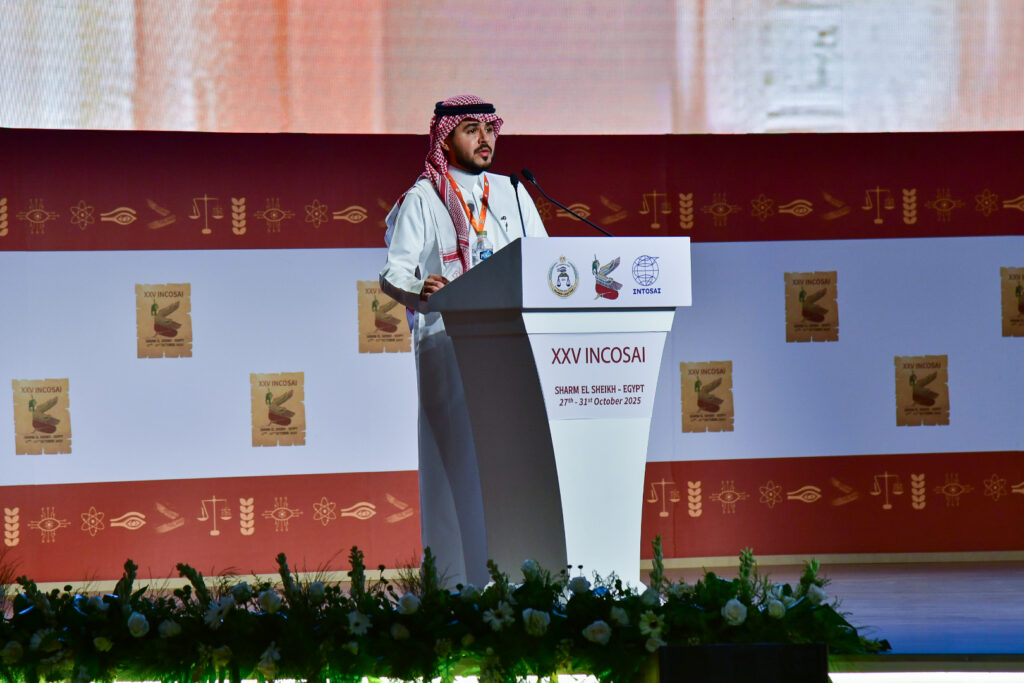
Mr. Ahmed AlQurashi, CPA, Assurance Director of SAI Saudi Arabia, shared with delegates how the General Court of Audit, through a financial audit AI-powered knowledge base, is enhancing audit efficiency to support auditors with deeper insights. The knowledge base enhances task performance, supports professional judgement and improves documentation quality. He reflected that AI is an enabler, not a replacement for auditors, and that the essence of auditing relies on our professional judgement.
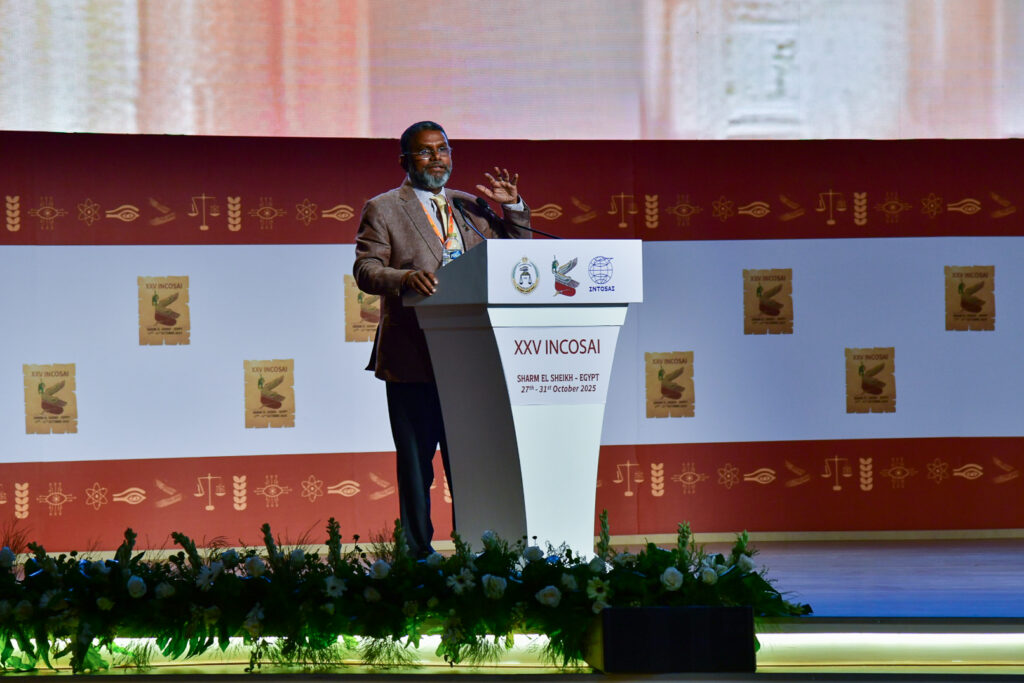
Similarly, B.K. Mohanty, Director General and Chief Technology Officer of SAI India, demonstrated how AI supports performance audits. In a case study of an environmental audit where plantation sites were inaccessible, AI models analyzed satellite imagery to estimate tree height, identify species, measure canopy density, and examine drainage patterns. What once required physical presence became possible through image analytics and machine learning.
AI was also deployed for risk assessment in procurement—detecting patterns such as repeated tender cancellations, common IP addresses among bidders, and network relationships indicating potential collusion. AI, in these cases, did not replace audit evidence, but rather, expanded it.
Auditing AI Itself
If AI is transforming government, then auditors must audit AI. Jan Roar Beckstrom, Chief Data Scientist at the National Audit Office of Norway, offered a grounded perspective: AI is not magic. It is an IT system, and auditing IT systems is already familiar territory.
Representing the National Audit Office of Norway, the Vice-Chair of Technical Theme II, Jan Roar Beckstrom shared a recent Norwegian audit that found prerequisites for large-scale AI adoption in the central government were not yet in place. Ethical frameworks and responsible-use principles were still developing.
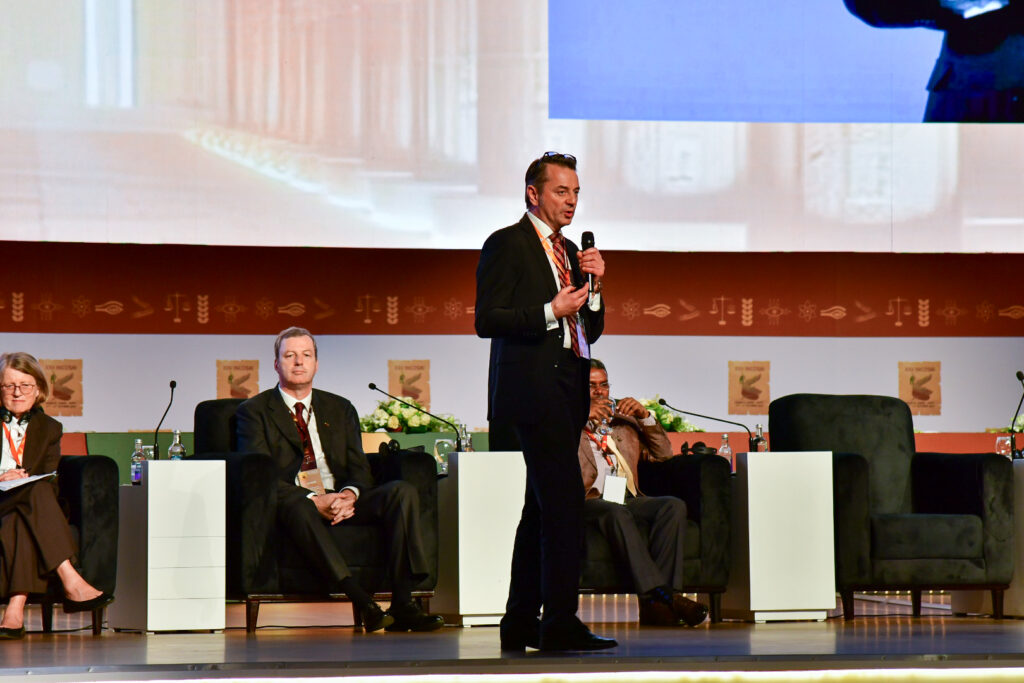
Beckstrom posed essential questions auditors should ask:
- Why was AI introduced?
- Were assumptions reasonable?
- Is the system transparent and explainable?
- Has bias been addressed?
To support auditors globally, SAIs from Germany, the UK, Brazil, the Netherlands, Finland, and Norway collaborated on a practical guide for auditing machine learning algorithms, available at auditingalgorithms.net. The message was clear: AI oversight requires shared standards and international alignment.
Kenya’s Structured Path Toward AI Integration
Nancy Gathungu, Auditor General of Kenya, shared the inspiration journey of the Office of the Auditor-General of Kenya’s bold yet structured path. Through its System Assurance and Data Analytics Unit, it has built robust databases and secure IT structures, in alignment with Kenya’s Data Protection and Cybercrime laws.
The Office of the Auditor-General of Kenya’s AI pilot now reviews financial statements submitted by over 9,000 entities. Tasks that previously took between 30 minutes and several days are completed in three to five seconds.
But Auditor General Gathungu emphasized a crucial principle: invest only in AI and technological advancements you will actually use. Adoption should be phased, context-driven, and inclusive. Young auditors may champion innovation, but experienced professionals anchor institutional wisdom. Success lies in bringing both together. AI, she reminded the Congress, exists on a continuum. Institutions can start small, learn, and scale.
Challenges on the Horizon
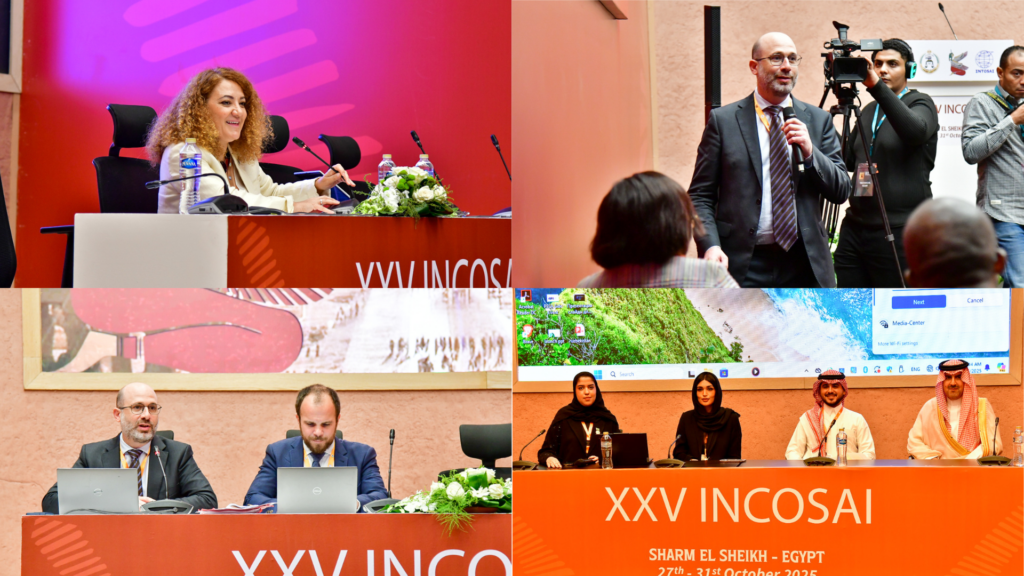
Moderators representing multiple SAIs, Bundesrechnungshof (SAI Germany) [English], the General Court of Audit of Saudi Arabia (SAI Saudi Arabia) [Arabic], the Court of Accounts of France (SAI France) [French], and the Court of Auditors of Spain (SAI Spain) [Spanish], guided the technical theme language discussions. These were summarized to the INTOSAI General Assembly by the Theme II General Rapporteur, the United Kingdom’s National Audit Office.
INCOSAI delegates recognized that the path to effective AI adoption is not without significant challenges. Among the most pressing concerns is the “black box” problem, in which the inner workings of complex AI models are difficult to interpret. Many organizations face legacy IT systems that are incompatible with modern AI solutions, while critical data often remains locked in silos. Privacy considerations and legal compliance add further layers of complexity, alongside the substantial upfront costs required to implement advanced technologies. Institutional resistance and gaps in skills and capacity can further hinder progress.
Addressing these challenges will require a combination of technical, organizational, and governance measures: secure and well-structured data warehouses, clear frameworks for managing the lifecycle of digital evidence, targeted training to build algorithm literacy, and robust policies to prevent discrimination and bias. Above all, delegates emphasized that trust must remain central—both within audit institutions and between auditors and the citizens they serve.
A Crossroads Between Established Practice and Innovation
As the INTOSAI Congress drew to a close, discussions returned to foundational considerations, recognizing the convergence of technical innovation and transformative changes in auditing. Delegates emphasized the importance of balancing human expertise and technological capability.
AI offers auditors the ability to analyze complete data populations rather than relying on samples. It enables real-time transaction monitoring, strengthens fraud detection, supports geospatial and environmental audits, facilitates automated document review, and enhances risk assessment processes. By relieving auditors of repetitive tasks, AI allows them to focus their expertise on complex, judgment-intensive work of higher value.
Yet AI alone cannot ensure accountability. It cannot uphold ethical standards, exercise professional skepticism, or substitute for human judgment. These responsibilities remain the domain of auditors.
Within the INTOSAI framework, guided by shared standards and common values, SAIs are not only integrating AI into their work but also shaping its responsible and ethical application in government.
When adopted with rigor, collaboration, and prudence, AI can enhance transparency, strengthen governance, and reinforce the public trust that underpins every SAI. The future of auditing does not lie in a choice between human judgment and machines; rather, it resides in enhancing human expertise through the responsible and intelligent application of technology.