Building Coalitions, Developing Regional Approaches, and Raising Public Trust for Greater Supreme Audit Institution Independence: Perspectives from The Right Honourable Helen Clark
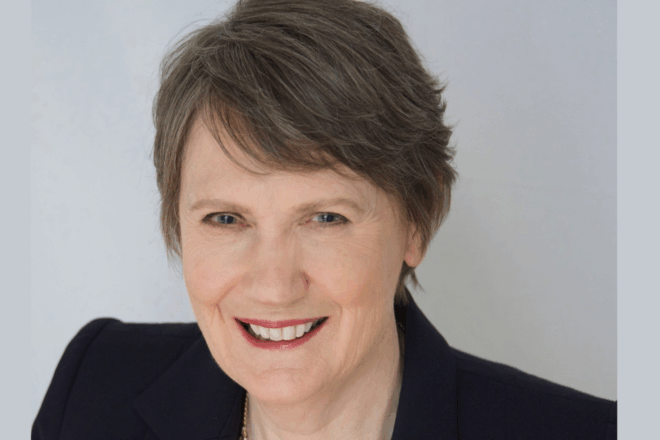
By: The Right Honourable Helen Clark, INTOSAI Donor Cooperation Goodwill Ambassador for Supreme Audit Institution Independence
This article is based on a speech originally recorded by the Right Honourable Helen Clark for the XXV INTOSAI Congress in Sharm El-Sheikh, Egypt on 31 October 2025.
A long road has been travelled by INTOSAI since its first Congress in Cuba in 1953. Its ongoing existence shows the enduring value of external auditing and that INTOSAI itself has been able to stand the test of time as a professional organisation.
The proceedings of this Congress are both relevant and timely. Geopolitical instability, war and conflict, climate shocks, digital disruption, pandemics, and more are putting significant stress on public finances, shrinking available fiscal space and driving changes in government spending priorities which can ultimately impact on service delivery.
Independent oversight of public financial management is an important part of the checks and balances existing in any system. Supreme Audit Institutions provide that oversight on the regularity, propriety and performance of government use of public resources, and contribute to public accountability. They are anchors of transparency, accountability, and good governance.
Yet they can only appropriately perform their tasks if they have appropriate levels of institutional, organizational, and financial independence from the entities they audit. This need was first articulated by INTOSAI in 1977 in its Declaration on Audit Principles – also known as the Lima Declaration. Since then, several legal instruments have reiterated this call, including two UN General Assembly Resolutions.
The evidence we have, however, suggests that only a small fraction of Supreme Audit Institutions in developing countries meet the independence criteria outlined in INTOSAI’s Lima and Mexico Declarations. They often lack the necessary independence to perform their duties, and that trend is moving in an adverse direction according to recent data.
In 2023, the INTOSAI Development Initiative issued its triennial Global Stocktaking Report (GSR). It measures and assesses developments and trends in Supreme Audit Institutions (SAIs) around the world.
For the third consecutive Stocktaking, independence levels are assessed to have declined. The access of Supreme Audit Institutions to information continues to fall, and interference in budget execution and audit planning has increased. Ten per cent of respondents to the 2023 Global Survey reported interference against SAI leadership.
An SAI Independence Rapid Advocacy Mechanism (SIRAM) was established in 2018 through the INTOSAI Donor Cooperation. It advocates SAI independence, and it raises awareness of threats to and breaches of that. It can also broker support for SAIs facing challenges to their independence. Analysis of cases which have come to the attention of the mechanism suggest two key trends:
1. Threats to the independence of Supreme Audit Institutions are by no means confined to low- and middle-income countries. There are growing reasons to be concerned in some high-income countries too where the assumed barriers to corruption and cronyism are under pressure.
2. Threats to Supreme Audit Institution independence are generally part of a broader set of challenges which are also affecting other independent institutions. These are associated with the deterioration of conditions around accountability, including the shrinking of civic space which is all too common these days.
How can these trends be countered? Let me suggest some ways forward.
1. Building coalitions at the global level can raise awareness of the importance of SAI Independence and enhance the potential for collective action.
Coalition building should include Development Partners and other relevant platforms:
- The INTOSAI Donor Cooperation is a natural place to discuss these issues as it brings together SAIs and Donors. Its Kingston Implementation Plan ramps up its efforts on SAI independence.
- The Global Project on SAI Independence is a joint effort by a number of partners to develop new approaches to promoting the independence of Supreme Audit Institutions (SAIs), with a focus on the informal factors—beyond legal frameworks—which influence how they interact with the executive and legislative branches, and how those interactions affect their independence. OECD, the IDI, INTOSAI’s General Secretariat and Policy, Finance, and Administration Committee, and the Swiss State Secretariat for Economic Affairs (SECO) are all collaborating on this. The International Monetary Fund (IMF) and the World Bank has helped shape the project to ensure alignment with global goals related to public financial management and fiscal transparency.
Going forward, such partnerships should be inclusive of civil society and contextualized to sectors like the extractives industries and health where there are significant corruption risks. I chair the Board of the Extractive Industries Transparency Initiative (EITI), which works for transparency and good governance in that sector and has civil society as a major constituency. It is vital that Supreme Audit Institutions are aware of and use the EITI disclosure data on contracts, revenue, payments, beneficial ownership and more.
2. Developing regional approaches which take into consideration the context in which Supreme Audit Institutions operate and create the necessary synergies among regional actors.
Institutions within the same region will often face similar realities and challenges – although even within a region contexts can be diverse. The Pacific Association of Supreme Audit Institutions (PASAI), does a good job of supporting its members by being a responsive and member-driven organization. Constructive relationships and dedicated support from key regional development partners like Australia and New Zealand have also helped strengthen SAIs in the Pacific.
In Anglophone Africa, AFROSAI-E also does a commendable job of assisting its members, and has recently developed a Model Audit Act which is a resource for proactive advocacy, even beyond the AFROSAI-E Region.
3. Raising the profile of Independent SAIs at the country level to strengthen legitimacy and support around their actions.
Public trust in national audit institutions is very important for effective advocacy for their independence. A strong reputation is a resource which a SAI can draw on if its autonomy is threatened. Therefore, public audit offices should not feel shy about being proactive in raising their own profile.
Public trust will be kept when audit reports are of good quality and are timely. That requires dedicated professionalism from staff and high-quality management systems. As an example, the publication of audits of stimulus packages provided during the COVID-19 pandemic have helped raise the profile of SAIs at the country level.
SAIs should also focus on stakeholder engagement and their interactions with other actors in national accountability ecosystems. These include Parliaments, Ombudspersons’ Offices and other such statutory offices, and non-state actors, such as civil society organizations with a transparency focus, and the news media.
Though current geopolitical challenges don’t paint a dazzling picture for the future, we can all be proud of the commitment, professionalism, and impact that SAIs deliver. They embody the core institutional values that improve and enhance society around them. And together, we must continue to adapt and evolve; to build coalitions, leverage regional approaches, and enhance trust in strong, independent institutions.