Tag: Editorial

Filter By:
Sort By:
From Mystery to Practice: How the Swedish National Audit Office Approaches AI in Its Performance Auditing

Across Supreme Audit Institutions, conversations about artificial intelligence (AI) often focus on technology. Discussions highlight models, data infrastructure, governance frameworks and future potential. Talk about AI is often shrouded in a certain air of mystery; practical applications tend to be conflated with more visionary ideas such as autonomous agents or even quantum computing. For many auditors, this can make AI seem complex − sometimes even intimidating.

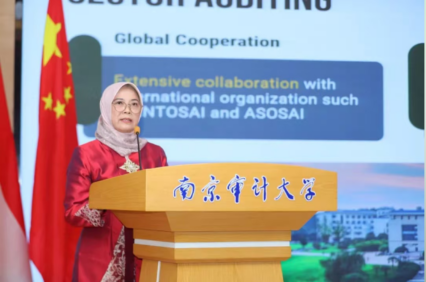
From Compliance to Performance Evaluation—the State Audit and Administrative Control Bureau of Palestine’s Performance Audit Transition

In a world of rapid changes and increasing challenges, governments are asked more than ever to have concrete findings, provide high quality public service and manage the available resources efficiently, effectively and responsibly. With these changes, the public audit is not only viewed as just ensuring compliance with laws and protocols but also evaluating the performance and measuring the actual influence of government policies and programs on lives of citizens.

IJGA Q2 2026 Cover Image EN
Q2 2026
Championing Fiscal Accountability: How SAI Philippines Leads Global Public Debt Oversight and Pioneers Citizen Participatory Audits

Strong public financial oversight is indispensable to good governance. Financial audits, public debt audits, and citizen-centered mechanisms play essential roles in ensuring the accountability of public funds and protecting fiscal integrity. The Philippines offers a compelling example of how a Supreme Audit Institution (SAI) can lead globally by pioneering a major audit reform initiative and advancing collaboration to strengthen public debt oversight. Together, the Citizen Participatory Audit (CPA) and its Chairmanship of the INTOSAI Working Group on Public Debt (WGPD), highlight the Philippine Commission on Audit’s (COA) commitment to transparency, accountability, and public sector reform.

INTOSAI Journal Q1 2026 Cover
Q1 2026- INCOSAI XXV
The XXV INCOSAI: A Renewed Audit Vision for a Rapidly Transforming World

Within the context of the long-standing journey of the International Organization of Supreme Audit Institutions (INTOSAI), and its role as a unifying international framework that entrenches the professional values of independence and integrity, the convening of the XXV INCOSAI represented a qualitative milestone in the evolution of global public sector auditing. It reaffirmed the ability of Supreme Audit Institutions (SAIs) to keep pace with the accelerating transformations occurring worldwide, particularly in the financial and economic spheres.

Q4 2025
Understanding Contextual Factors Impacting SAI Independence: The IDI-OECD Global Project

In October 2022, the INTOSAI Development Initiative (IDI) and the Organisation for Economic Co-operation and Development (OECD) began collaborating on a joint effort to explore the challenges faced by Supreme Audit Institutions (SAIs) in safeguarding their independence. Rather than focusing solely on legal frameworks, the goal was to examine SAI independence from a broader and more practical perspective, taking into account informal pressures, institutional dynamics, and political realities that affect how independence is exercised in practice.

Q3 2025
Financial Audits as Pillars of Democratic Accountability: State Audit Office of North Macedonia’s Journey Toward Transparent Governance

In times of growing demand for public accountability and transparency, supreme audit institutions (SAIs) serve as guardians of good governance. At the State Audit Office (SAO) of the Republic of North Macedonia, we remain persistent in our mission to ensure sound stewardship of public resources through financial, compliance and performance audits grounded in international standards and national priorities.

Q2 2025
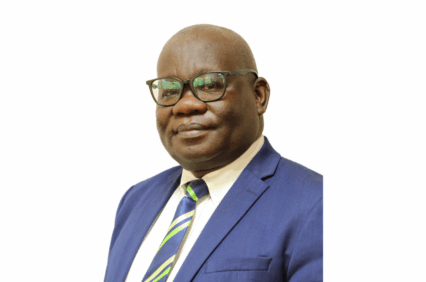
Building a Sustainable Future: The National Audit Office of Tanzania  Audits Infrastructure for Resilience and Innovation 

Assessing infrastructure resilience is key to mitigating risks, enhancing service delivery, and ensuring long-term value for citizens. Rigorous audits allow us to identify areas for improvement, strengthen governance, promote accountability, and optimize resource utilization. Given the pressures of urbanization, climate change, and technological progress, infrastructure planning and management must be forward-thinking, inclusive, and adaptive to evolving challenges.

Q1 2025
How Can the SAI Community Become More Active and Visible In Its Involvement In the Implementation Of Sustainable Development Goals (SDGs)?

The Sustainable Development Goals (SDGs) Report 2024 indicates that only 17% of the SDG targets remain on track as planned. The COVID-19 pandemic, global conflicts, and climate change have profoundly and significantly impacted progress towards meeting the SDGs.

The French Cour des comptes’ Annual Public Report on Public Action to Adapt to Climate Change

The French Constitution entrusts the Cour des Comptes with the task of informing the public through its public reports. The Annual Public Report (APR) is an essential vehicle for this information. The law specifies that it concerns “a major public policy issue to which the Cour des Comptes wishes to draw the attention of the public authorities and contribute to informing citizens”. In its 2024 annual public report, the Cour des Comptes examined the theme of public action to adapt to climate change.

Q4 2024
The Role of Supreme Audit Institutions in a Changing World

As Auditor General, I have had the privilege of overseeing our national audit office during a period of change and significant challenges. As I reflect on my seven years in office, there are several key themes and lessons learned that I find to be essential for the ongoing development and effectiveness of Supreme Audit Institutions (SAIs) globally.

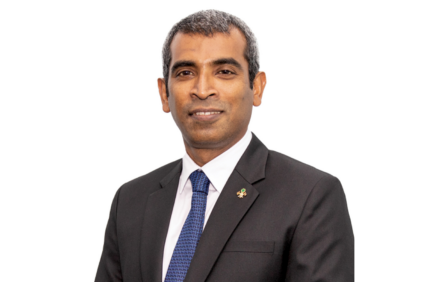
Transformational Change in Environmental Auditing: Journey of SAI Maldives

From an aerial view, the Maldives appears as a dazzling pearl necklace, with its scattered islands forming intricate atolls in the Indian Ocean. Yet, the true heart of our nation lies beneath the surface—our extensive and vital reef system. Spanning 4,513 square kilometers, these reefs are the seventh largest globally, sustaining a diverse ecosystem of over 1,200 marine species. For our small island nation, these pristine waters, vibrant marine life, and sandy beaches are not just natural treasures but the backbone of our economy. Furthermore, our reefs act as crucial barriers, protecting our low-lying islands—80% of which are less than one meter above sea level—from the ocean’s relentless forces. 

Q3 2024
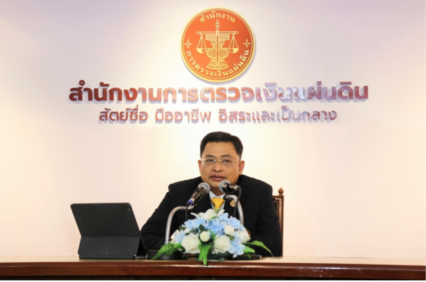
The Importance of Follow-Up Audits: Insights from the Auditor General of Thailand

As the Auditor General of Thailand, I have observed firsthand the key role that follow-up audits play in ensuring the integrity and effectiveness of government financial management. The State Audit Office of the Kingdom of Thailand (SAO) is committed to rigorous follow-up procedures that uphold our mandate under the Organic Act on State Audit B.E. 2561 (2018).

Q2 2024
The Forum of Supreme Audit Institutions with Jurisdictional Functions: The Significance of Its Jurisdictional Role in the Public Sphere

Supreme Audit Institutions (SAIs) with jurisdictional functions from around the world make up approximately a quarter of the International Organization of Supreme Audit Institutions (INTOSAI) membership. According to Pompe et. Al (2022), these SAIs not only audit, but also assume crucial roles in the adjudication and management of public funds. SAIs with jurisdictional functions have become a beacon of transparency and accountability, as they conduct reviews of accounts, and impose sanctions upon detecting poor management or financial irregularities in government administration.