Enhancing Collaboration between Supreme Audit Institution and Anti-Corruption Agencies: Lessons Learnt from Tanzania
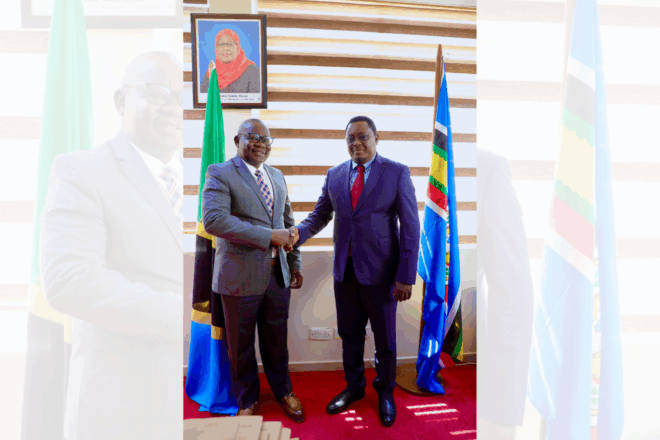
Author: Frank Sina (PhD)
The views, opinions, and interpretations expressed in this paper are solely those of the author and do not necessarily reflect the official policies or positions of the National Audit Office of Tanzania nor the Prevention and Combating of Corruption Bureau. Any conclusions or recommendations made in this paper are the author’s own and do not represent the ideas or views of the institution.
1. Introduction: About Tanzania
Tanzania is one of the East African countries vested with stunning landscapes, rich culture, and iconic tourist attractions. Tanzania’s economy is classified as lower-middle-income, with a Gross Domestic Product (GDP) of around $75 billion US dollars. The economy is diverse, with agriculture, mining, and tourism being key contributors. In recent years, Tanzania has made significant strides in infrastructure development, energy production, and social services, which have collectively bolstered economic growth. Despite these advancements, the country continues to grapple with challenges related to corruption and financial crimes. The government has intensified efforts in combating these issues, corruption remains a significant impediment to development and poverty reduction. The country’s ranking on international anti-corruption indexes reflects ongoing challenges, with Transparency International placing Tanzania at 94th out of 180 countries in its Corruption Perceptions Index (CPI) for 2023.
The fight against corruption in Tanzania is spearheaded by several key bodies, including the Prevention and Combating of Corruption Bureau (PCCB) and the National Audit Office of Tanzania (NAOT). These institutions play a crucial role in investigating and prosecuting corrupt practices, promoting transparency, and ensuring the proper use of public resources. Recent initiatives have focused on enhancing the capacity of these institutions and fostering greater public awareness and participation in anti-corruption efforts. In this article, an expose of the current collaborative framework is shared and lessons from the existing framework are discussed as an insight to other similar organisations to follow the suit.
2. Overview of the Entities
National Audit Office-Tanzania (NAOT) and the Prevention and Combating of Corruption Bureau (PCCB) are among key oversight and watchdog institutions within the accountability framework of the country. Whereas the effective Supreme Audit Institution (SAI) promotes and enhances transparency accountability and predictability of government performance, anti-corruption authorities are essential for promoting good governance, protecting human rights, fostering economic development, and preserving the integrity of institutions. Their role is critical in combating corruption and building more transparent, accountable, and just societies.
2.1 The Controller and Auditor General and the National Audit Office of Tanzania
The Controller and Auditor General (CAG) is one of the Constitutional Authorities of the United Republic of Tanzania. The CAG is established under Article 143(1) of the Constitution of the United Republic of Tanzania, 1977 (hereinafter ‘the Constitution’). The CAG is the Head of the National Audit Office of Tanzania (NAOT), which is recognized under sections 20(1) and 20(2) (a) of the Public Audit Act, Cap. 418 as the Supreme Audit Institution of the United Republic of Tanzania.
Under Article 143(2) (c) of the Constitution, the CAG is mandated to examine, inquire into and audit the accounts of the Government of the United Republic, the accounts managed by all officers of the Government of the United Republic and the accounts of all courts of the United Republic and the accounts managed by the Clerk of the National Assembly. Under Section 5(c) and Part IV of the Public Audit Act, the CAG is mandated to undertake various kinds of audits to public Organizations including financial and compliance audit (Section 26), and Performance Audit (Section 28). Further, the CAG is also mandated to undertake compliance audit including procurement audit.
Among audits conducted by the NAOT are special and forensic audits, which usually review suspicion of fraud, mismanagement and other corrupt practices. CAG conducts these audits on his own discretion or upon request by legal organisations or persons including the PCCB. Upon conclusion of these audits, CAG typically shares such reports with PCCB even when the same are requested by other bodies or authorities. PCCB uses audit reports for investigations and, where tenable, calls NAOT auditors to clarify issues during investigations and to testify in courts as witnesses for the Republic where the reports are tendered.
2.2 The Prevention and Combating of Corruption Bureau (PCCB)
The PCCB is a law enforcement agency vested with powers to prevent, investigate, educate, and prosecute all corruption offenses within the United Republic of Tanzania. These powers are exercised in public and private sectors. Section 7 of the Prevention and Combating of Corruption Act, Cap.329 (PCCB Act) vests the PCCB with the powers to: examine and advise the practices and procedures of public, parastatals, and private organizations; facilitate the detection of corruption or prevent corruption and secure the revision of methods of work or procedure which appear to add to the efficiency and transparency of the institution concerned; cooperate and collaborate with international institutions, agencies or organizations in the fight against corruption.
PCCB uses audit reports to prevent corruption as per section 7(a) and (c) or investigate subject to the directions of the Director of Public Prosecutions, and prosecute offenses as provided under section 7(e) of the PCCB Act and other offences involving corruption. Further, PCCB has a crucial role under section 45 of the PCCB Act, to establish and maintain a system of collaboration, consultation and cooperation with law enforcement agencies and other national authorities within the United Republic engaged in investigation and prosecution.
3. Collaboration Frameworks
PCCB and NAOT have been collaborating in various spheres since PCCB was established. The collaboration was put into a legal framework in 2008, when the Public Audit Act was enacted. The Act, under section 27, requires persons working on behalf of CAG to report suspicion of fraud or related offences to CAG. CAG is required to study the matter and communicate the incidences reported by his subordinates to investigative organs and serve a notice to the Director of Public Prosecutions (DPP).
Investigative organs are required to investigate the matter within 60 days and report their findings to DPP for a determination of tenability of such matter for criminal prosecutions. In case the same is not tenable in law, DPP is obliged to notify the CAG and recommend alternative measures of redress. CAG may apply the measures recommended to pursue and enforce alternative measures of redress as recommended by the DPP against the audited entity.
Following this enactment, several consultative actions on how best the two organisations can collaborate have been undertaken. Among these actions is the conclusion of the Memorandum of Understanding (MoU) between NAOT and PCCB on the 18th December 2017. The MoU was revised and updated on 17th December 2020 and now focuses on improving collaboration particularly in execution of special audits, information sharing and capacity building among its officers. Following this, heads of the institutions developed and approved a joint implementation plan and appointed a liaison officer’s working group
4. Existing Collaboration Practices
NAOT and PCCB complement each other’s work. The societal value of NAOT as a SAI and its contribution can be easily evidenced through successful investigation, prosecution of cases originating from audit findings and the recovery of mismanaged public resources by authorities charged with responsibility to do so, including the PCCB. PCCB, on the other hand, depends on the NAOT’s audit reports as indicators of red flags for corrupt practices, and requires expert evidence for cases of financial misappropriation and loss to specified organisations.
NAOT communicates suspicions of wrong doings that it comes across during the audit or after completion of audits, specifically forensic and special audits, to PCCB. The latter is obliged to undertake investigations within 60 days, or about 2 months. Upon completion, the investigations are communicated to the Director of Public Prosecutions (DPP) to determine appropriate legal actions, including prosecutions of suspects of wrongdoing. NAOT auditors frequently appear as expert witnesses in cases emanating from audit findings.
The two organisations are part of the national, regional, and international coordination and cooperation bodies involved in the prevention and fight against corruption and enhancing accountability. Officers of these organisations frequently hold Technical Teams and Liaison Officers Meetings to discuss key issues that affect working relations and how to best collaborate to achieve their strategic objectives.
Both organizations usually invite experts from the above-mentioned bodies for capacity building to its officers, particularly in areas of their mandate and technical expertise. NAOT shares information regarding audits conducted (apart from those requested by PCCB) if they have indication of corrupt practices that could be subjected to in-depth investigations.
The two organizations are working to develop a joint Standard Operating Procedures (SoPs) with the aim of documenting existing practices of collaboration for consistency, predictability and sustainability. SoPs will provide guidance for how the officers in field can actually work together to enable the organisations achieve the desired objective , while being mindful of statutory frameworks governing their affairs. SoPs will have a particular focus on the areas of execution of audit and investigation mandate, information sharing and capacity building, and will complement the existing framework.
5. Key Lessons Learned for Effective Collaboration
While there are still several areas for improvement within the existing from collaboration framework between Tanzania’s SAI and the Anti-Corruption Agency, the progress realised gives some lessons for an ideal collaboration between similar institutions in other jurisdiction. Key lessons learnt include:
5.1 Successful Collaboration Requires a Strong and Well Organized Collaboration Framework
As discussed above, the collaboration between the NAOT and the PCCB is significantly strengthened by a robust legal and institutional framework. The Public Audit Act of 2008 provides a solid legal foundation for this partnership, which is further reinforced by the Memorandum of Understanding (MoU) signed in 2017 and revised in 2020. A well-defined framework such as this present in Tanzania ensures that both organizations have a clear understanding of their roles, responsibilities, and the processes for collaboration, facilitating a systematic and structured approach to their joint efforts.
5.2 Leadership Support and Emphasis on Collaboration
The strong support from the highest levels of leadership, including the President of the United Republic of Tanzania, Her Excellence Samia Suluhu Hassan has been an important factor that has contributed towards deepening of the existing collaboration between NAOT and PCCB. The President’s emphasis on the importance of these institutions working together sets a clear tone from the top, encouraging cooperation and the resolution of challenges at all levels. This leadership-driven mandate has empowered the CEOs of both organizations to prioritize collaboration, ensuring that their respective officers are aligned with the overarching goal of combating corruption and enhancing accountability. This generally sends a clear message for that the SAI and anti-corruption body to work together and achieve their common objectives, there must be not only political will, but actual support from the top leadership, which cascades to lower level officials.
5.3 Existence of Regular Feedback and Working Sessions
Officers from PCCB and NAOT regularly hold feedback and working sessions, which have been instrumental in maintaining a productive partnership between the two organizations. These sessions provide a platform for both entities to share information, discuss ongoing issues, and strategize on more effective approaches. The iterative feedback process enables the identification and resolution of challenges, ensuring that the collaboration remains dynamic and responsive to emerging needs. While these meetings and sessions may require financial resources, their presence plays an important role in bolstering technical level collaboration at field levels.
5.4 Presence of Dedicated Liaison Officers
The appointment of dedicated liaison officers has proven to be a critical element in the success of the collaboration between NAOT and PCCB. These officers act as essential conduits for information sharing, ensuring that communication flows smoothly between the two organizations. Their role in expediting the resolution of issues and facilitating coordination at the operational level has been key to achieving timely and effective outcomes. Appointment of such officers needs to be meticulously done to ensure that the officers are reasonably senior, have deeper understanding of the two organisations’ processes, and command respect among peers.
5.5 Provision of Financial Resources for Joint Capacity Building
The allocation of financial resources, particularly through initiatives like the Building Sustainable Anti-Corruption Tanzania (BSAAT) program, has been fundamental in supporting the joint efforts of NAOT and PCCB. These resources have enabled both organizations to invest in capacity building and regular meetings, which are crucial for enhancing the skills and knowledge of their officers. This signifies a key lesson that, effective and efficient collaboration requires financial resources to enable officers frequently meet, share knowledge and conduct other joint operations. This financial backing ensures that the collaboration is not only sustained, but also continuously improved, with both organizations benefiting from shared learning and development opportunities.
6. Conclusion
In summary, the collaboration between NAOT and PCCB is a testament to the importance of a well-organized framework, strong leadership, regular communication, dedicated personnel, and sufficient financial support. These elements, when combined, create a vigorous foundation for a successful partnership that significantly contributes to the fight against corruption and the promotion of accountability in Tanzania.
About the Author: Frank Sina (PhD) received his PhD from Maastricht University, LL.M from Ohio Northern University-US, and LL.M, LL.B from University of Dar es Salaam. He is a Principal Legal Officer and Principal Officer in charge of the National Audit Academy Tanzania. He can be privately be contacted via franksina2002@gmail.com.