Q3 2025

The Role of Financial Audits and Mechanisms for Oversight of Public Funds
Download PDF

Featured Articles

Strengthening Public Fund Governance through Financial Audits: Insights from the Albania Supreme Audit Institution’s Practice

Public finances are like the lifeblood of a country – they fund social programs, build infrastructure, and provide essential services that people rely on every day. Keeping public administration efficient and transparent is key to earning people’s trust – it’s about more than just good governance; it’s about showing citizens that their institutions truly work for them. Financial audits are the main instrument used by Albania’s Supreme Audit Institution (ALSAI) to guarantee efficiency, accountability, and transparency in the administration of public funds.

Evaluating the Sufficiency and Appropriateness of Evidence in Financial Audits: A Case Study on the Cash and Cash Equivalents Accounting Cycle

Undoubtedly, evidence is the cornerstone that auditors rely on to substantiate their findings during financial audits. A critical question for auditors is whether the quantity and quality of the evidence gathered during testing unequivocally support their conclusions. 

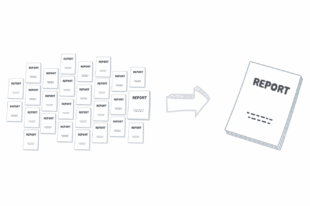
Improving Financial Audit Efficiency: One Report Instead of 27

In response to public demand and global trends, the State Audit Office of Latvia (SAI of Latvia) has initiated the most significant transformation in its audit operations in the past two decades.

Integrated Approach for Impactful Financial Audit: Insights from SAI Indonesia

This paper examines the integration of performance audit perspectives into financial audits on the Audit Board of the Republic of Indonesia’s (BPK) by using the Financial Audit with Performance Audit Perspective (FAPA) framework. This paper demonstrates how FAPA approach, documented through Long-Form Audit Reports, enhances audit impact by evaluating both financial accuracy and operational effectiveness. Despite challenges in methodological alignment, stakeholder management, timing, and coordination, we present a structured workflow model for effective implementation of the FAPA framework. The paper advocates for further integration of sustainability and foresight elements to promote long-term value creation in public financial management, better meeting evolving stakeholder expectations and supporting Sustainable Development Goals.

Best Practices for Conducting Public Financial Audits

Effective public financial audits are vital tools in promoting transparency, accountability, and good governance in the public sector. Supreme Audit Institutions (SAIs) play a key role in evaluating how public funds are managed and ensuring that public officials act in accordance with laws, policies, and ethical standards. This article outlines best practices for conducting public financial audits, grounded in the International Standards of Supreme Audit Institutions (ISSAIs).

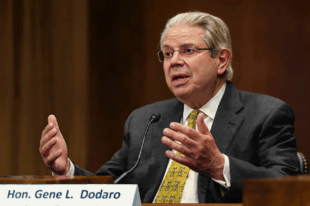
Financial Audits and Mechanisms for Good Governance of Public Funds: Levers in the Accountability Ecosystem for Greater Impact

Like many people, when I travel, I often take a taxi from the airport into the city center where I’m visiting or working. In my experience, taxi rides are a fantastic opportunity to learn about the local culture, find out which sights are worth a visit, or get recommendations about where to eat. What’s more, these drives are a prime opportunity to find out some more nuanced (and personal) information: how people perceive their government. In many instances, issues of corruption, inefficiency, and waste are openly shared by the driver, alongside personal perceptions of particular politicians. It’s a great, albeit anecdotal, way to get a feel for what local people are thinking or feeling. 

Real-time Auditing: A Tool to Enhance Good Governance and Accountability for Public Funds

Real-time audits can complement and add to the scope of work undertaken by national, state and local audit organizations, providing timely insights and enhancing oversight and decision-making. As reflected in the INTOSAI Journal’s recent discussion of responses to the COVID-19 pandemic, real-time audits helped to track contracts, funding, and services. Against the backdrop of the pandemic as well as tracking government interventions after financial crises and responding to natural disaster recovery efforts, real-time auditing experience offers lessons learned about how Supreme Audit Institutions (SAIs) can contribute to good governance and accountability for public funds. 

Enhancing Collaboration between Supreme Audit Institution and Anti-Corruption Agencies: Lessons Learnt from Tanzania

Tanzania is one of the East African countries vested with stunning landscapes, rich culture, and iconic tourist attractions. Tanzania’s economy is classified as lower-middle-income, with a Gross Domestic Product (GDP) of around $75 billion US dollars. The economy is diverse, with agriculture, mining, and tourism being key contributors.  In recent years, Tanzania has made significant strides in infrastructure development, energy production, and social services, which have collectively bolstered economic growth. Despite these advancements, the country continues to grapple with challenges related to corruption and financial crimes.  The government has intensified efforts in combating these issues, corruption remains a significant impediment to development and poverty reduction. The country’s ranking on international anti-corruption indexes reflects ongoing challenges, with Transparency International placing Tanzania at 94th out of 180 countries in its Corruption Perceptions Index (CPI) for 2023.

Harnessing Real-Time Analytics for Public Accountability: The Digital Evolution of Supreme Audit Institutions

Classic financial audits arrive long after the money has moved. By the time ledgers are reconciled and reports are tabled, fraudulent transfers may be laundered beyond recovery. Government data, however, now travels through digital highways—treasury platforms, tax APIs, banking gateways, platforms, even the cloud —where each transaction leaves a time-stamped footprint. 

Digitalising Contract Oversight: Somalia’s Office of the Auditor General Leads the Way

Office of the Auditor General of Somalia (OAGS) has achieved a significant milestone by implementing a digital Contract Management System (CMS), representing a pivotal step toward promoting transparency, accountability, and operational efficiency across public institutions. As part of a broader public financial management reform agenda, the CMS signals Somalia’s commitment to modernising governance structures and aligns with the global drive to digitalise public sector oversight. This experience offers valuable lessons to other members of the International Organization of Supreme Audit Institutions (INTOSAI), particularly those in developing or fragile states where building transparent systems remains a pressing priority.