Tag: sai independence

Filter By:
Sort By:
The Global Project: Rethinking SAI Independence

Amid today’s complex political climate, low public trust in institutions, and tighter government budgets, the independence of Supreme Audit Institutions (SAIs) becomes more relevant than ever in ensuring that governments manage public funds openly, efficiently and for the benefit of citizens. However, both the Organisation for Economic Development (OECD) and the INTOSAI Development Initiative (IDI) have found that SAIs face major – and sometimes increasing – obstacles. These challenges are not just legal, but also practical—especially in their relationships with executive and legislative branches.

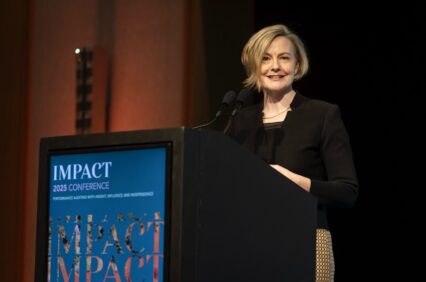
Building Coalitions, Developing Regional Approaches, and Raising Public Trust for Greater Supreme Audit Institution Independence: Perspectives from The Right Honourable Helen Clark

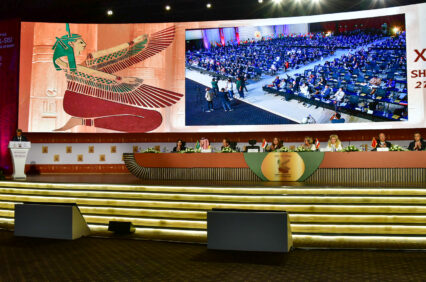
A long road has been travelled by INTOSAI since its first Congress in Cuba in 1953. Its ongoing existence shows the enduring value of external auditing and that INTOSAI itself has been able to stand the test of time as a professional organisation. 

Understanding Contextual Factors Impacting SAI Independence: The IDI-OECD Global Project

In October 2022, the INTOSAI Development Initiative (IDI) and the Organisation for Economic Co-operation and Development (OECD) began collaborating on a joint effort to explore the challenges faced by Supreme Audit Institutions (SAIs) in safeguarding their independence. Rather than focusing solely on legal frameworks, the goal was to examine SAI independence from a broader and more practical perspective, taking into account informal pressures, institutional dynamics, and political realities that affect how independence is exercised in practice.

The Role of Supreme Audit Institutions in a Changing World

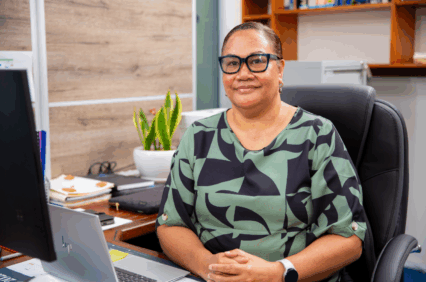
As Auditor General, I have had the privilege of overseeing our national audit office during a period of change and significant challenges. As I reflect on my seven years in office, there are several key themes and lessons learned that I find to be essential for the ongoing development and effectiveness of Supreme Audit Institutions (SAIs) globally.

Developing relevant and innovative approaches to support SAI Independence: Insights from the SAI Independence Rapid Advocacy Mechanism (SIRAM)

Supreme Audit Institutions (SAIs) have a vital role for public sector accountability, integrity, and transparency. To fulfill their role and build trust between the organs of the state and society, SAIs need to be independent. 

SAI Independence may be understood as the ability of a Supreme Audit Institution to operate autonomously of the government, without undue influence and control. It is considered a fundamental condition for SAIs to effectively carry out their mandate. The INTOSAI Mexico Declaration on SAI Independence identifies eight conditions, known as the pillars of independence, as the benchmark against which the independence of an SAI can be assessed.

The relationship between audit and the enforcement of financial responsibilities: Experiences from SAI of Portugal

The SAI of Portugal (Tribunal de Contas) is currently an institution that combines both the Anglo-Saxon and the Jurisdictional models of Supreme Audit Institutions. It means that although the audit function is a main function activity of the Court, it also complimentarily has also the power to judge financial liabilities.

Recruiting and Building Capacities of Qualified Staff in the Yap State Office of the Public Auditor

In the Federated States of Micronesia, the Yap State Office of the Public Auditor (OPA) is dealing with staffing challenges that are, unfortunately, not uncommon for the Pacific Island region. 

Looking Towards the Future of Accountability: Highlights from the PASAI Congress on Enhancing Public Auditing in the Pacific Region

By the INTOSAI Journal and PASAI Introduction In late February to early March 2023, the…

CAROSAI Identifies Small Island Challenges in the Region, Highlighting the Need for Resources and SAI Independence

Public sector auditing on small islands presents unique challenges, ranging from limited resources and capacity constraints, to susceptibility to national and environmental disasters, highlighting the complexity of ensuring accountability and transparency in these geographically constrained and vulnerable regions.

AFROSAI-E Engages Member Countries and Key Stakeholders at the 2022 Strategic Review & 18th Governing Board Meeting

Over 110 delegates from AFROSAI-E’s 26 member countries, partner institutions, and key stakeholders attended its 2022 Strategic Review and 18th Governing Board meeting.

Chairmanship of CAROSAI passed to the Court of Audit Aruba during the XII CAROSAI Congress

During the week of May 15th to May 19th, 2022, the XII CAROSAI Congress was organized in Aruba by the Court of Audit Aruba. The theme for the XII CAROSAI Congress, “Targeting Superior Audit Impact”, promotes accountability, transparency, and inclusiveness.

SAI Thailand Champions the FAIR Concept to Respond to COVID-19 Operations Challenges

SAI Thailand utilizes the FAIR concept (flexibility, agility, information technology, and resilience) to confront the post-pandemic environment for public sector auditing.