SAI Cyprus Organises High Level Event on EU SAIs Independence
Author: Akis Kikas, Director of Audit, Audit Office of the Republic of Cyprus
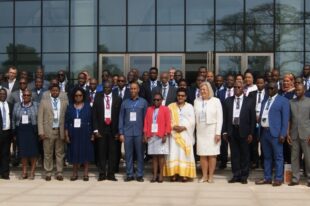
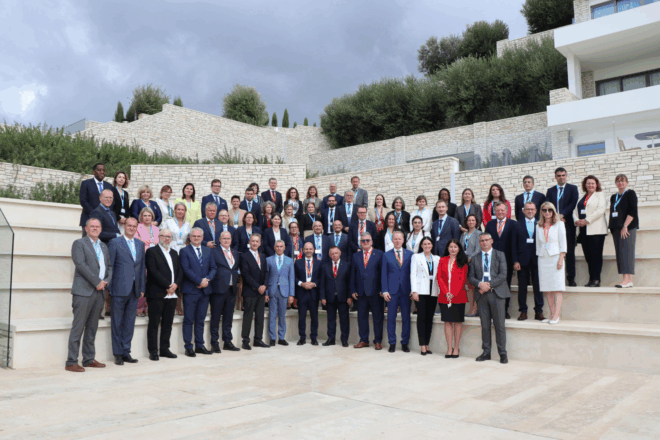
The Supreme Audit Institution (SAI) of Cyprus hosted a High Level event on European Union (EU) SAIs Independence in Pafos on October 15th 2024, with keynote speakers from the European Commission, the INTOSAI Development Initiative (IDI), the Support for Improvement in Governance and Management (SIGMA)/ Organisation for Economic Co-operation and Development (OECD) and the House of Representatives of the Republic of Cyprus. The event was attended by 21 SAIs of the European Union and 5 SAIs of Candidate and potential Candidate countries. The purpose of the event was for SAIs to reaffirm their commitment to safeguard their independence, address challenges that could pose a threat to it and discuss possible solutions.
During the event, Mr. Akis Kikas, Director of Audit of SAI Cyprus, presented the professional pronouncements in place relating to SAIs Independence, stressing that the independence of audit bodies is not only a technical requirement; it is a cornerstone of democracy and a vital tool for ensuring the integrity of public administration and therefore, adherence to the principles set out in the Mexico Declaration on SAI Independence is of paramount importance. He further pointed out that the United Nations General Assembly (UNGA) in its Resolutions 66/209 of 2011 and 69/228 of 2014 acknowledges the role SAIs have in fostering governmental accountability for the use of resources and their performance in achieving development goals. Aware that independence should remain an overarching goal of all SAIs, the resolutions also take note and encourage Member States to apply in a manner consistent with their national institutional structures, the Lima and the Mexico Declarations. Furthermore, he reminded the participants that the Addis Ababa Action Agenda on Financing for Development, endorsed by UNGA Resolution 69/313 from 2015, calls Member States to commit themselves to strengthening national control mechanisms, such as SAIs. To ensure that SAIs are able to deliver on this aspiration, the document encourages Member States to give due consideration to the independence and capacity building of SAIs in a manner consistent with their national institutional structures. It was also pointed out that, a significant development in recent years for European Union SAIs is that adherence to the above INTOSAI principles is inserted as a pre-accession requirement for candidate countries. Therefore, it is evident that these form now part of the Aquis Communautaire and therefore their application is expected, mutatis mutandis, in all member states.
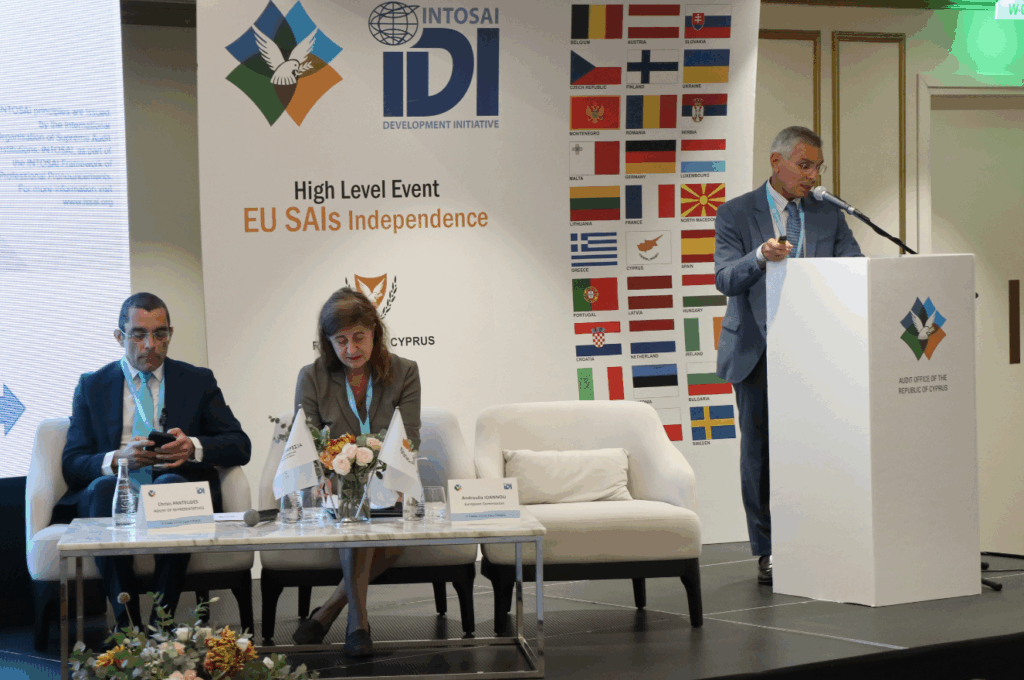
Ms Androulla Ioannou, Deputy Director of the Joint Audit Directorate for Cohesion of the European Commission, explained the role of independent SAIs in good governance and the Rule of Law, stressing the long-term benefits for both SAIs and the public. She pinpointed that SAIs are a central component of the anticorruption framework, contributing to building integrity in the public finance, but also a significant part of the checks and balances in national systems. She further highlighted that the European Commission monitors developments related to the independence, resources and powers of SAIs in the Rule of Law Report that it prepares annually.
Mr Chrisis Pantelides, Deputy Chairman of the Standing Committee on Development Plans and Public Expenditure Control of the House of Representatives of the Republic of Cyprus stressed that, without the contribution of the SAI, the Parliamentary Committee on Control cannot function, and the exercise of parliamentary control will be very deficient , if non-existent.
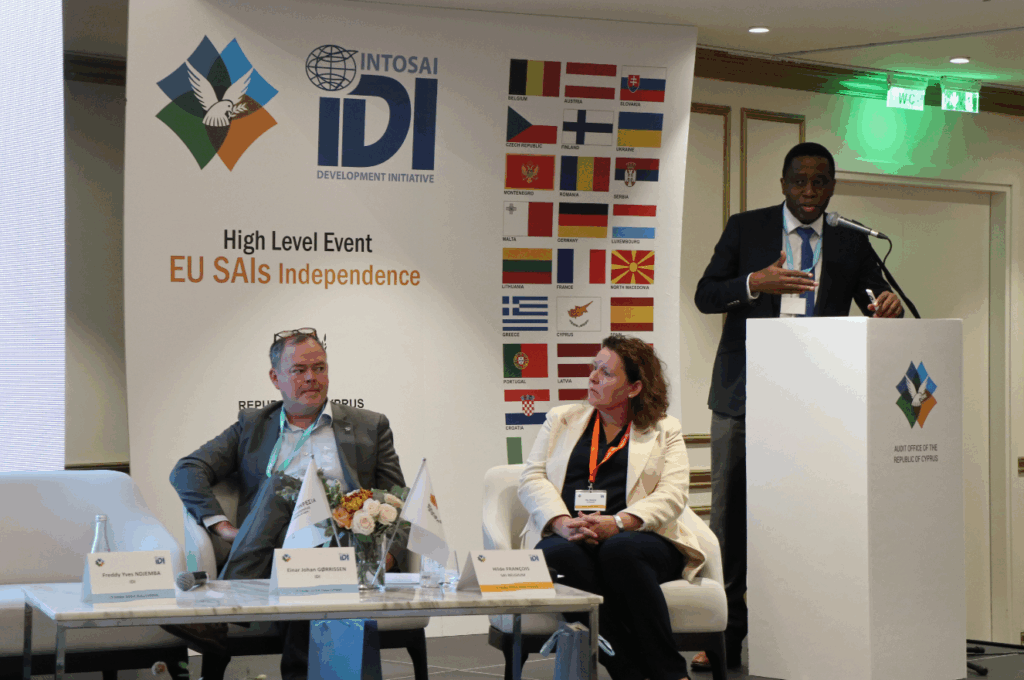
Mr Einar Johan Gørrissen, Director General of IDI, presented the results of the INTOSAI Global Stocktaking report – SAI Independence section, which is a triannual exercise where the objective is to give a snapshot of performance and capacities of SAIs. Mr Gørrissen explained that an overall decline in the SAI Independence Index, based on the Mexico Declaration principles, has been noted, with negative trends for adequate legal frameworks (Principle 1), access to information (Principle 4) and financial autonomy (Principle 8). He also noted an increase in reported SAI interference cases, especially in selecting audit areas. More than half SAIs cannot appeal to Supreme Court in cases of interferences, and 10% reported that Heads of SAI had experienced interference in conducting their mandates.
Mr Freddy Ndjemba, Senior Manager of IDI, shared with the participants insights from IDI’s SAI Independence Rapid Advocacy Mechanism (SIRAM) and Ms Bianca Brétéché, Deputy Head of SIGMA programme, OECD, presented the IDI/OECD global project on SAI Independence.
In the ensuing discussion participants agreed that existing INTOSAI pronouncements, especially the Mexico Declaration, offer a solid framework for SAI independence, and reiterated their unwavering commitment to the Mexico Declaration Principles of independence, as a cornerstone of their effectiveness and credibility but also acknowledged that there is great variation in the effectiveness of implementing these Principles in different jurisdictions. They recognised the importance of formal references to INTOSAI Standards regarding SAI independence in the Acquis Communautaire, not only as a pre-accession requirement for candidate countries, but for all member states. Independence is vital for SAIs to properly carry out their role in providing oversight in public spending and supporting the rule of law, however the following key challenges are observed:
- Restricted access to data.
- Financial independence.
- Lack of legal immunity for SAI Heads & members.
The participants recognised the importance of collaboration among EU SAIs and with EU institutions, through regular exchange of information, joint initiatives, and advocacy and expressed their commitment to promote SAI independence at the EU and national levels. The following considerations for advocacy on EU SAI Independence were put forward:
- Knowledge sharing and peer to peer learning, to support the contextualization of independence in different jurisdictions.
- Develop specific capabilities such as the legal capacities within SAIs to safeguard independence and protect the SAIs statute. SAIs should review and strengthen their applicable legal and institutional frameworks on a national level, and advocate for strengthening these frameworks in order to safeguard their independence.
- Steps should be taken to encourage the European Commission to explicitly require the implementation of SAI independence principles in EU member states. This is essential to facilitate and enhance the role of SAIs and enable them to fulfil their role in the rule of law, in an effective manner. Systematize the assessment of SAI independence through inclusion in the EC Rule of Law report, and use the results as a basis for future reforms.
- Articulate and demonstrate more effectively SAIs contribution to good governance, transparency and accountability. SAIs should enhance their communication efforts to raise public awareness of their role and the importance of their independence.
- International cooperation: SAIs should continue to collaborate with international organizations and other oversight bodies to promote good governance and accountability.