Tag: OLACEFS

Filter By:
Sort By:
Inside INTOSAI
Inside INTOSAI
Letter from the Chair of INTOSAI: The Importance of the Role of Supreme Audit Institutions in Education
October 16, 2024
Implementation of Deliberations: Case Study of Audit at the Transport Infrastructure Agency

The Supreme Audit Institution (SAI) of Brazil, known as the Tribunal de Contas da União (TCU), is tasked with overseeing the federal entity’s accounting, financial, budgetary, operational, and asset management to ensure legality, legitimacy, and economy. The Federal Constitution of 1988 empowers the TCU to enforce compliance with the law by setting deadlines for necessary corrective measures upon detecting illegality.

Analysis of the development, follow-up and impact of recommendations on government auditing in Peru

In Peru, there are three main types of control services in the governmental sphere: ex-ante, simultaneous and ex-post.

Ex-ante control is implemented before any financial disbursement is made. A clear example is the ex-ante authorization requested from the Office of the Comptroller for the payment of additional services in investment or construction projects.

Beyond Compliance: Elevating Audit Impact through Behavioral Insights

Through their work, Supreme Audit Institutions (SAIs) are compelled to promote positive changes in people’s lives. To achieve this purpose, auditing stands out as one of the most important tools at SAIs’ disposal to increase the public value generation. By carrying out audits, a SAI can evaluate whether processes are executed in compliance with established norms, identify performance improvements (under the usual principles of effectiveness, efficiency, and economy), or conclude on the financial information of an entity.

Inside INTOSAI
Inside INTOSAI
Letter from the Chair of INTOSAI: The Importance of the Role of Supreme Audit Institutions as External Auditors
September 30, 2024
Inside INTOSAI
Inside INTOSAI
Letter from the Chair of INTOSAI: Public-Private Partnerships in Infrastructure
August 19, 2024
Inside INTOSAI
Inside INTOSAI
Letter from the Chair of INTOSAI – The Strategic Importance of Foresight for the Work of Supreme Audit Institutions
July 18, 2024
News in Brief
News in Brief
Assessing the Impact of SAI Peru’s Concurrent Control Model: Greater Savings and Improved Efficiency
July 12, 2024
Inside INTOSAI
Inside INTOSAI
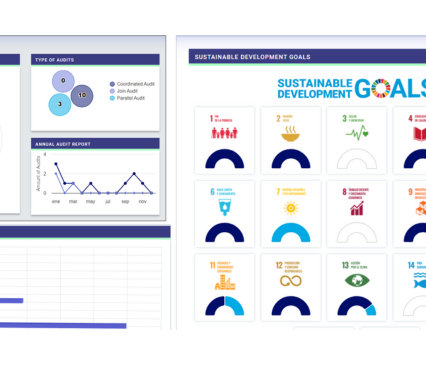
Subcommittee on Cooperative Audits Launches New Virtual Catalogue of Cooperative Audits
July 10, 2024
News in Brief
News in Brief
Peruvian Congress passes ‘Law of the Career of the Government Auditor’
July 3, 2024
News in Brief
News in Brief
SAI Peru Shares Knowledge with SAI Paraguay on the Application of Performance Auditing and the Concurrent Control Model
June 27, 2024
Inside INTOSAI
Inside INTOSAI
Energy Transition in the Context of the Climate Crisis
June 19, 2024
The Professional Trajectory of the Judicial Function: A Case Study from the Federal Court of Accounts of Brazil

Since 2020, the Federal Court of Accounts of Brazil (TCU) has been structuring a policy of professional trajectories, with the aim of greater professionalization of its auditors. A professional trajectory is defined as the sequence of positions or roles occupied throughout the functional life of an auditor, encompassing qualifications, experiences, and competencies necessary to perform functions at a certain career level.

Public Prosecution Offices within Supreme Audit Institutions’ jurisdiction, their role and importance for the due process of law: A glance at the findings of a global survey

The INTOSAI-P 50 document outlines twelve principles for the jurisdictional activities of Supreme Audit Institutions (SAIs) empowered with the corresponding mandate, which allows them to rule on the liability of individuals accountable by law in case of irregularities or mismanagement.

The Forum of Supreme Audit Institutions with Jurisdictional Functions: The Significance of Its Jurisdictional Role in the Public Sphere

Supreme Audit Institutions (SAIs) with jurisdictional functions from around the world make up approximately a quarter of the International Organization of Supreme Audit Institutions (INTOSAI) membership. According to Pompe et. Al (2022), these SAIs not only audit, but also assume crucial roles in the adjudication and management of public funds. SAIs with jurisdictional functions have become a beacon of transparency and accountability, as they conduct reviews of accounts, and impose sanctions upon detecting poor management or financial irregularities in government administration. 

Inside INTOSAI
Inside INTOSAI
Strengthening the Independence of Supreme Audit Institutions: A Global Commitment
May 7, 2024
Inside INTOSAI
Inside INTOSAI
ClimateScanner Global Call: Supreme Audit Institutions unite at UN headquarters to assess national climate action and tackle climate change
April 24, 2024
Inside INTOSAI
Inside INTOSAI
The Importance of ISSAI 140 for Quality Management in Government Audits  
April 16, 2024
Inside INTOSAI
Inside INTOSAI
The Role of Supreme Audit Institutions in Gender Equality
March 11, 2024
Inside INTOSAI
Inside INTOSAI
What is the role of Supreme Audit Institutions in relation to immigrants, refugees, and stateless people?
January 8, 2024
Evaluation of Information Quality From the User’s Perspective

This article presents a methodology to assess the effective transparency of information published on public entities’ portals. It considers not only the mere availability of information but also quality requirements of information, such as timeliness, completeness, conciseness, accuracy, clarity, reliability, accessibility, and relevance.

Assessment of the Maturity and Impact of Tax Incentives for Regional Development: Application of the Control Framework for Public Policies and Impact Assessments

In 2022, the Brazilian Court of Audit (TCU) and the Comptroller General of the Union audited the Automotive Regional Development Policies (PADR) of the Brazilian government. These policies, created in the late 1990s, granted tax credits to automobile manufacturers that established factories in less developed regions of Brazil.