Women’s Leadership in Supreme Audit Institutions

Author: Aziza MSAAF, Chief Ethics Officer, Court of Accounts of Morocco
Global Women’s Representation
The Beijing Declaration in 1995 set a roadmap for gender equality and women’s empowerment. Since then, the international community has been increasingly aware that women’s leadership is essential for the development of public strategies and programs, so that rights, priorities, and needs of all members of society are fairly represented.
However, 30 years later, no country in the world has yet achieved full gender parity, as stated by the 2025 Global Gender Gap Report1. The average of the “Parity Gap Index” stands at 68.8% for all 148 countries in 2025. Although there has been great progress, closing the Parity Gap could take decades to be achieved. In the public sector workforce, women make up 50% of employees but only 28.8% of senior leadership. Enhancing women’s representation in leadership could strengthen talent availability and support long-term growth.
Women’s Representation in SAIs
Supreme Audit Institutions (SAIs) around the world continue to face challenges in achieving gender equality, despite notable progress in promoting women’s integration within their organizations.
According to the Global SAI Stocktaking Reports (GSR) realized by the INTOSAI Development Initiative (IDI), from 2014 to 2023, the average of female staff composition in the overall SAI staff numbers has increased from 37% to 51%. Still, there are variations across INTOSAI regions. For instance, only 35% of SAI staff in ARABOSAI, were female in 2023.
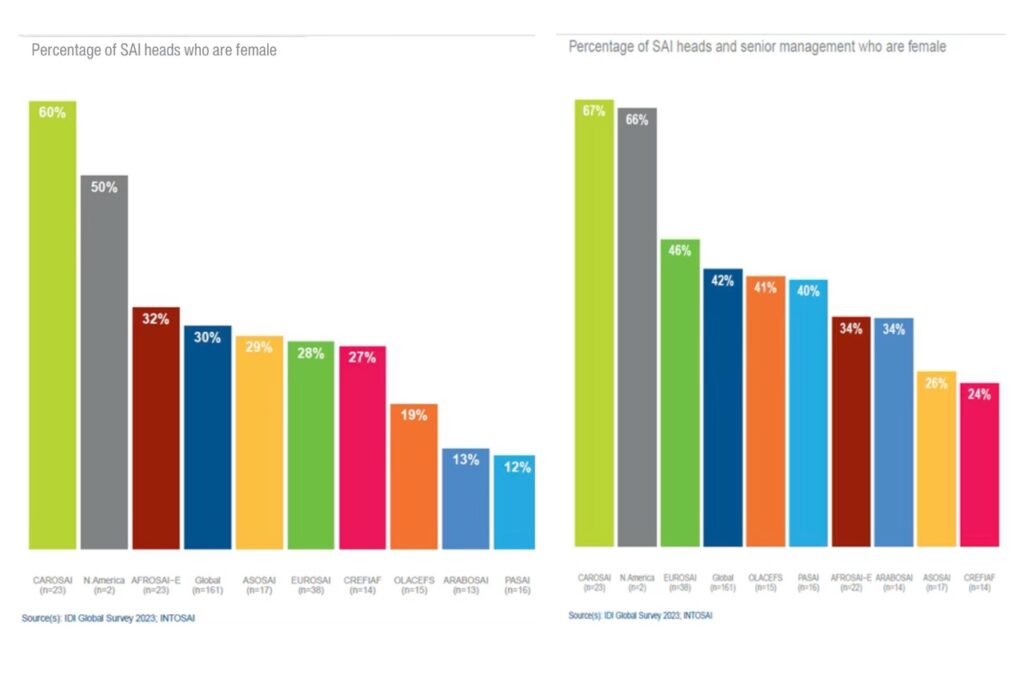
Female representation at the heads of SAIs and in senior management remains limited. In 2023, 30% of SAI heads were women. Regionally, CAROSAI led with 60%, while ARABOSAI ranked second lowest at 13% (see graph, GSR 2023). Female senior management as a share of overall SAI staff also showed slight growth, rising from 39% in 2020 to 44% in 2023. CAROSAI again had the highest proportion at 71%, ASOSAI the lowest at 25%, and ARABOSAI at 31% (see graph, GSR 2023).
Challenges and Progress of Women’s Leadership in the Court of Accounts of Morocco
From 2000 to 2015, female composition in the overall staff number of the Court of Accounts of the Moroccan Kingdom improved slightly from 25% to 28%, concentrated in support staff. Female representation in professional staff increased from 12% to 19% and from 41% to 48% in support staff. However, in the last decade, the female composition of staff increased significantly to 39% in 2025 (28% of professional staff and 51% of support staff in 2025).
Women remain underrepresented in the Court of Accounts, specifically for professional staff. However, the rate of 39% illustrates a small, better representation than the ARABOSAI region (35%), to which we belong, as well as, the national current rate of women in the public administration (36%).
The Court of Accounts demonstrates a strong commitment to fairness, equality, and gender inclusion in its human resource management, consistent with national priorities and the Sustainable Development Goals (SDGs). Recruitment is open equally to all candidates, with selection and appointments based solely on competence and qualifications, despite the absence of a formalized strategy for assigning positions of responsibility.
A key milestone for women’s leadership progress was the appointment of Mrs. Zineb El Adaoui as the “First President”, Head of the Court of Accounts in 2021. Ms. El Adaoui is the first woman to lead the institution since its creation in 1979, marking a transformative moment for gender equality in the Moroccan public governance.
Recognizing the importance of gender equality, the value of women’s leadership, and the SAI role in leading by example, the First President has actively encouraged women’s participation in leadership. As a result, the proportion of women in senior management has risen significantly, though it remains below the desired level.
Consequently, Moroccan SAI, as for other peers in the INTOSAI community, has a long pathway toward gender equality, but that could be significantly narrowed because of a declared and assured will and commitment of the First President and senior management to encourage and promote female and young staff to take their chance in middle and senior management positions.
Global Challenges in Women’s Leadership and Strategies for Advancement
While women’s low representation in leadership positions is sometimes attributed to intrinsic factors—such as limited career vision, self-censorship, or a reluctance to exercise hierarchical authority—research suggests that gender differences in career ambition are relatively modest. Therefore, the persistent underrepresentation of women in leadership is better explained by the continuing presence of “glass ceiling” barriers, rooted in both socio-cultural norms and traditional organizational practices within public administration.
To overcome these challenges, it is important to reaffirm a women’s right to access senior positions and promote inclusive, stereotype-free workplaces. Decision-makers should raise awareness of career barriers, provide mentorship to help women build confidence, and support their reintegration after maternity leave to retain talent. Adopting a long-term view of women’s contributions and fostering a culture of encouragement are key to advancing gender equality in leadership.
SAI Measures to Promote Women Leadership and Gender Equality
The Beijing Declaration and Platform of Action has constituted the milestone in the commitment toward gender equality. It was translated in the United Nations 2030 Agenda, and in particular in SDG 5, an ambitious goal that seeks to “Achieve gender equality and empower all women and girls”, among the 17 SDGs that concern all area of development. The UN called on SAIs to help track progress on specific targets, and audit national programs that support the SDGs, including SDG 5.
According to the INTOSAI-P12, “Value and benefit of SAIs: making a difference to the lives of citizens”, to gain trust and credibility, a SAI needs to be a model institution, setting an example, from which others in the public sector can learn. In the specific case of the SDG 5, SAIs seek gender equality through providing and demonstrating a positive workplace environment for women in their own organizations, and in the audited organisations. INTOSAI’s strategy on gender equality involves the promotion of this principal within SAIs and through audit work, focusing on diversity, inclusion, and empowerment. Additionally, the IDI and INTOSAI regions are implementing initiatives and providing support to SAIs to help institutionalize gender responsiveness in governance and incorporate gender into performance measurements and audits.
SAI’s Growing Gender Awareness
– 40% of SAIs integrate gender equality into their strategic plan;30% of SAIs have a gender policy.
– In OLACEFS 67% of SAIs have a gender policy. In contrast only 14% and 11% have such a policy in ARABOSAI and PASAI, respectively;
– 38% have designated a gender focal point: a sharp increase from 25% in 2020.
– In OLACEFS, 87% of SAIs have a gender focal point, in CREFIAF the number is 73% and in ARABOSAI the number is 57%.
Interviews with the First President and Three Women leaders of SAI Morocco
Mrs Zineb El Adaoui, First President of the Court of Accounts; Kingdom of Morocco
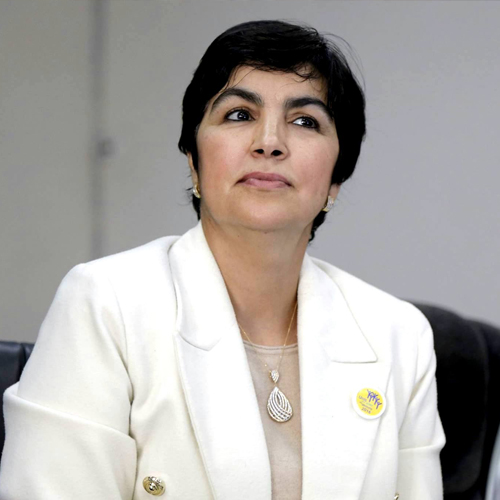
- As a female leader, what has been your most significant challenge?
As the first woman to serve as head of SAI in Morocco, the greatest challenge for any leader of this prestigious institution, regardless of gender, is the ability to unite people around a shared vision and values.
I have felt also, as a woman, the responsibility to foster an inclusive and equitable culture without ever compromising on excellence or meritocracy;
- When you face challenges, what encourages you to push forward?
What keeps me moving forward, even in difficult times, is a deep belief in the mission of our institution: to contribute to improving the lives of our citizens.
Recognizing that our work serves the public interest and that our professional actions have a broader impact on our society, gives a meaning to every effort and transforms challenges into motivation;
- What advice would you give to increase Supreme Audit Institution female leadership?
There are many mechanisms to promote women’s leadership, but none will truly succeed unless women themselves believe in their capacity to inspire, to lead, and to make a difference. Self-confidence is the foundation of all leadership.
Mrs Fatima Bouzourh, President of the Budgetary and Financial Disciplinary Chamber
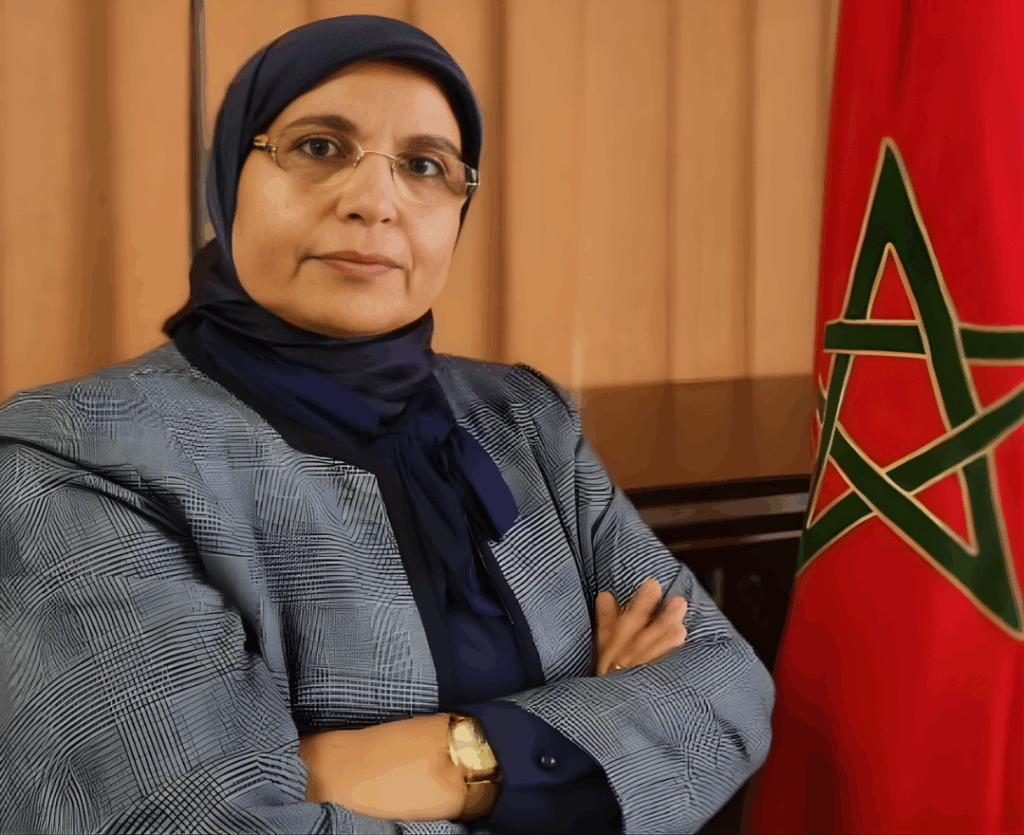
- As a female leader, what has been your most significant challenge?
As the first woman leading the budgetary and financial disciplinary chamber at the Moroccan SAI, my challenge was to capitalize on the chamber’s experience as a jurisdictional chamber in order to ensure the quality of its outputs, and to offer professional supervision to my team while preserving a climate of mutual respect and conviviality;
- When you face challenges, what encourages you to push forward?
What encourages me to overcome the difficulties encountered is above all: the encouragement of our leadership, the support of my family, the pleasure and satisfaction that I feel when achieving my objectives, and most of all, the feeling of serving my country through the work that I carry out with dedication;
- What advice would you give to increase Supreme Audit Institution female leadership?
Women in the SAI must sharpen their skills, demonstrate great professionalism and the ability to work in a team, in order to assert themselves through their human and professional qualities.
Mrs Salima Chafiki, President of the Court of Accounts of Rabat-Sale-Kenitra Region
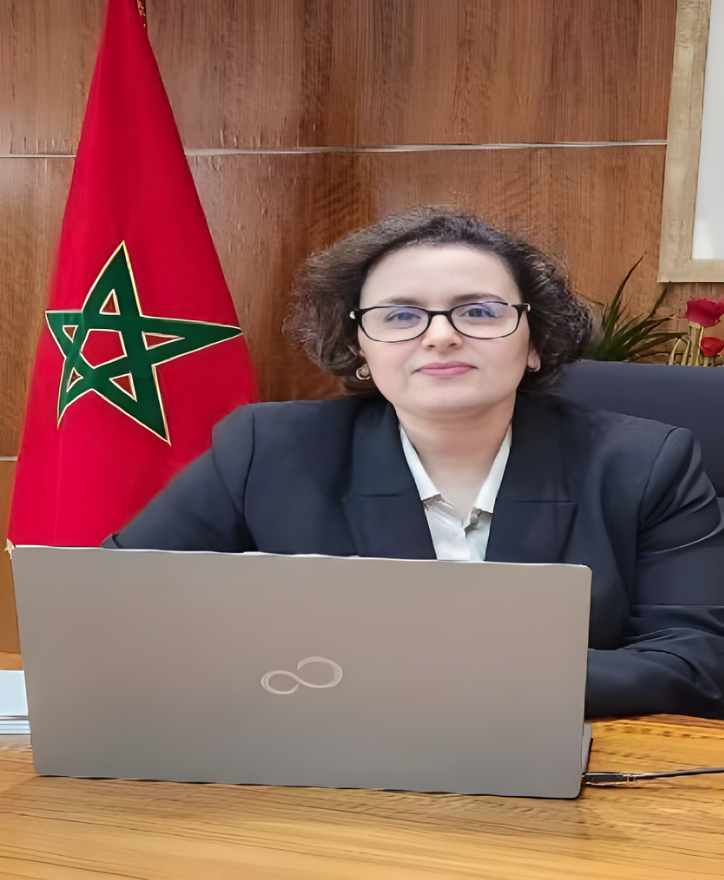
- As a female leader, what has been your most significant challenge?
As a female leader, my greatest challenge was to succeed in my mission to successfully capitalize on previous experiences, to further raise our institution on the regional institutional scene and to ensure the regional oversight of good governance, transparency, and accountability.
Another challenge, and not the least, was to value my team’s commitment, to establish a culture of listening, exchange, trust and solidarity. For me, this meant anchoring a firm belief in collective intelligence and aligning all managerial actions with a modern, co-constructive, solution and results-based approach;
- When you face challenges, what encourages you to push forward?
In face of difficulties, my driving force is to be always remain optimistic and believe in a better future. Our profession is extraordinary because it gives us the opportunity to contribute to changes in citizens’ lives and to contribute to render justice to them.
Our audits allow us to see the tangible impact of public action on people’s lives. They help prevent and correct shortcomings and even drive changes in regulations and laws. Seeing these results every day gives us the motivation to keep moving forward.
- What advice would you give to increase Supreme Audit Institution female leadership?
To increase female leadership, we need to share and cultivate a passion for the profession, a sense for measured risk and challenges. We need always to lead by example, take the initiative, innovate, persevere, and never give up. It is also essential to accept to deal with differences.
We must embody empathy and ethical values, and unite around shared ideas and objectives. We should know how to serve the group and uphold noble causes, while valuing consultation and fostering a win-win spirit as guiding principles.We must learn to be both protective and determined: “An iron fist in a velvet glove”.
Mrs MBARKA El Ifriki, Public Prosecutor at the Regional Court of Accounts of Casablanca – Settat
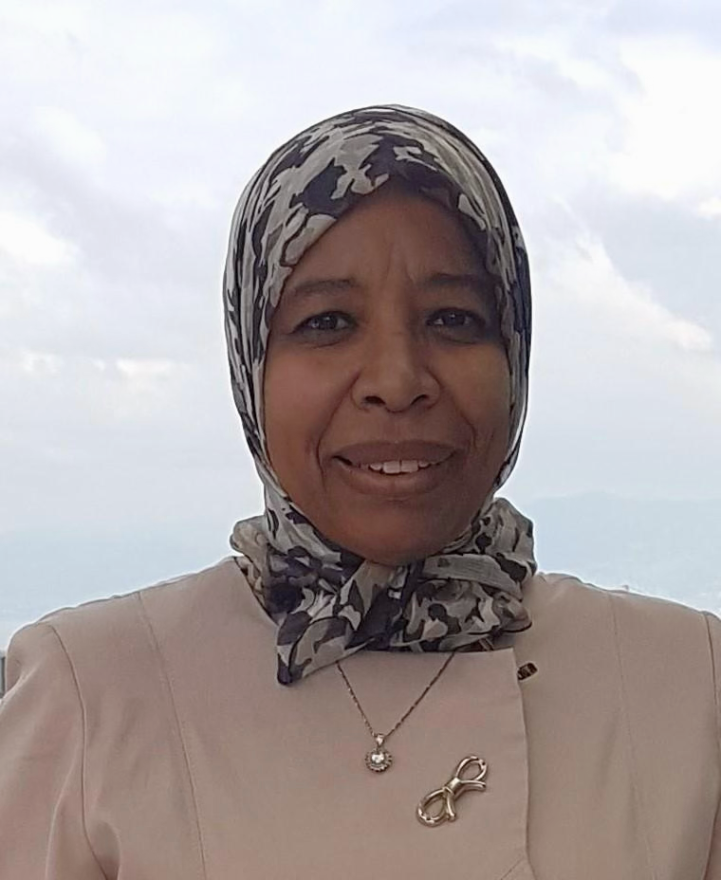
- As a female leader, what has been your most significant challenge?
As a woman leader, my biggest challenge is to be able to manage existing stereotypes alongside my standard leadership roles. It is constantly necessary to prove that women are able to behave as “true leaders” capable of managing and making the right decisions, even in the same way as their male colleagues or simply differently;
- When you face challenges, what encourages you to push forward?
What encourages me to move forward is hope, responsibility and a positive environment. A hope of seeing things change in our work environment. A responsibility to be an exemplary leader and a permanent source of inspiration to young female colleagues, not only in terms of professional skills but also in terms of human relationship and resilience. And finally, being surrounded by family, friends, and colleagues who bring positive energy in my life;
- What advice would you give to increase Supreme Audit Institution female leadership?
To increase women leadership in SAIs, we need to work, in parallel, on encouraging women to access the various positions of responsibility, especially senior management positions, providing women leaders by ongoing support to overcome the inherent challenges they could face and also, focusing on women’s professional and personal capacities building.
It is important to highlight that “Only capable and competent women can drive real change on the ground”.
- Report published by the World Economic Forum. ↩︎