The Establishment of the National Audit Office of Malta: Safeguarding of SAI Independence Enshrined in the Constitution

Author: Charles Deguara, Auditor General of the National Audit Office of Malta
The 1997 constitutional and legal enactments stand as a defining event in the history of the Maltese National Audit Office, which originated as an auditing department within the public service. This historical date is comparable to the founding of the former Department of Audit, established by the first British Governor of Malta, Sir Thomas Maitland, back in 1814, and the grant of elementary constitutional protections to the Director of Audit when Malta became an independent state in 1964. To commemorate this important milestone in 2022, amongst other initiatives, the National Audit Office of Malta (NAO) issued a scholarly book entitled ‘State Audit in Times of Transition – Reflections on Change and Continuity, Challenge and Opportunity from Malta and Beyond’. Edited by Professor Edward Warrington, it includes a collection of studies that essentially reflect on the past and present with an eye to our institution’s future. This article is based on the introduction to this book that is accessible on our website (State-Audit-in-Times-of-Transition).
Indeed, one cannot overstate the critical importance of the legislation enacted in July 1997 with the unanimous approval of Government and Opposition members of Parliament (MPs). Until then, the Department of Audit generally fell under the control of the Ministry for Finance. With the amendment of Article 108 of the Constitution and the enactment of the Auditor General and National Audit Office Act 1997, the NAO emerged as a fully autonomous oversight institution led by an Auditor General and Deputy Auditor General, whose appointment invariably requires the support of no less than two-thirds of the Members of Parliament. Other important provisions in the legislation, such as those related to the recruiting and financing of the NAO reinforce the Office’s total independence from the Executive.
Thanks to these important amendments, Malta’s NAO complies with the Lima and Mexico Declarations on the functions, independence, and ethos of Supreme Audit Institutions. Undoubtedly, only a fully independent external audit function can guarantee a reliable, fair, and trustworthy reporting of audit findings and recommendations.
In all fairness, notwithstanding the obvious constraints on its independence and resources, the former Department of Audit consistently followed, as far as possible, a policy of fair and objective reporting. The fundamental audit methodology and the experience of public sector auditing accumulated over one hundred and fifty years constituted a very useful starting point for the newly set up NAO. The institutional knowledge and experience of certain members of management, some of whom are still in service at the NAO, have proven to be extremely useful throughout this gradual but determined transition. Thus, our Office inherited the ethos and core values of its predecessor and is committed to continue cherishing them in line with international public sector auditing standards.
Among the responsibilities and powers vested in the Office of Auditor General, I emphasise the core duty to invariably provide fair, truthful and objective assurance to Parliament, and ultimately to our citizens, our principal stakeholders, that public funds are being used for the purpose for which they were approved, in compliance with prevailing rules and regulations, and in the most economical, effective and efficient manner possible (the famous three e’s). Observers of contemporary governance now refer to two additional important e’s: ‘environment’ and ‘ethics’, both of which have today become increasingly evident in our audit work. We discharge this onerous duty essentially through a fully independent selection of audit subjects which form our Audit Plan for a particular year. This calls for a careful internal consultation and discernment process which is guided by certain criteria, such as materiality and risk. In this regard, we have developed within our Office an extensive risk assessment framework that is very useful in the designation of our Audit Plan. Among other elements, these risk assessments consider the financial materiality, the socio-economic sensitivity of public sector programmes and activities as well as the status of previous concerns raised by the Office in recent years.
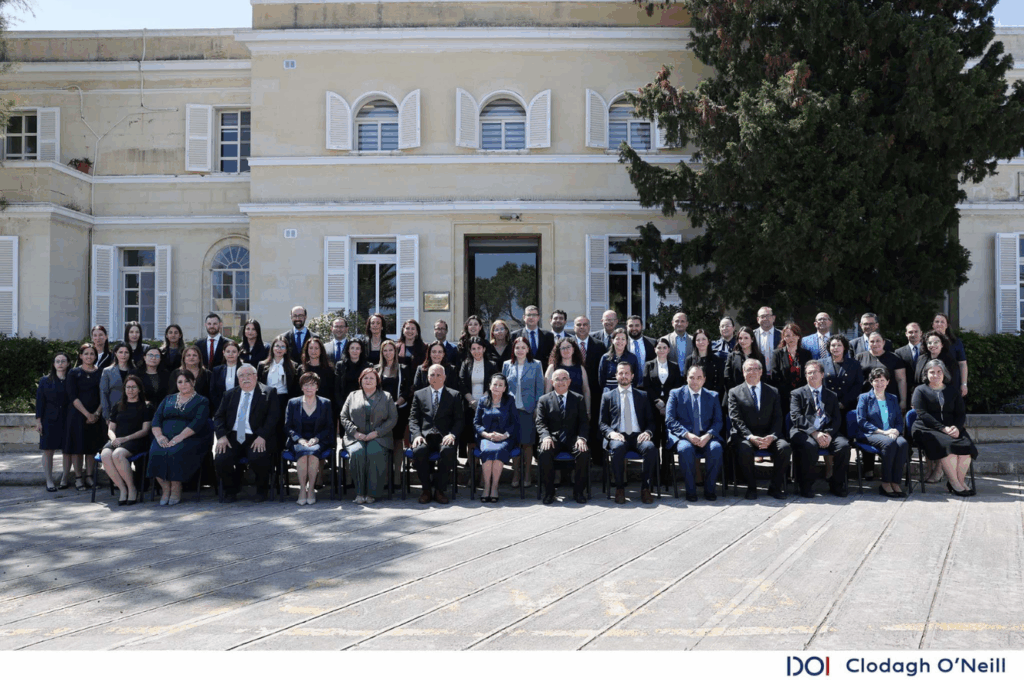
To do our work well, and consistent with international auditing standards, the enabling legislation confers authority on the Auditor General and the NAO’s staff to have free access at all reasonable times to such information from officers and other personnel of government departments or offices, or of entities subject to his audit, that may be required by them for the proper execution of their functions according to law. The NAO shall be entitled to receive from such officers and other personnel such reports and explanations as they may deem necessary for such purposes.
Moreover, in terms of sub-article 108(12) of the Constitution, in the exercise of their functions the Auditor General and the Deputy Auditor General shall not be subject to the authority or control of any person. This reflects the full autonomy that the NAO enjoys – a ‘sine qua non’ condition required to enable it to carry out its Constitutional duties in the most objective and independent manner possible.
Throughout my long tenure within this Office, I have always emphatically believed that our staff are undoubtedly the NAO’s most valuable asset. Consequently, we need to continuously invest in our highly qualified employees, particularly through the provision of appropriately designed professional development programmes, to ensure that they possess the right tools to carry out audit work to the highest professional standards. The NAO needs the right tools, at all levels of the organisation, to ensure we are duly prepared for such new challenges brought about by these complex changes, especially those occurring within the public sector itself. This implies adaptations and innovations in the way the public sector conducts its business, particularly the use of more complex public procurement procedures and whole of government approaches. Having such tools is a critical requirement to ensure that a national audit institution enjoys and is able to practice full operational independence.
In times of complex social, economic, cultural and technological transition, an institution’s external relationships assume even greater salience, perhaps none more so than the NAO’s relationship with the leadership of its auditee, namely the Public Service of Malta. While jealously guarding our constitutional and professional autonomy, the NAO strives assiduously to maintain a good working relationship with the leadership of the public service, as clearly stipulated in our Strategic Plan 2024-2028, entitled ‘Enhancing Audit Impact’. I refer to my introduction thereto ‘Central to the NAO’s ethos is the commitment to independence and autonomy, ensuring that audits are conducted impartially and objectively, free from external influences…..’
Another aspect of the NAO’s full autonomy, is that despite being the smallest national audit institution within the European Union, we have become more visible in the international sphere. We are very active in several international working groups, such as the EU Contact Committee (an active network of the Heads of national audit institutions of the EU Member States), and in the European Organization of Supreme Audit Institutions (EUROSAI) Environmental Auditing as well as the EUROSAI Information Technology (IT) Auditing Working Groups. Suffice it to state that this year we have hosted in Malta the important 23rd INTOSAI Working Group on Environmental Auditing Assembly (July 2025) whilst we are presently preparing, in close collaboration with the European Court of Auditors, to host this year’s Contact Committee in November 2025.
The NAO sits at the centre of a web of institutional relationships, particularly with its auditees, extending right across the State. In essence, I would define the ethos of these relationships as mutual trust and respect. The values are interdependent. Trust and respect ensure that the NAO’s reports and assignments are duly accepted by Parliament, by the auditees and by the general public, whose interests we strive to safeguard, particularly since ultimately it is the tax-paying public that finances Government’s operations. Of course, such trust needs to be continuously earned, and that in turn means that all our work must be based on the fundamental values of objectivity and fairness without any bias or favour.
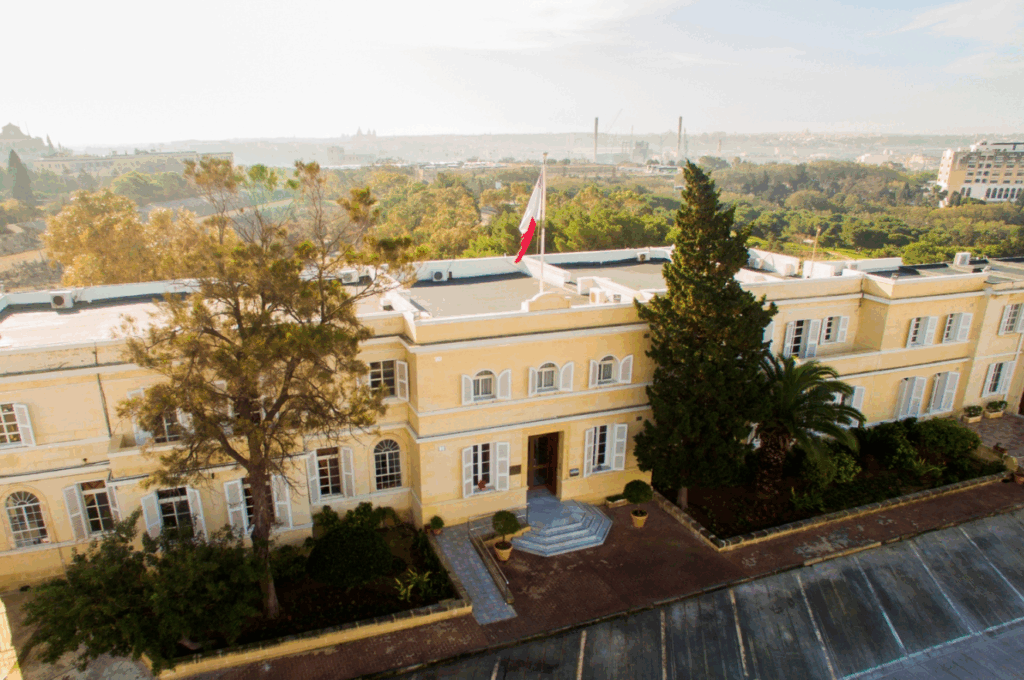
Undoubtedly, the NAO has evolved significantly throughout the past twenty-eight years: in saying this, I warmly acknowledge the efforts undertaken by my predecessors and all the staff who have worked within the NAO. Suffice it to say that prior to the 1997 legislative amendments, only the Annual Report on Public Accounts was published (comprising the financial audit of the Government Financial Report and a number of Compliance Audits); very few stand-alone reports were issued. At present, apart from the two Annual Reports, one focusing on Public Accounts and the other on the Workings of Local Government, the NAO publishes several stand-alone reports, such as Performance Audit Reports, IT Audit Reports, and Special Audits and Investigations Reports. For the most part, the latter are undertaken at the request of the Public Accounts Committee, a Parliamentary Select Committee. Moreover, nearly a decade ago, the NAO started issuing Follow-Up Audit Reports, which focus on the extent of implementation of the NAO’s main recommendations in reports issued in previous years. It is satisfying to note that the vast majority of our recommendations have either been or are in the process if being implemented.
I strongly believe that the main reason for this significant development is the rigorous, transparent and forward-looking staff selection process adopted since the inception of the NAO. This being an extremely important aspect of the total autonomy that the NAO enjoys today, as emphasised above. Gradually, it led to the recruitment of professionally qualified and competent staff in accounting (for Financial and Compliance Audits) and in other academic fields (for the other types of audits). We also worked hard to raise the morale and motivation of our staff, particularly during a very challenging time for the NAO, when the conditions of engagement were not so attractive and we were losing very good people from our team. Today, resignations from our Office have been reduced drastically.
While the number of employees we have today is similar to what it was decades ago, the depth of their skills, expertise, and professionalism has grown remarkably. This is one of the principal results of the autonomy that our Office enjoys.
To conclude, the National Audit Office is the heir to one of the oldest governing institutions in Malta: as heir, it has inherited the mission entrusted to the State Auditor as well as the enduring ethos of its predecessor, the Department of Audit. Through its work the NAO strives not to be the passive custodian of a dead legacy. On the contrary: it cultivates that legacy with extraordinary commitment and vigour, with a view to helping Malta’s public administration to discharge faithfully its own distinctive mission towards the common good in the challenging circumstances of the twenty-first century. Essentially, through the continued enhancement of good governance across the public sector keeping in view the high priority given to the attainment of the sustainable development goals. This steadfast commitment and vigour makes me confident that, notwithstanding the challenges it faces, the National Audit Office will continue to carry out its constitutional mandate in the best manner possible. Ultimately, in the best interest of the citizens it aspires to serve.
Charles Deguara, Auditor General