Perspectives from the World Bank on SAI Independence through the Independence Index
Author: Mona El-Chami, Senior Governance Specialist, World Bank
Introduction
Supreme Audit Institutions (SAIs) are a cornerstone for public financial management and good governance. Being able to work independently is necessary for transparency, accountability, and the good use of public resources. The World Bank considers that SAI independence is not only a legal or technical aspiration but also a developmental necessity. SAIs’ mandate is to build trust in the public, hold governments accountable, and contribute to national development goals, particularly Sustainable Development Goal (SDG) 16 on peace, justice, and strong institutions (United Nations, 2015). But they cannot do these things if they are not fully independent.
This article explores the origins and structure of the SAI Independence Index (InSAI), highlights key trends and insights from recent reports, and discusses the implications for SAIs and the donor community. It also talks about important new developments and insights from recent reports. It also sees opportunities for collaboration and continuous improvement in the quest for stronger, more independent SAIs worldwide.
Origins of the SAI Independence Index
The SAI Independence Index (InSAI) was developed in response to a growing recognition among the international accountability community that SAI independence is both essential and unevenly realized across countries and regions. Even though many countries have officially committed to SAI independence, there wasn’t enough regular, comparable data to figure out what level of independence there really was and track progress over time.
The InSAI complemented International Standards of Supreme Audit Institutions (ISSAIs), International Organisation of Supreme Audit Institution (INTOSAI)’s SAI Performance Measurement Framework (SAI PMF) tool, and other existing tools and approaches to provide insights into SAI independence. It was intended to be utilized to inform and better equip World Bank task teams and development partners to support the strengthening of SAIs in client countries and help focus the ongoing collaboration between INTOSAI and development agencies to address the intractable SAI independence issue. The InSAI was developed by a team of SAI experts at the World Bank and reviewed by experts from INTOSAI Development Initiative (IDI), US Government Accountability Office (US GAO), French Court of Accounts, Ghana Audit Service, The Global Fund, and UK’s Foreign, Commonwealth and Development Office.
The Structure of the SAI Independence Index
The InSAI includes 10 indicators that are based on international standards and practices and capture the multifaceted nature of SAI independence. These indicators are grouped based on the following important dimensions:
Legal Framework: How well do country constitutions and laws protect SAI’s independence?
Financial autonomy: The ability of SAIs to handle their own funds and give resources to the right places as needed.
Staffing autonomy: The authority to hire, keep, and manage qualified workers without too much help from outside sources.
Operational autonomy: The freedom to set audit priorities, methodologies, and reporting practices.
Access to Information: The right to obtain access to all the records and information needed to do audits well.
Reporting and follow-up: The ability to report findings publicly and ensure that recommendations are acted upon.
The methodology of the index combines using documentation and professional judgment, with written justifications for each score. The final score (0–10) reflects the level of SAI independence. This approach allows for a nuanced understanding of the formal and informal factors that affect SAI independence in real-life situations.
Trends and Insights
Regional and Global Patterns
The first InSAI Index, which came out in 2021, revealed significant disparities in SAI independence across regions and countries. Only two countries reached the highest level of independence, which shows the challenges that remain. Some of the key findings included:
Weaknesses in Financial and Staffing Autonomy: Many SAIs lack control over their own budgets and face constraints in recruiting and retaining skilled personnel. These limitations undermine their ability to conduct effective audits and respond to emerging risks.
Variations in Independence Across Regions: Some regions, such as South Asia, scored relatively higher, particularly in operational autonomy and audit scope, while regions like Sub-Saharan Africa and the Middle East had lower levels of independence, especially in financial autonomy and legal frameworks.
Donor Influence in Promoting Independence: The findings underscored that SAIs receiving sustained donor support showed more significant improvements in their legal frameworks, audit capabilities, and operational independence.
The second InSAI Index completed in 2023, emphasized that, while progress has been made—especially in transparency and operational autonomy—persistent challenges remain. Financial and staffing constraints continue to impede the ability of many SAIs to function independently. Political pressures, resource limitations, and gaps in legal frameworks are recurring themes in countries where SAI independence is weakest.
Notable Improvements and Challenges
The InSAI Index has shown a number of positive trends, such as:
Stronger legal protections: In many countries, legal changes have been made to strengthen government promises of SAI independence, which are often made possible by technical help from donors.
Better Accountability: More and more SAIs are talking to the public and sharing their results, which is creating a culture of accountability.
Improved operational practices: Thanks to programs that build capability, SAIs can use modern auditing methods and international standards.
However, challenges persist. In many contexts, the gap between formal independence and actual practice remains wide. Informal norms, political dynamics, and limited resources can undermine even the best-designed legal frameworks.
Implications for SAIs
Informing Reform and Policy Dialogue
The InSAI Index has become a valuable tool for SAIs, policymakers, and development partners. By providing a clear, evidence-based assessment of SAI independence, the index informs reform efforts and policy dialogue at both the national and international levels.
For SAIs, the index serves as a benchmark for self-assessment and strategic planning. It helps identify areas of strength and weakness, prioritize reforms, and track progress over time. For governments and legislators, the index highlights the importance of enacting and enforcing legal protections for SAI independence.
Use Cases in Country-Level Assessments and Donor Coordination
Development partners, including the World Bank, use the InSAI Index to inform the design and implementation of public financial management (PFM) projects. The index helps donors target their support to areas where it is most needed, coordinate efforts with other partners, and monitor the impact of their interventions.
For example, World Bank PFM projects often include components aimed at strengthening SAI autonomy, such as supporting legal reforms, providing technical assistance, and building institutional capacity. The index provides a framework for measuring the effectiveness of these interventions and ensuring that they contribute to sustainable improvements in SAI independence.
Broader Donor Efforts in Supporting SAI Independence
The World Bank and other donors are committed to supporting SAI independence through a variety of mechanisms and partnerships:
Institutional Strengthening: Many SAIs need both financial and technical resources to have stronger independence. Donor-funded projects often focus on developing SAIs’ institutional capability including investments in technology, infrastructure, and training.
Technical Assistance and Legal Reforms: Donors have played a key role helping SAIs in drafting legislation that supports autonomy.
Global Advocacy: Collaboration and advocacy by development partners has always been impactful. It has helped embed the principle of independence into global frameworks such as the Addis Ababa Action Agenda on Financing for Development (United Nations, 2015; INTOSAI, 2007).
Looking Ahead: The Global Project on SAI Independence
While substantial progress has been made, the journey toward full SAI independence is ongoing. Political pressures, resource constraints, and informal barriers continue to pose significant challenges. The World Bank recognizes that achieving true independence is a long-term endeavor that requires sustained commitment from all stakeholders.
The Global Project on SAI Independence, led by the World Bank, International Monetary Fund (IMF), Organisation for Economic Co-operation and Development (OECD), IDI, and US GAO marks a new phase in donor support. This initiative aims to explore not only the legal and formal aspects of independence but also the informal factors—such as norms, traditions, and relationships with key government stakeholders—that influence SAI effectiveness. By addressing both the written and unwritten rules of the game, the project seeks to drive meaningful, lasting change. The InSAI methodology has the chance to be upgraded based on the findings of the Global Project.
Conclusion
SAI independence is a key part of good governance, sustainable growth, and efficient management of public funds. The InSAI Index has provided the international community with a tool to assess, compare, and strengthen SAI independence worldwide. It will be upgraded to improve its coverage, precision, and responsiveness to evolving governance realities. The World Bank and development partners are committed to helping SAIs have the independence they need to serve the public interest and contribute to a more transparent, accountable, and prosperous world.
Call to Action
We invite everyone in the INTOSAI community to engage with us to advance the cause of independent, effective, and trusted SAIs worldwide.
References
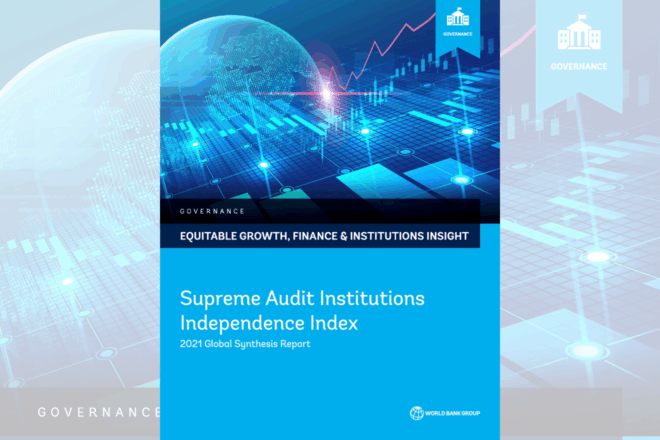
- World Bank. (2021). Supreme Audit Institutions Independence Index (InSAI) Global Report. https://www.worldbank.org/en/topic/governance/brief/supreme-audit-institutions-independence-index
- INTOSAI Development Initiative. (2023). Global SAI Stocktaking Report. https://gsr.idi.no/
- INTOSAI. (2007). Mexico Declaration on SAI Independence (INTOSAI-P 10). https://www.issai.org/pronouncements/intosai-p-10-mexico-declaration-on-sai-independence/
- United Nations. (2015). Addis Ababa Action Agenda on Financing for Development. https://www.un.org/esa/ffd/ffd3/
- INTOSAI Development Initiative. (2024). Resource Kit on SAI Independence for SAI Leaders. https://sirc.idi.no/document-database/documents/intosai-publications/79-resource-kit-on-sai-independence-for-sai-leaders/file
- INTOSAI Journal. (2024). Developing relevant and innovative approaches to support SAI Independence: Insights from the SAI Independence Rapid Advocacy Mechanism (SIRAM). https://intosaijournal.org/journal-entry/developing-relevant-and-innovative-approaches-to-support-sai-independence-insights-from-the-sai-independence-rapid-advocacy-mechanism-siram/